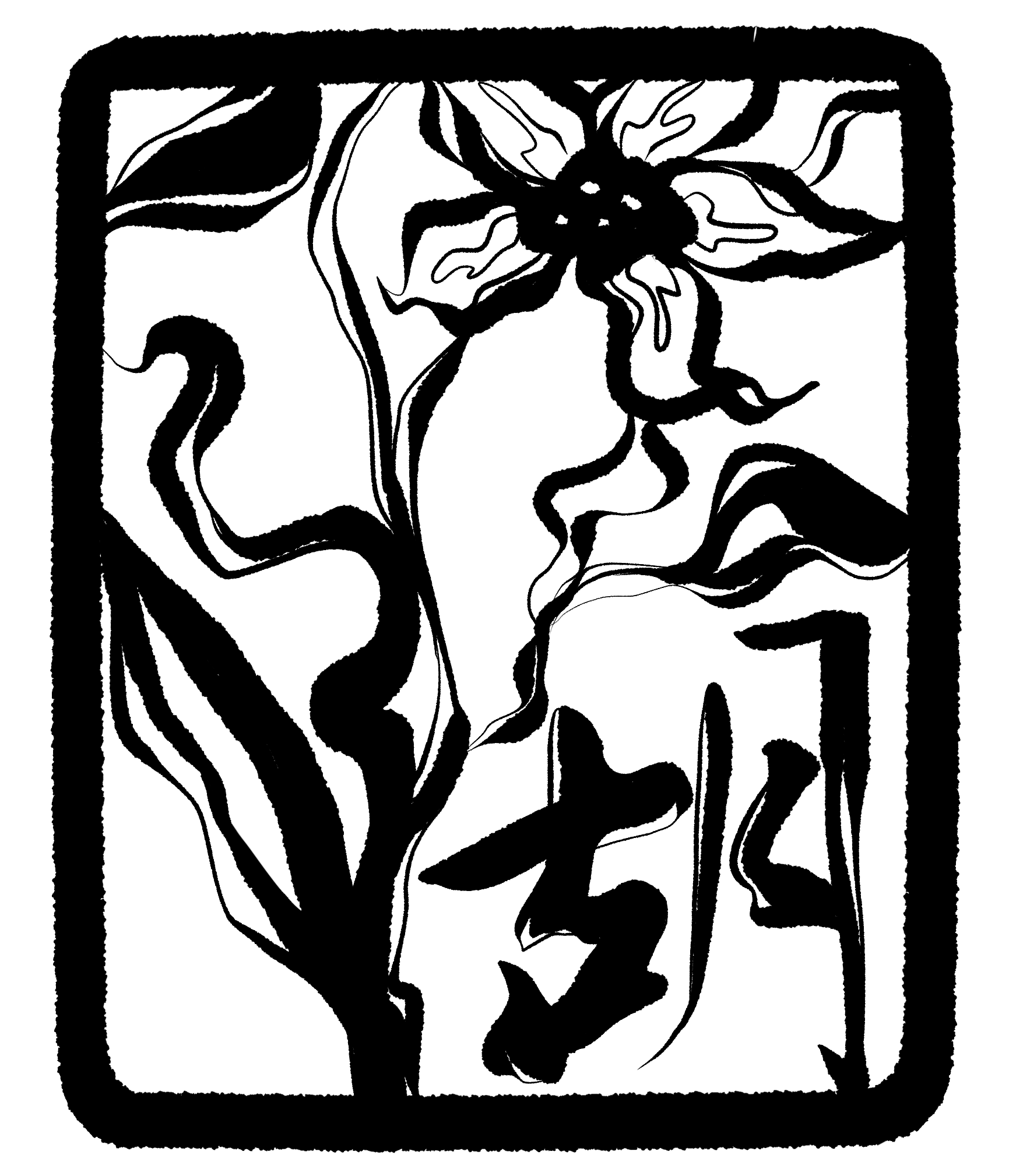
Story Mapping & Sketching
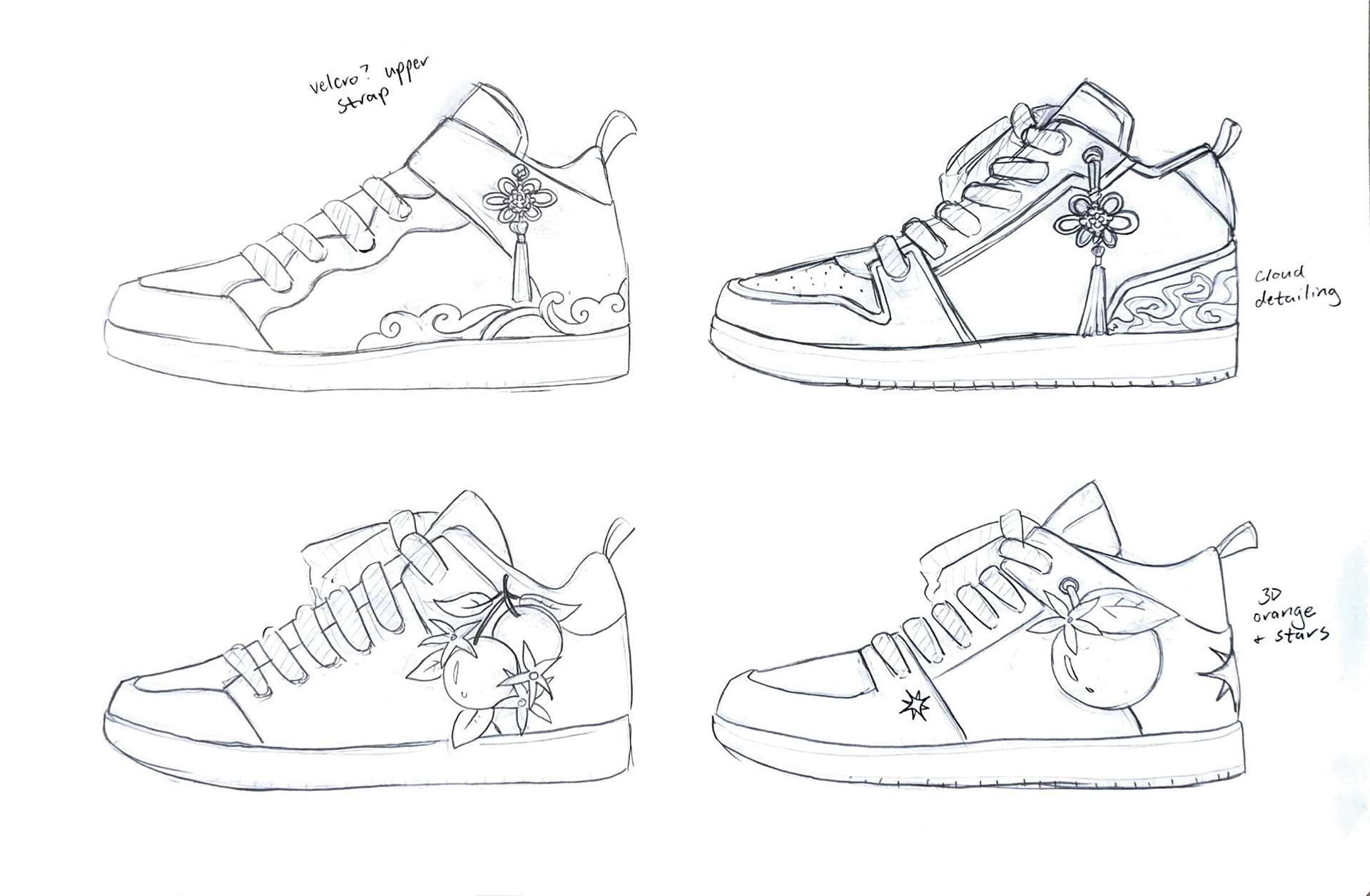
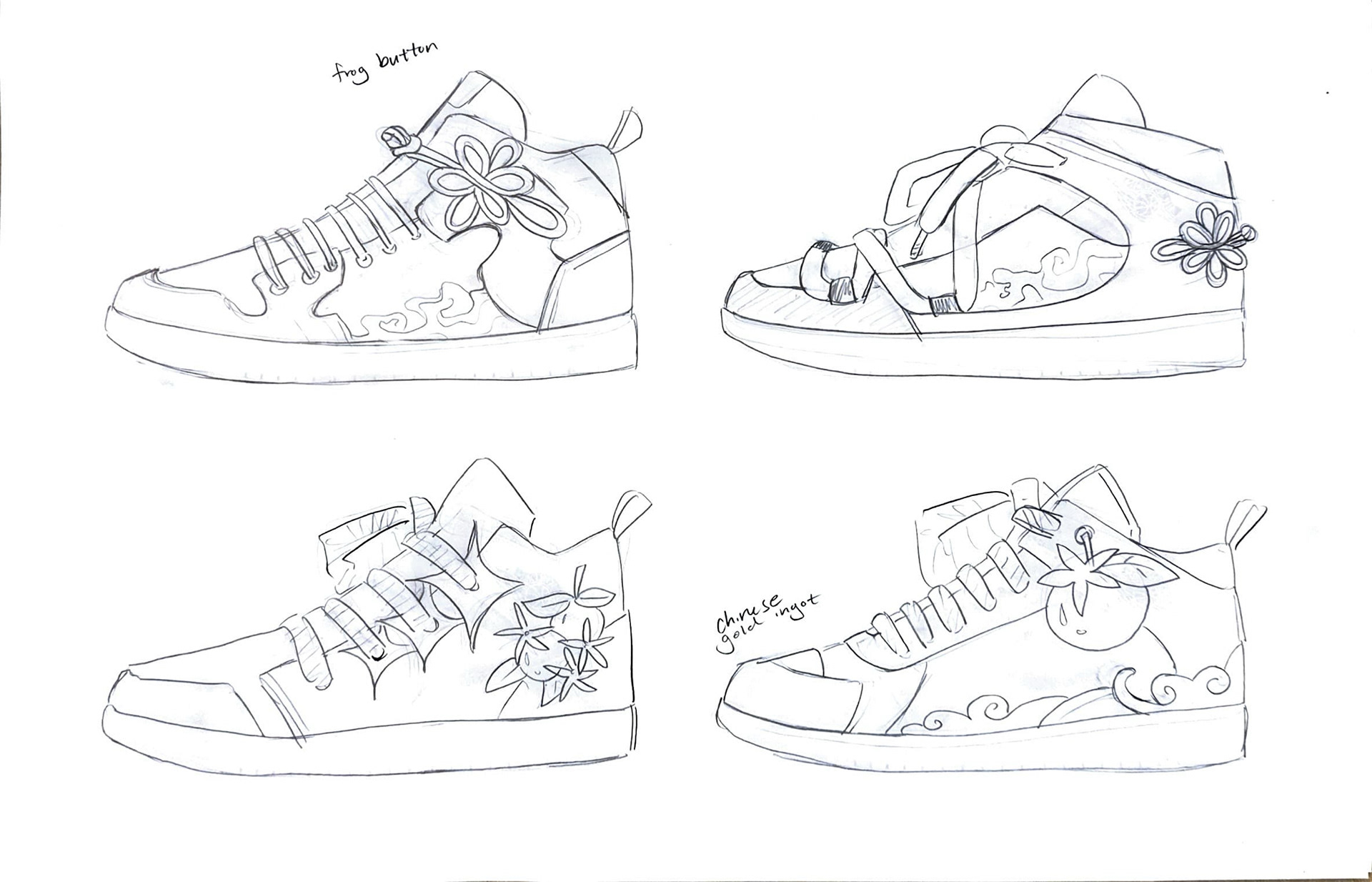
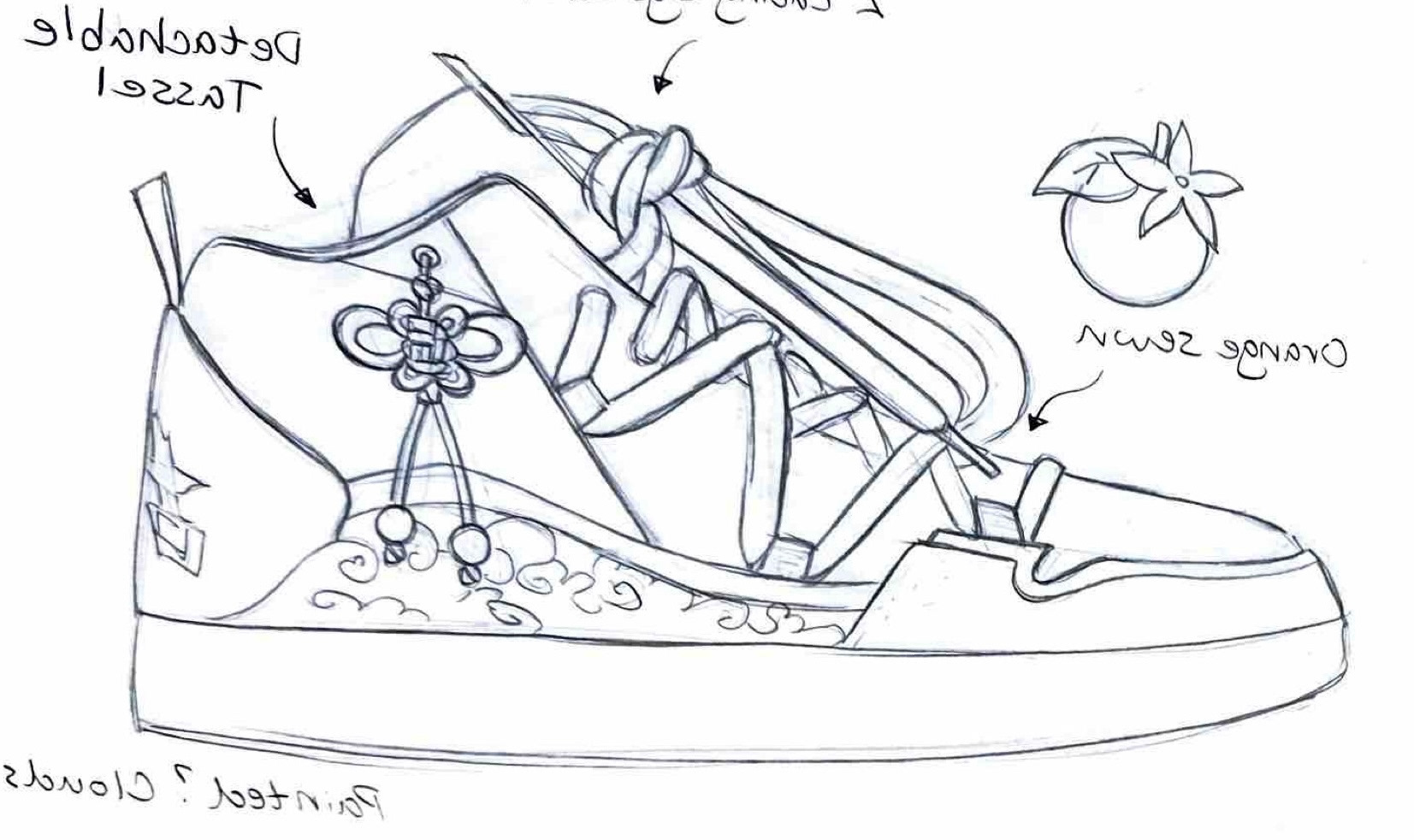
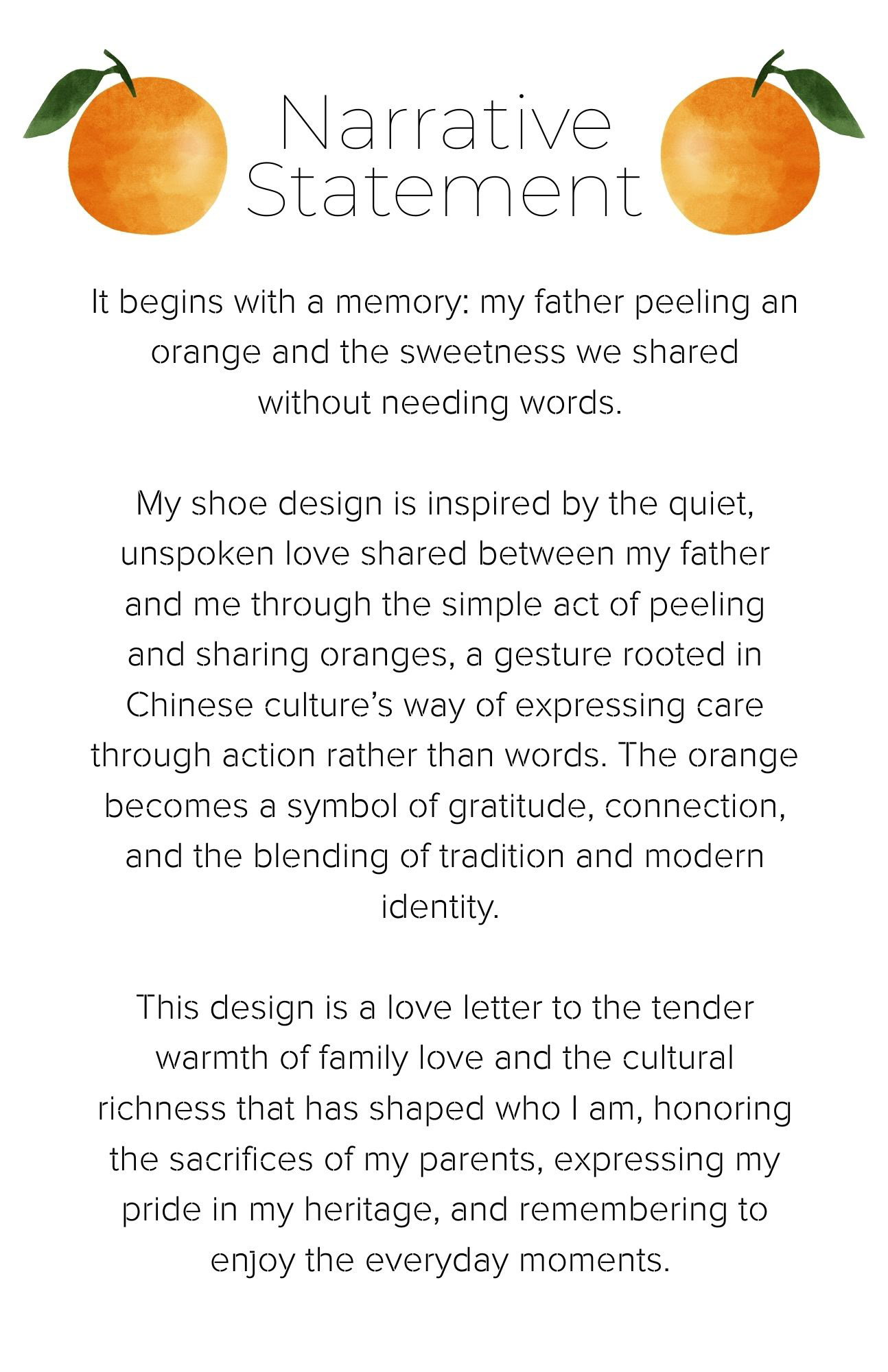
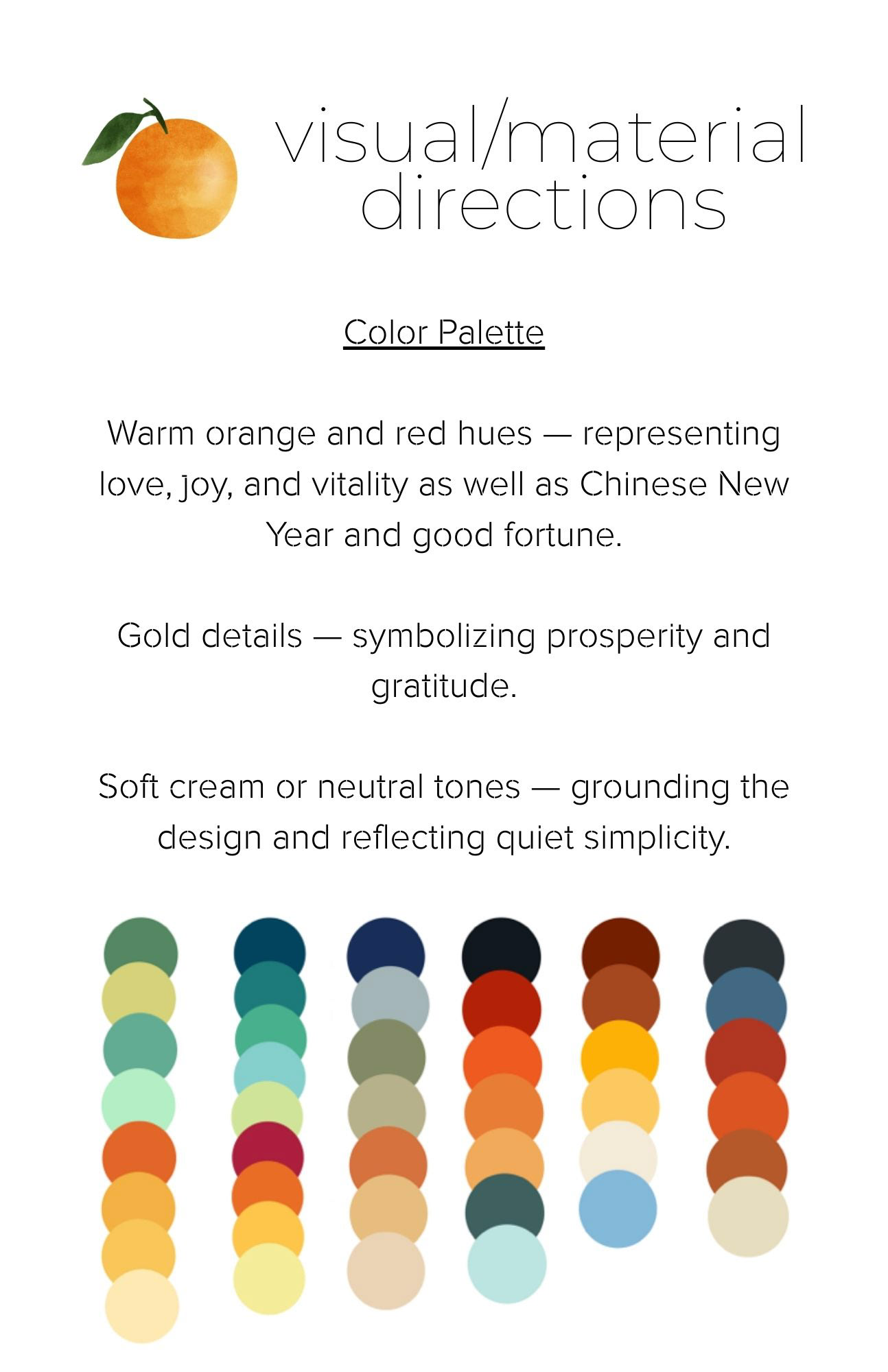
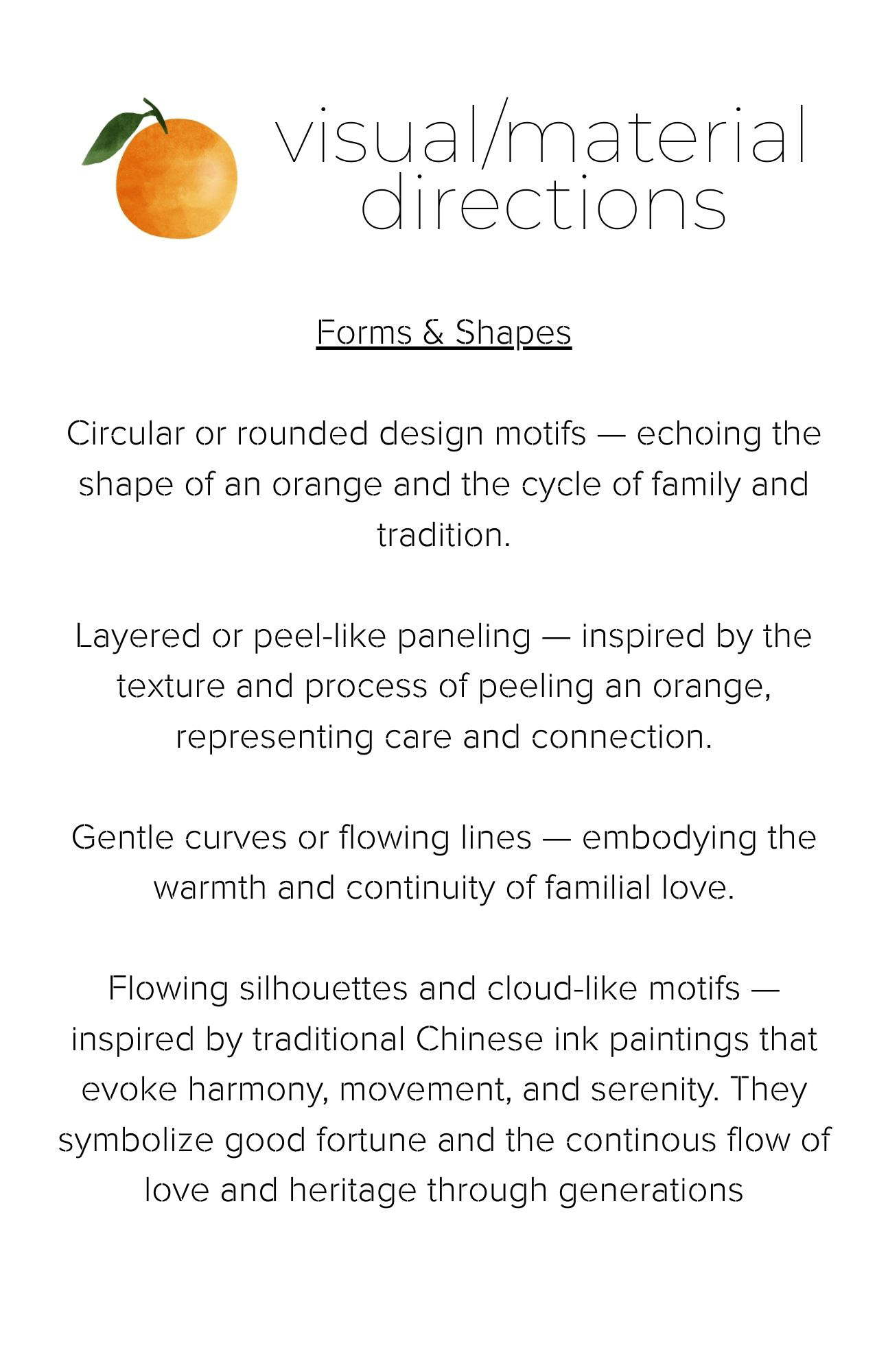
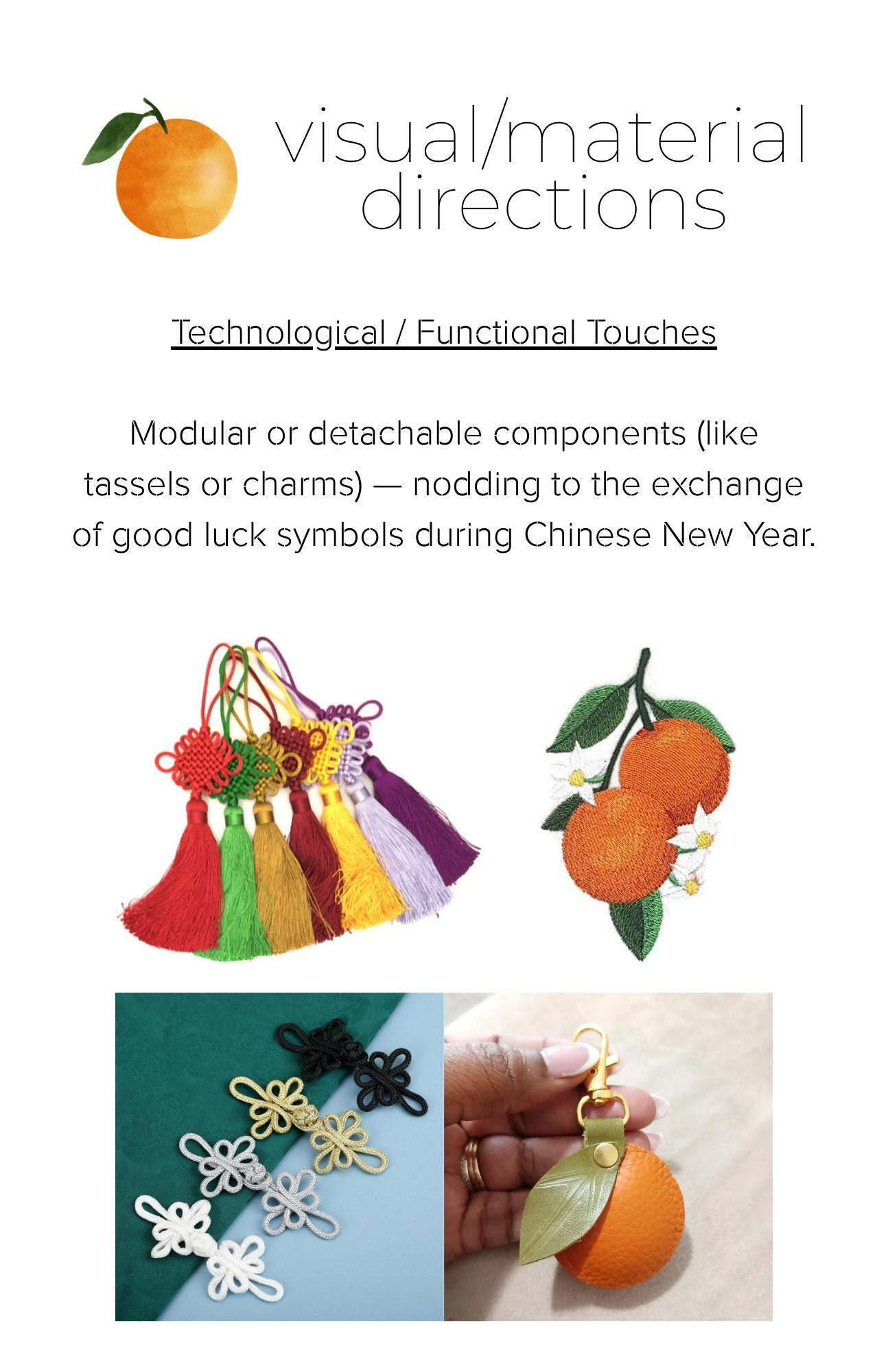
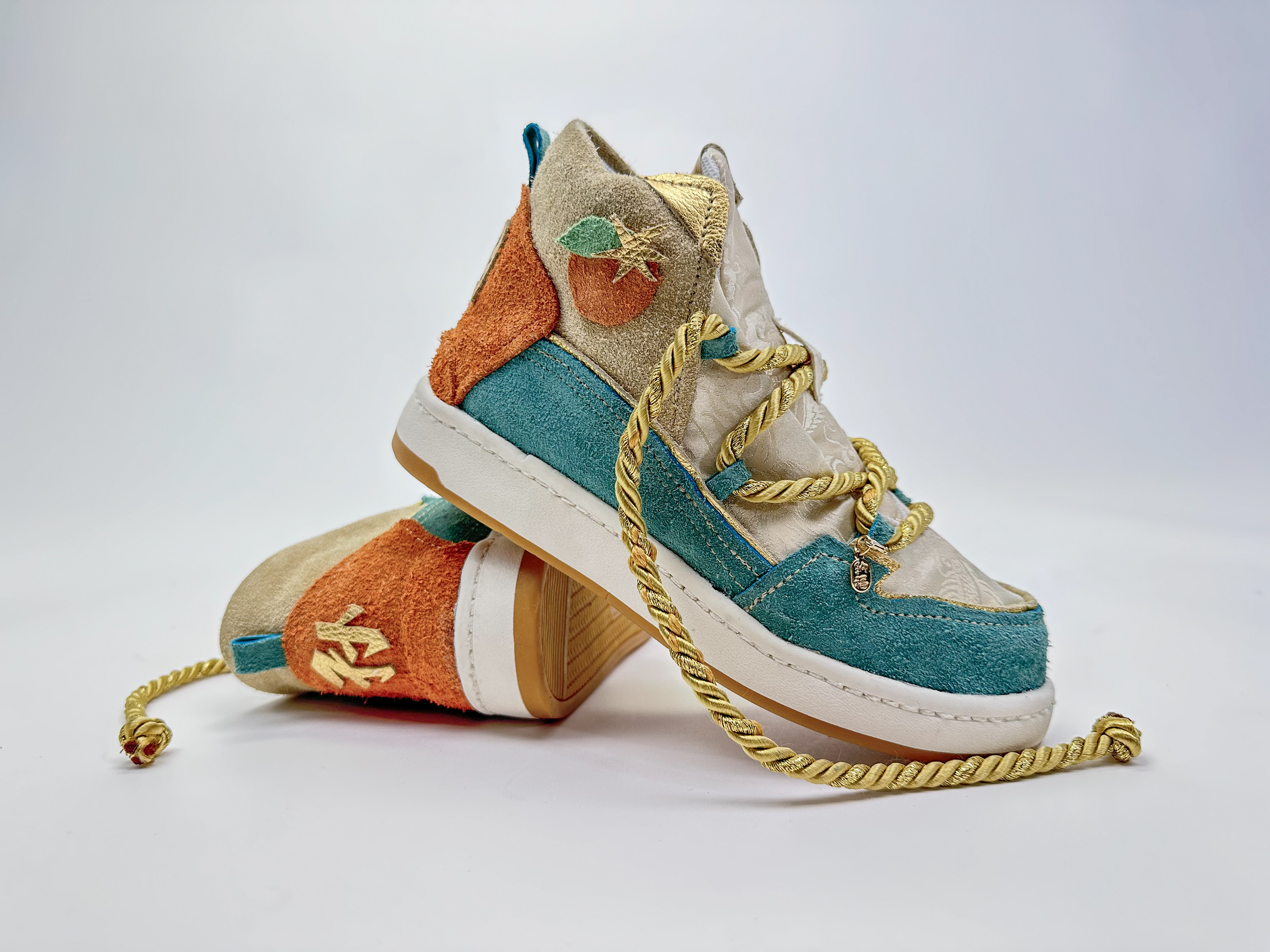
I began by unpacking memories, cultural symbols, and the quiet rituals that shaped my relationship with my parents. The orange emerged as a central metaphor — a symbol of shared love, prosperity, and everyday care in Chinese culture. From there, I moved into loose sketches exploring orange segments, peel-like layers, and flowing cloud motifs from traditional Chinese art. These early drawings focused on translating emotion into form, setting the foundation for the shoe’s silhouette and narrative direction.
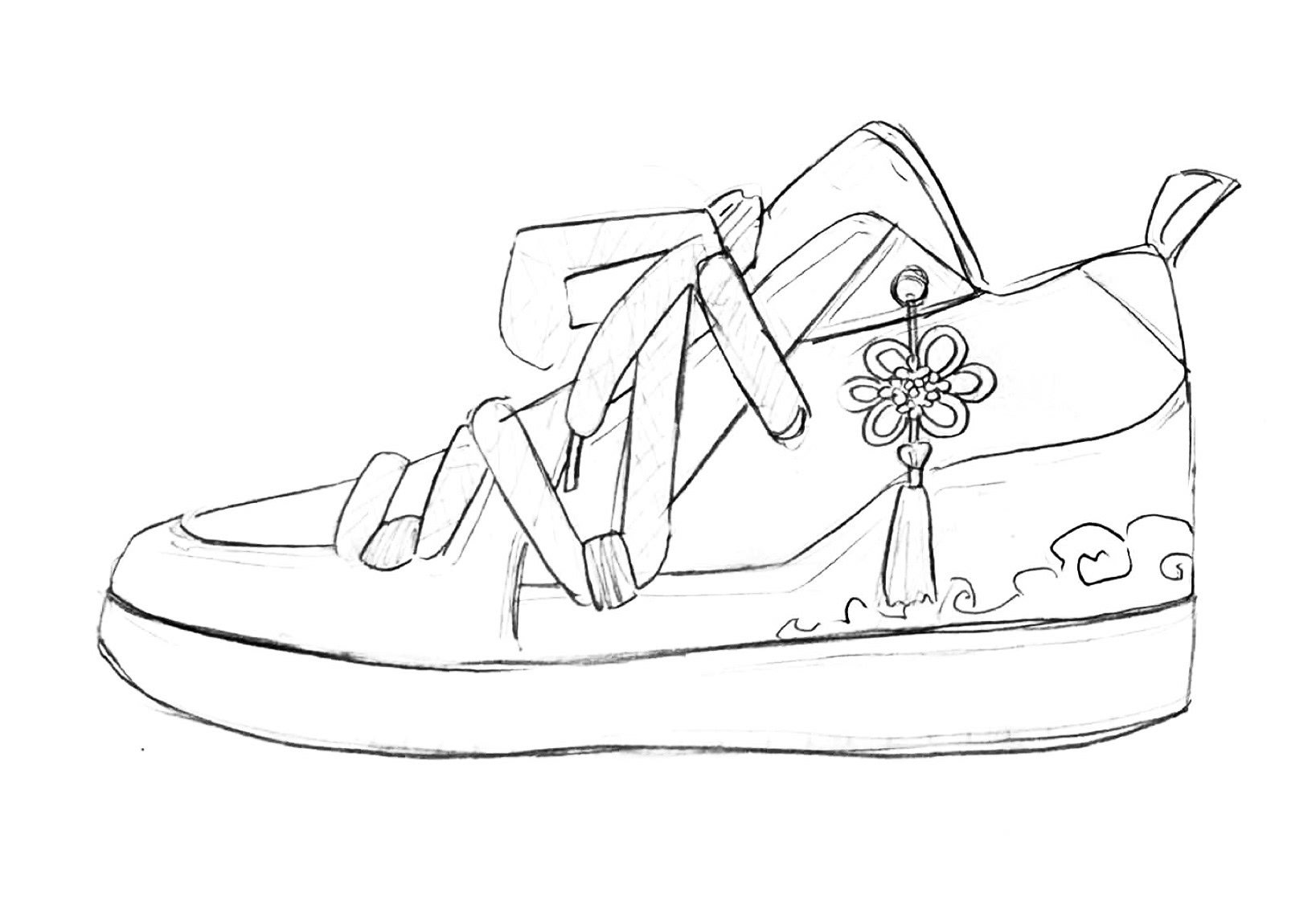
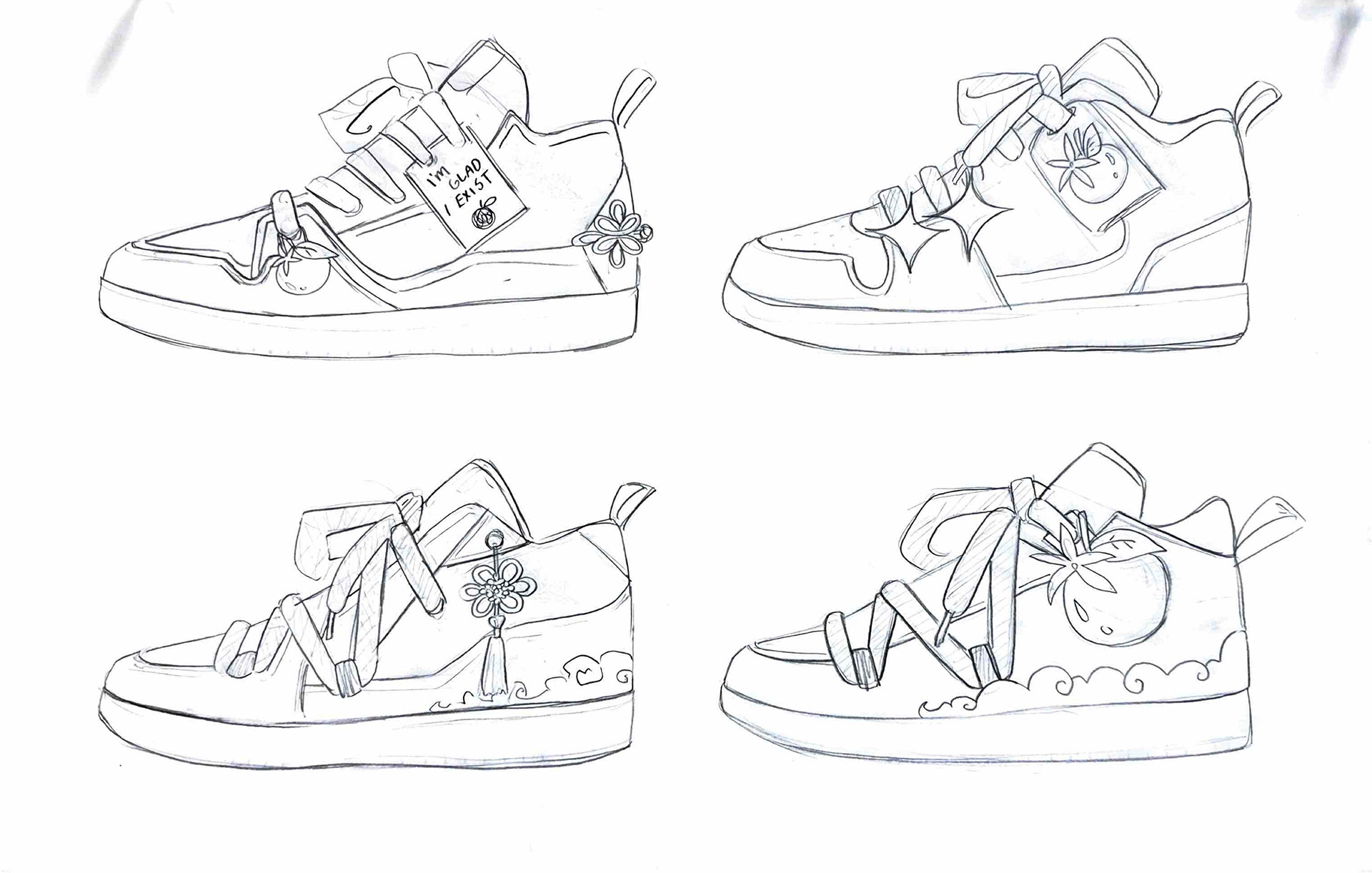
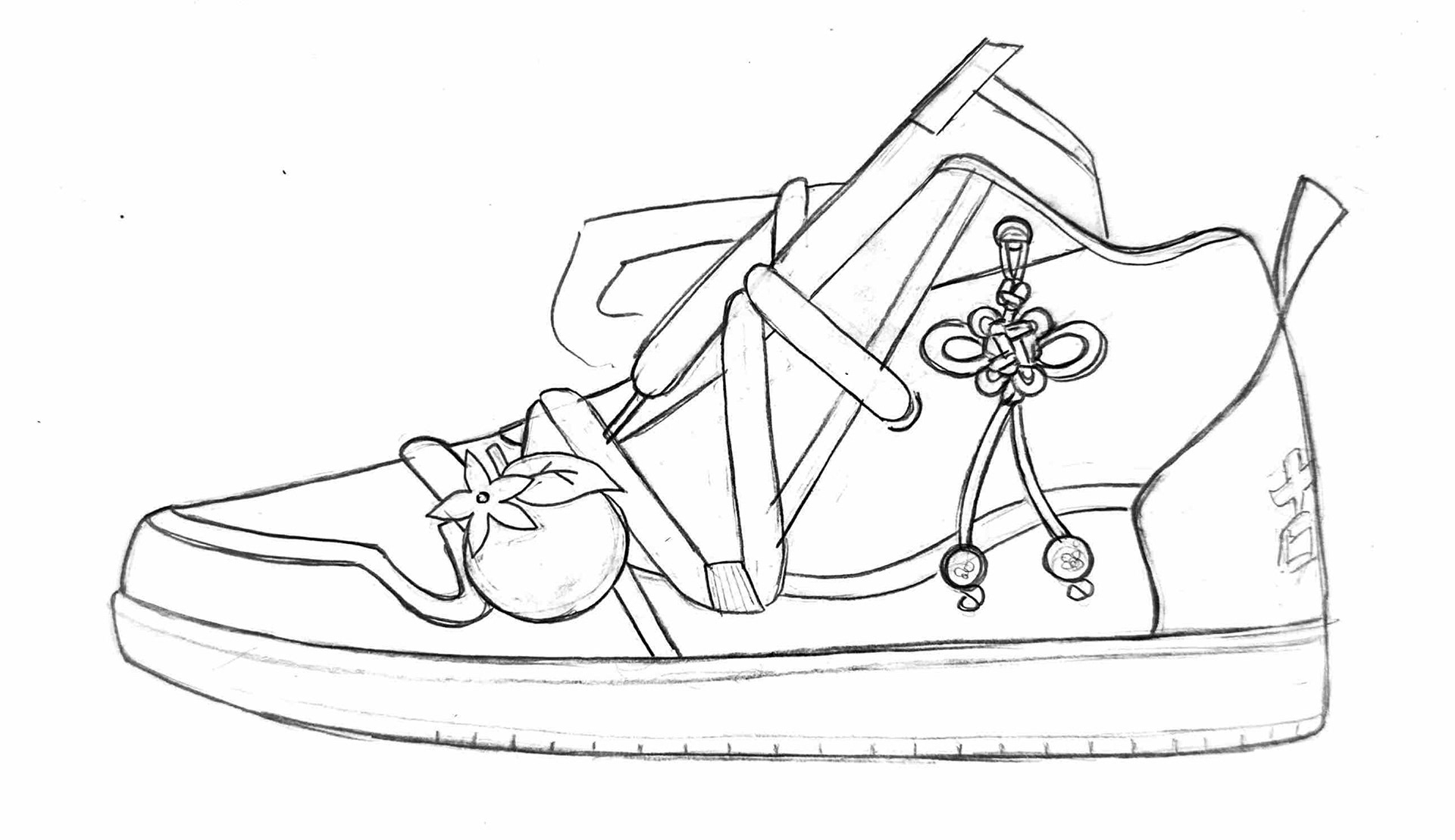
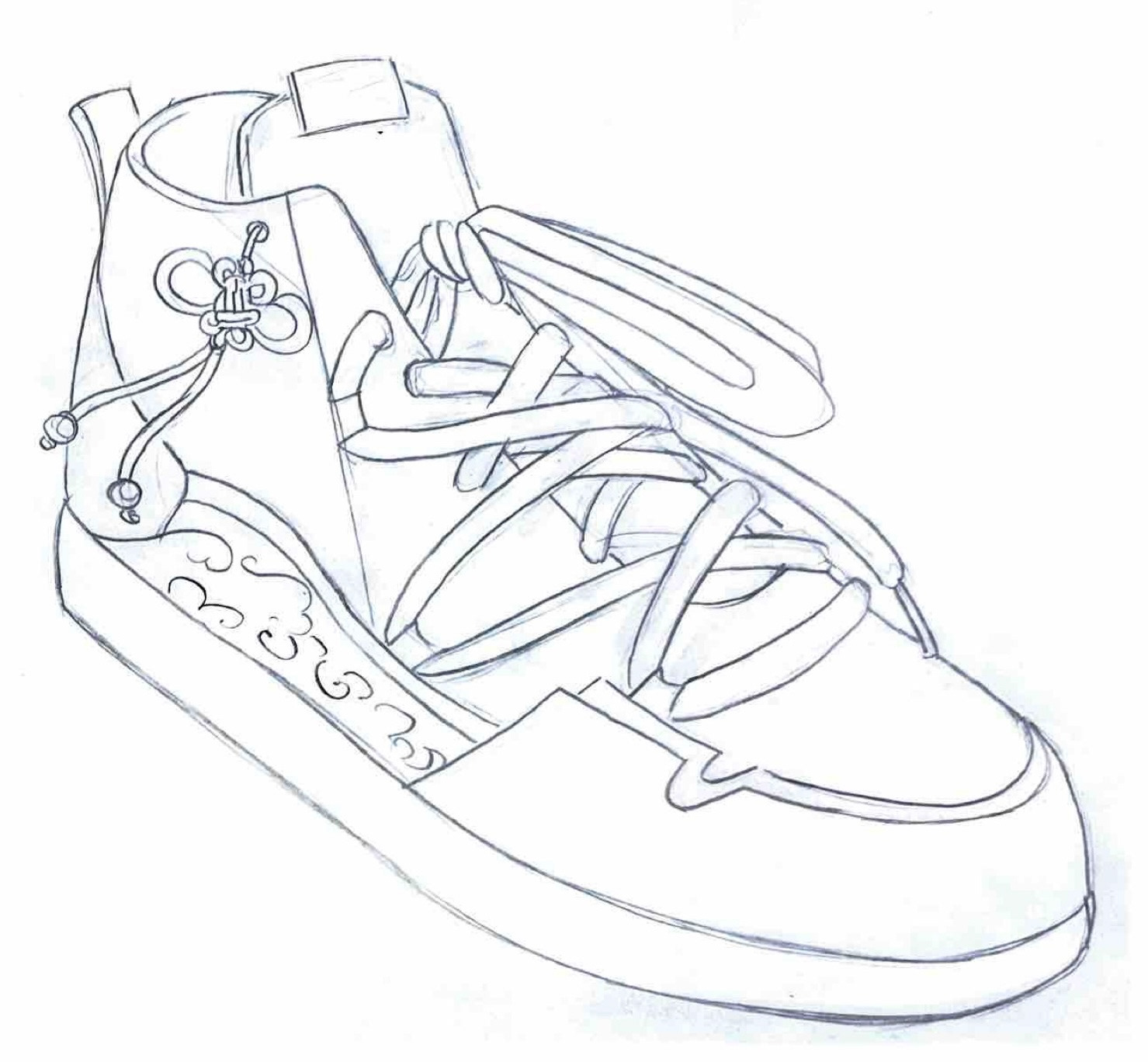
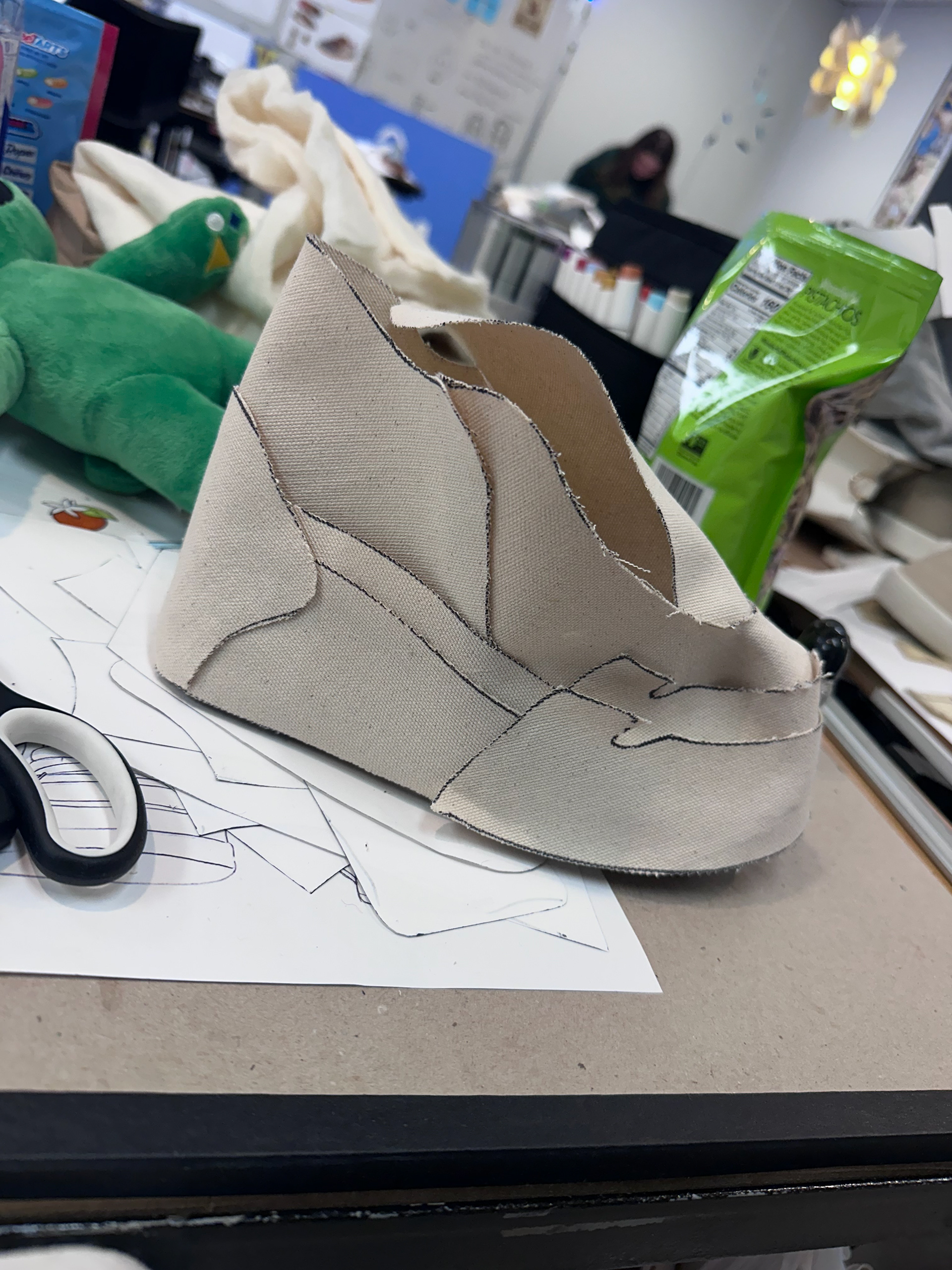
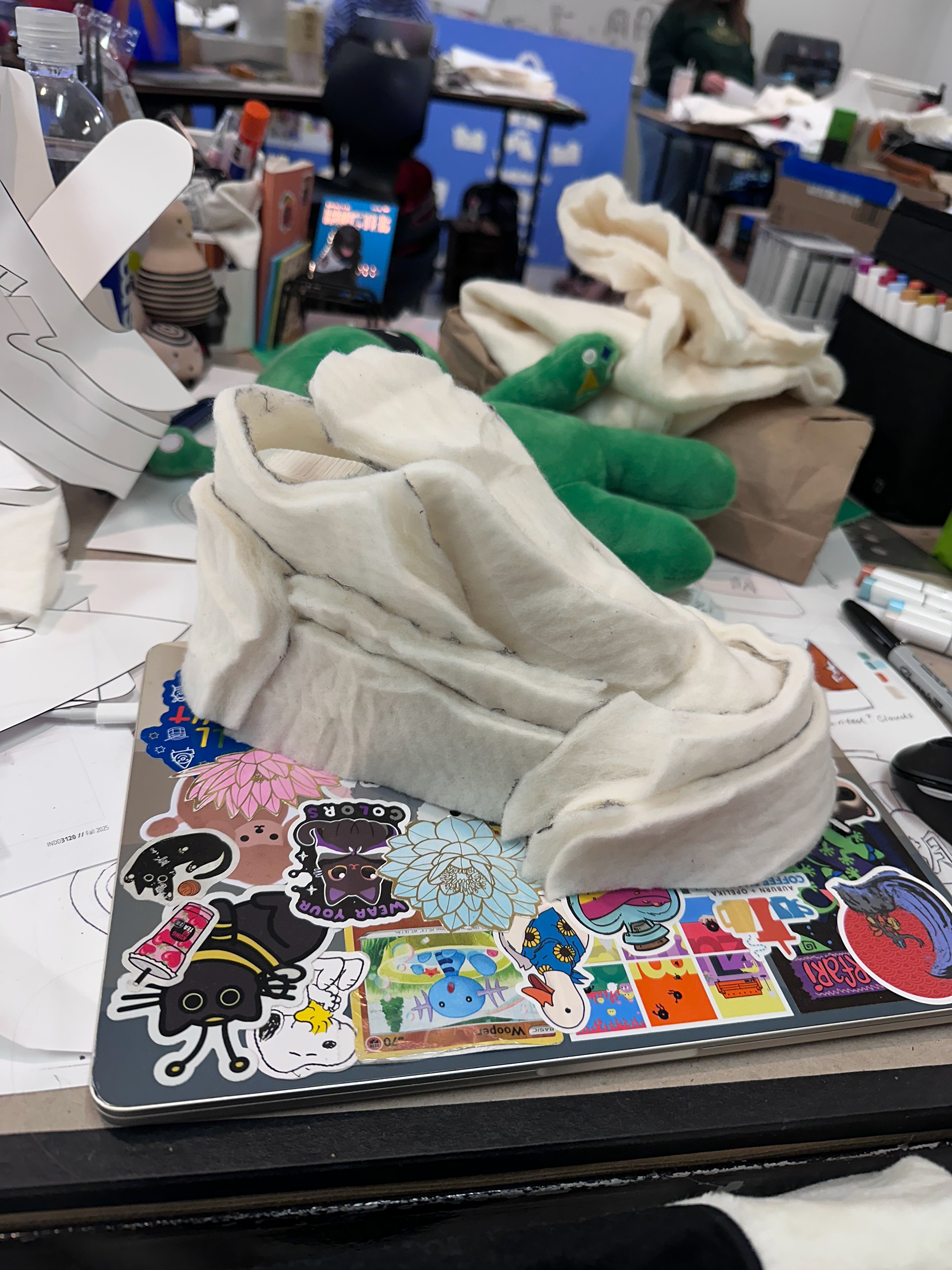
Form Development & Prototyping
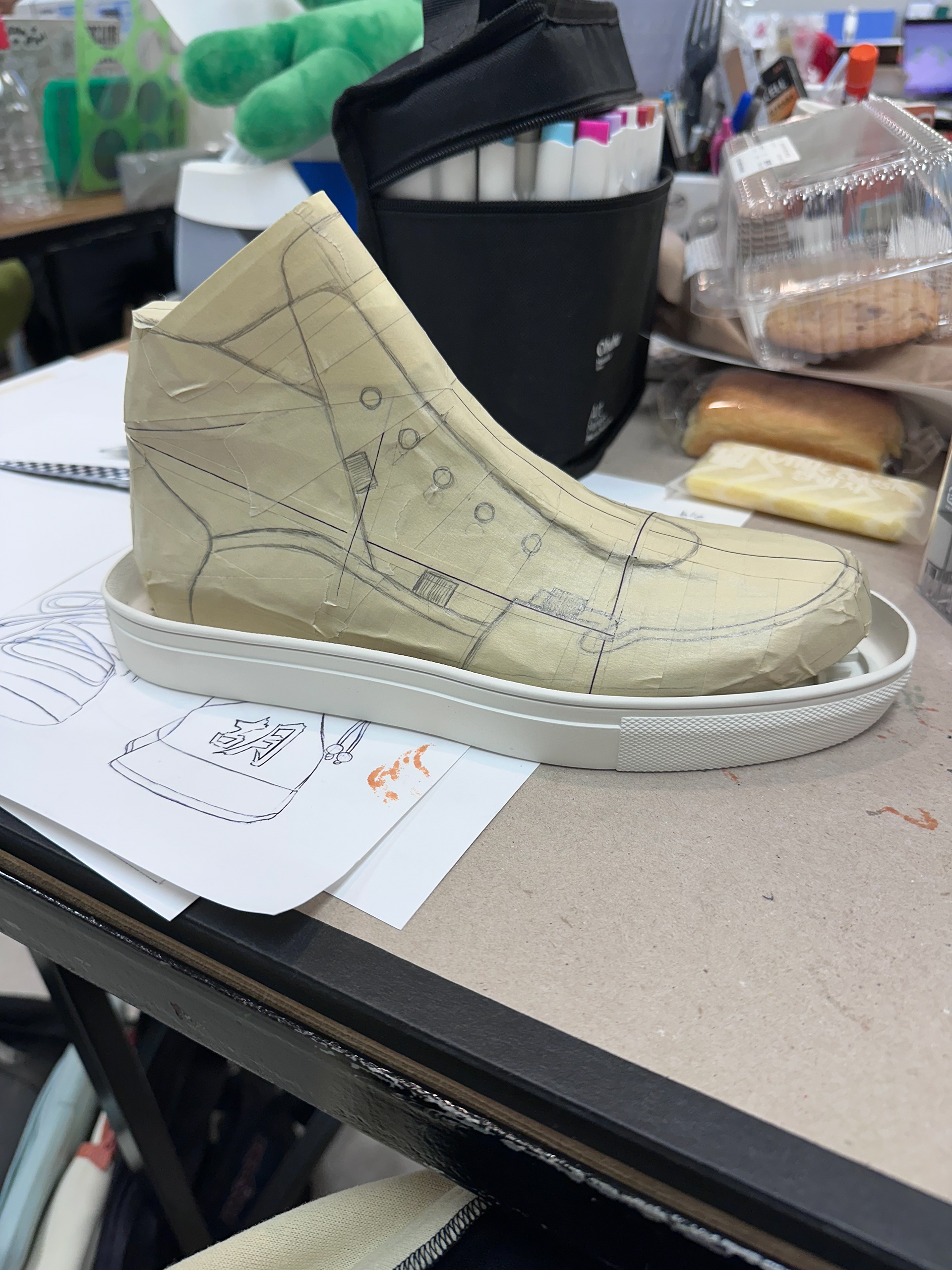
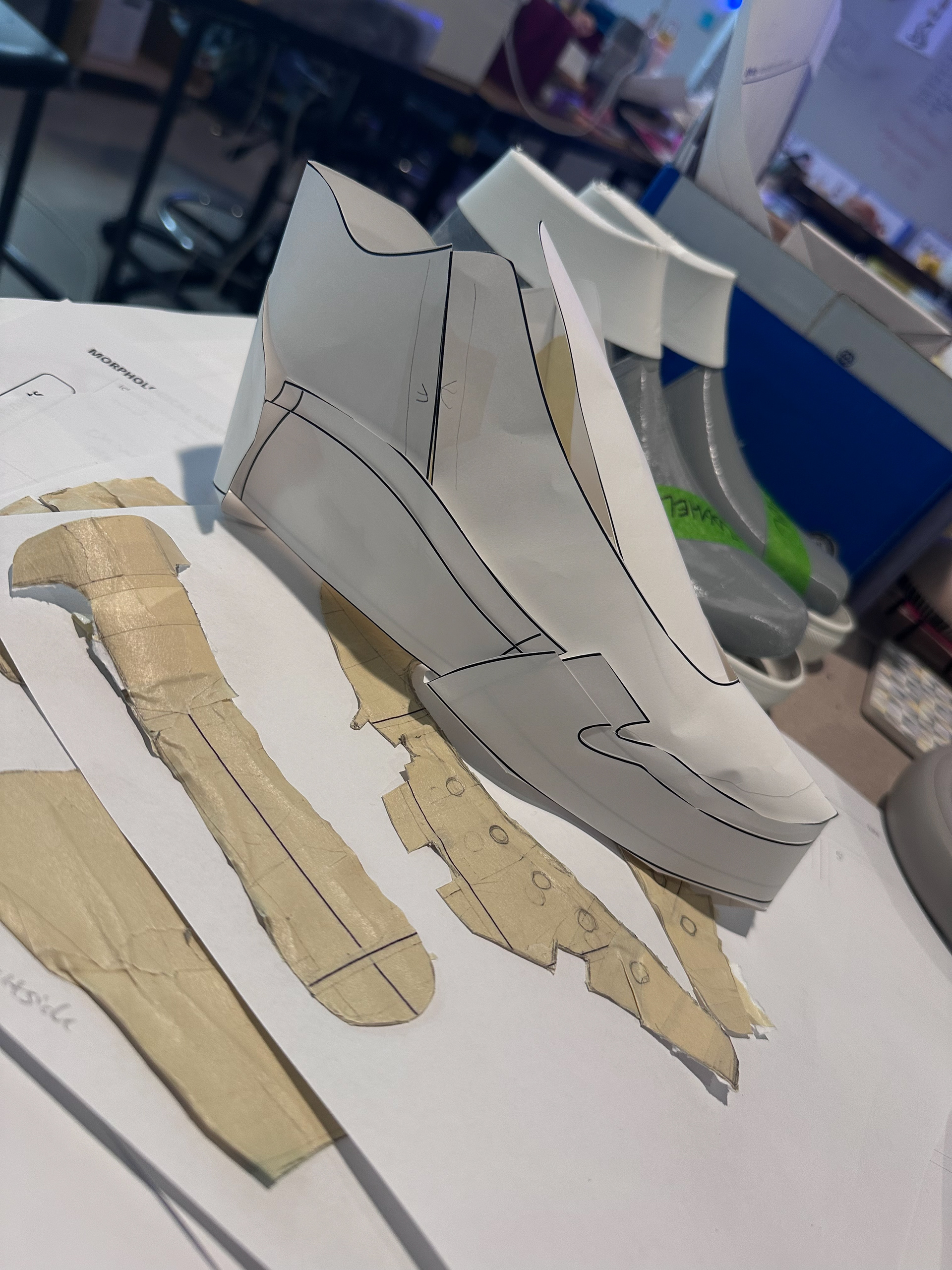
After finalizing the sketch, I transferred the design onto the shoe last and created my initial patterns. This stage was all about testing form, shape, and proportion, adjusting panel lines, refining curves, and making sure the concept translated cleanly in three dimensions. Once the patterns felt resolved and the structure held up, I moved on to cutting and building the final version in leather.
The Process
Having never sewn before, I’d be lying if I said I wasn’t intimidated by the old Consew Model 29 sitting in my studio. Through careful trial and error, lots of broken thread, and slowly getting a feel for the rhythm of the machine, I taught myself how to stitch each panel together. When it came to the hand-sewn details, my grandmother stepped in to help, a small but meaningful collaboration that tied another generation into the project.
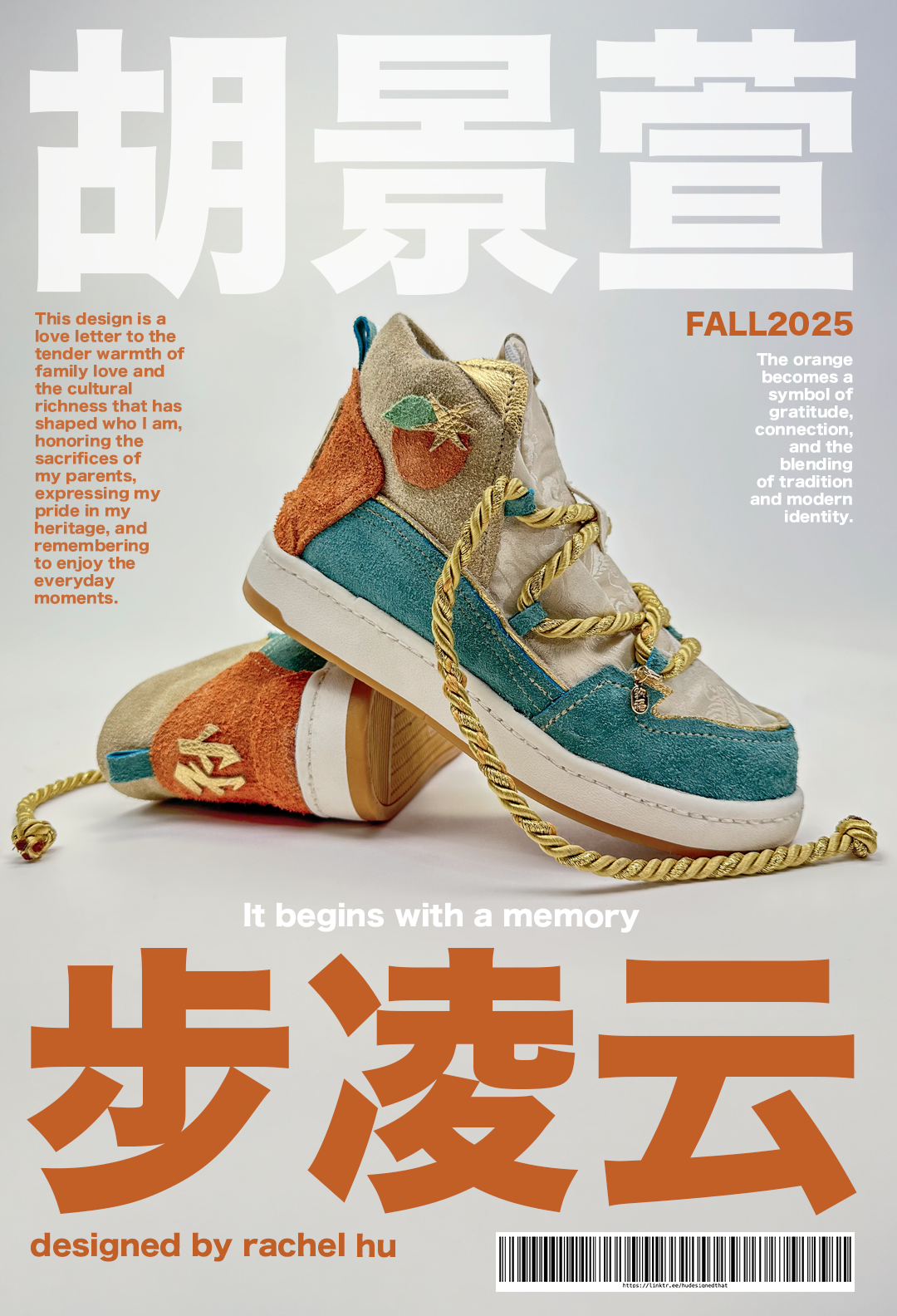
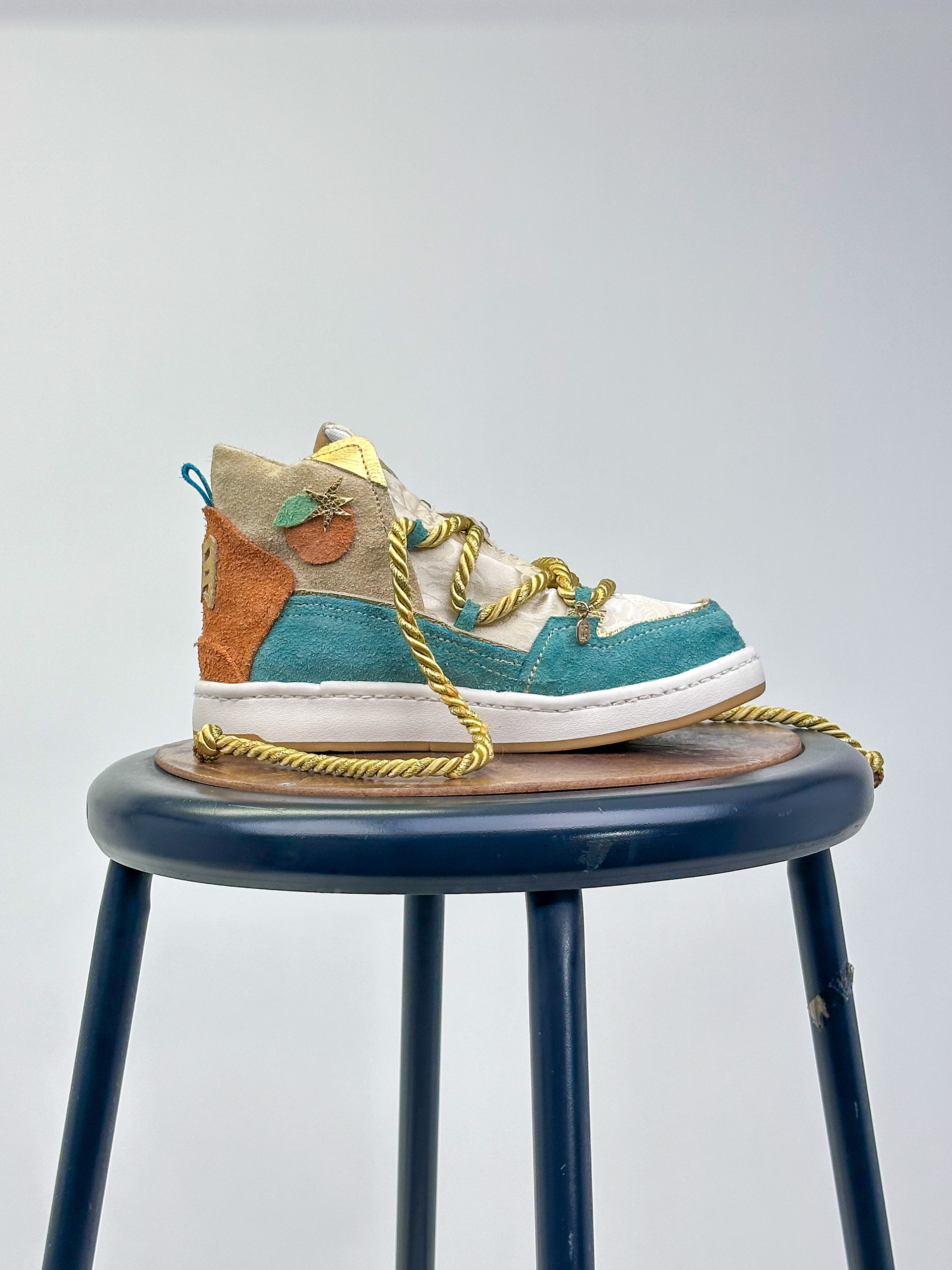
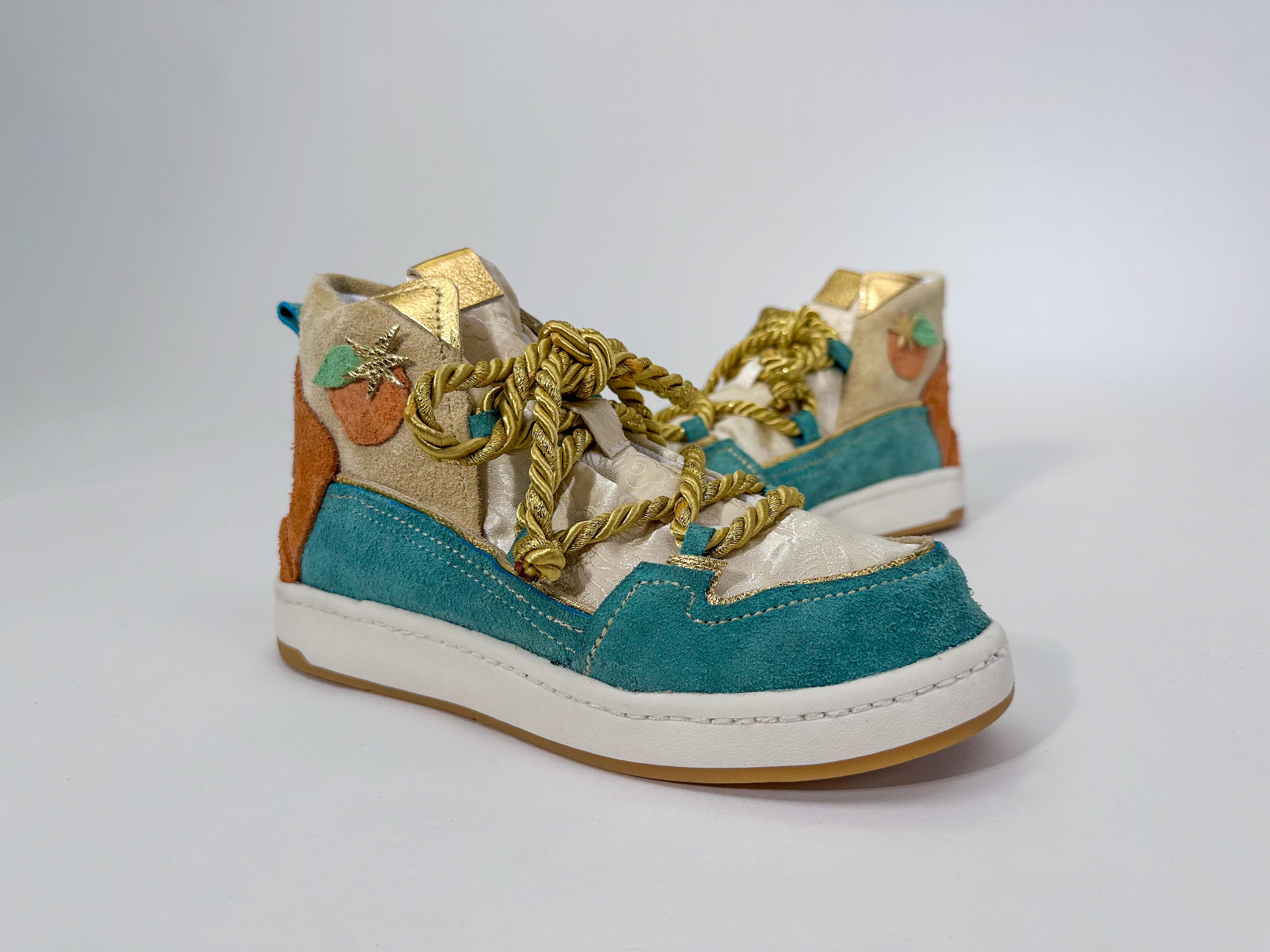
Piece by piece, the shoe came together, carrying the marks of everything I learned along the way. The final result honors both my parents, with their last names stitched onto each shoe and an orange motif to remember the sweet memories we share.
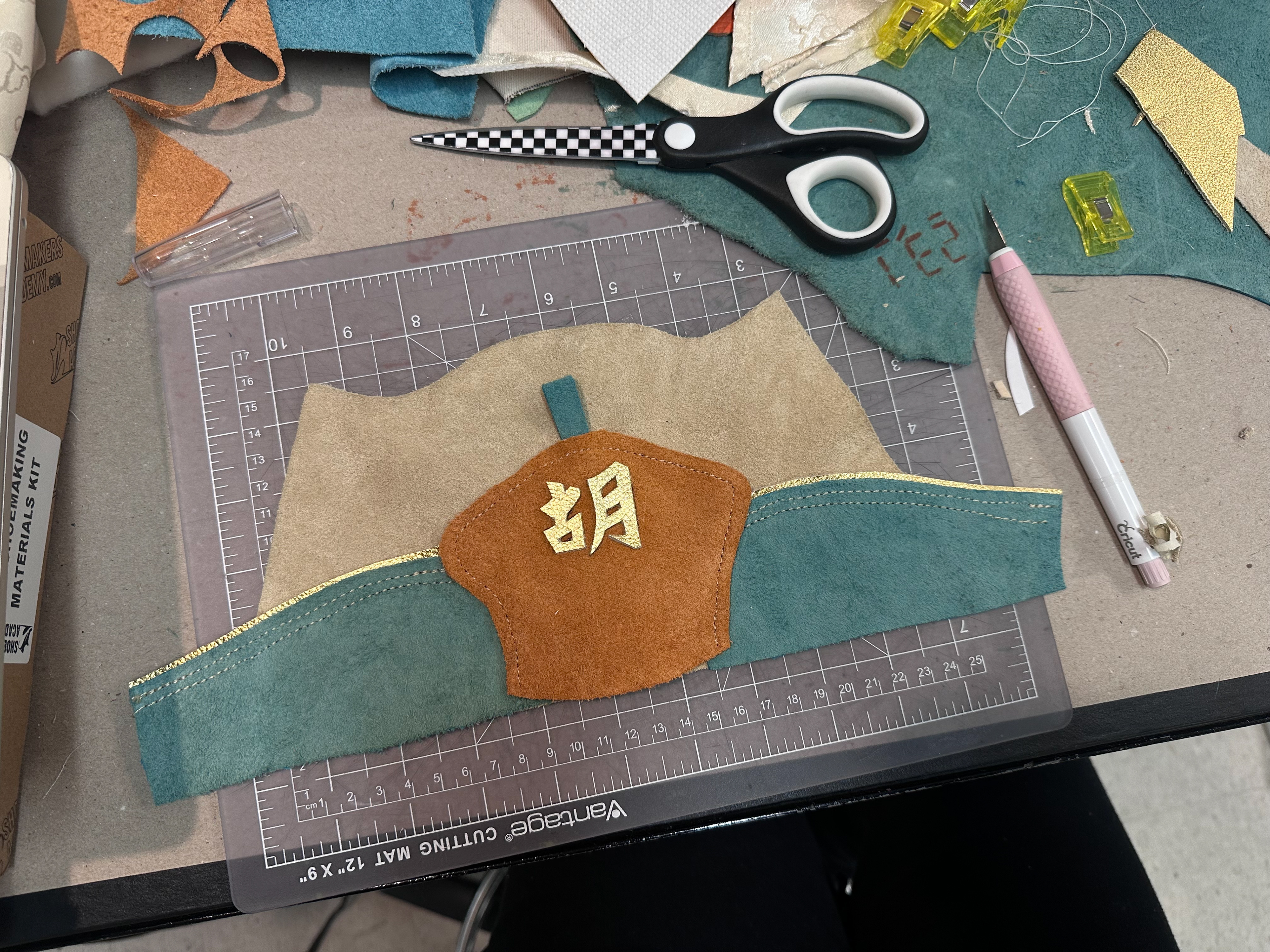
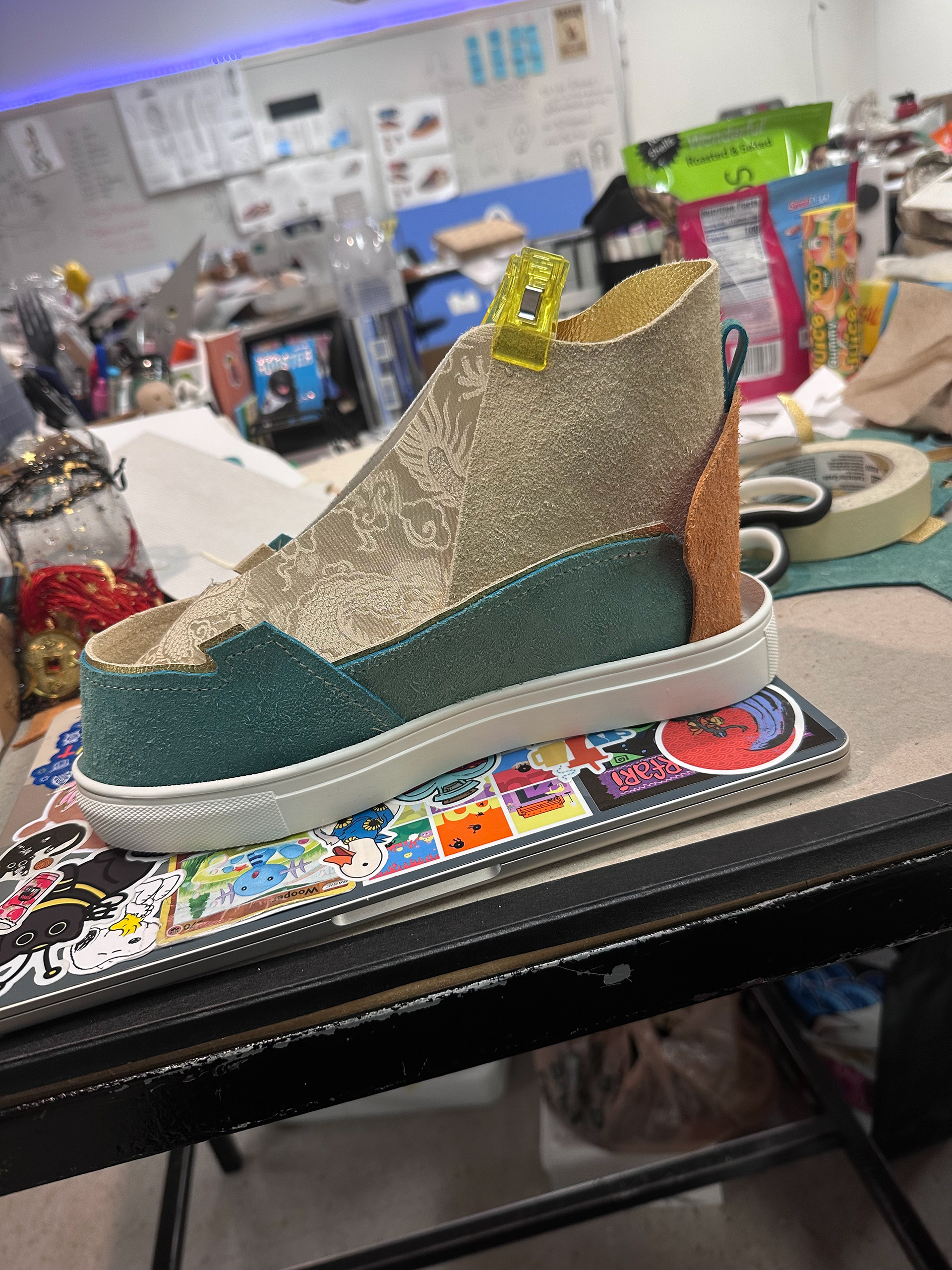
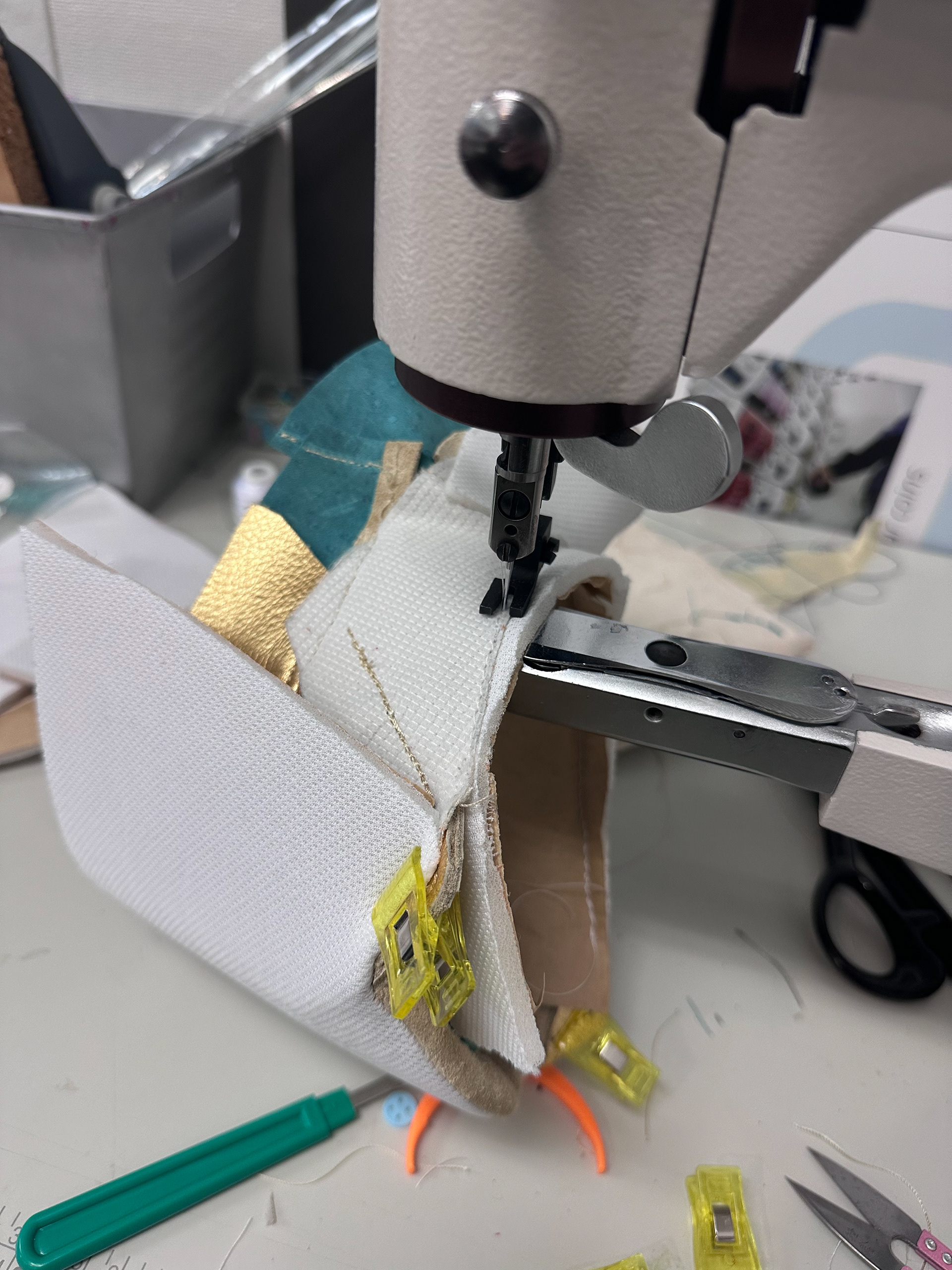
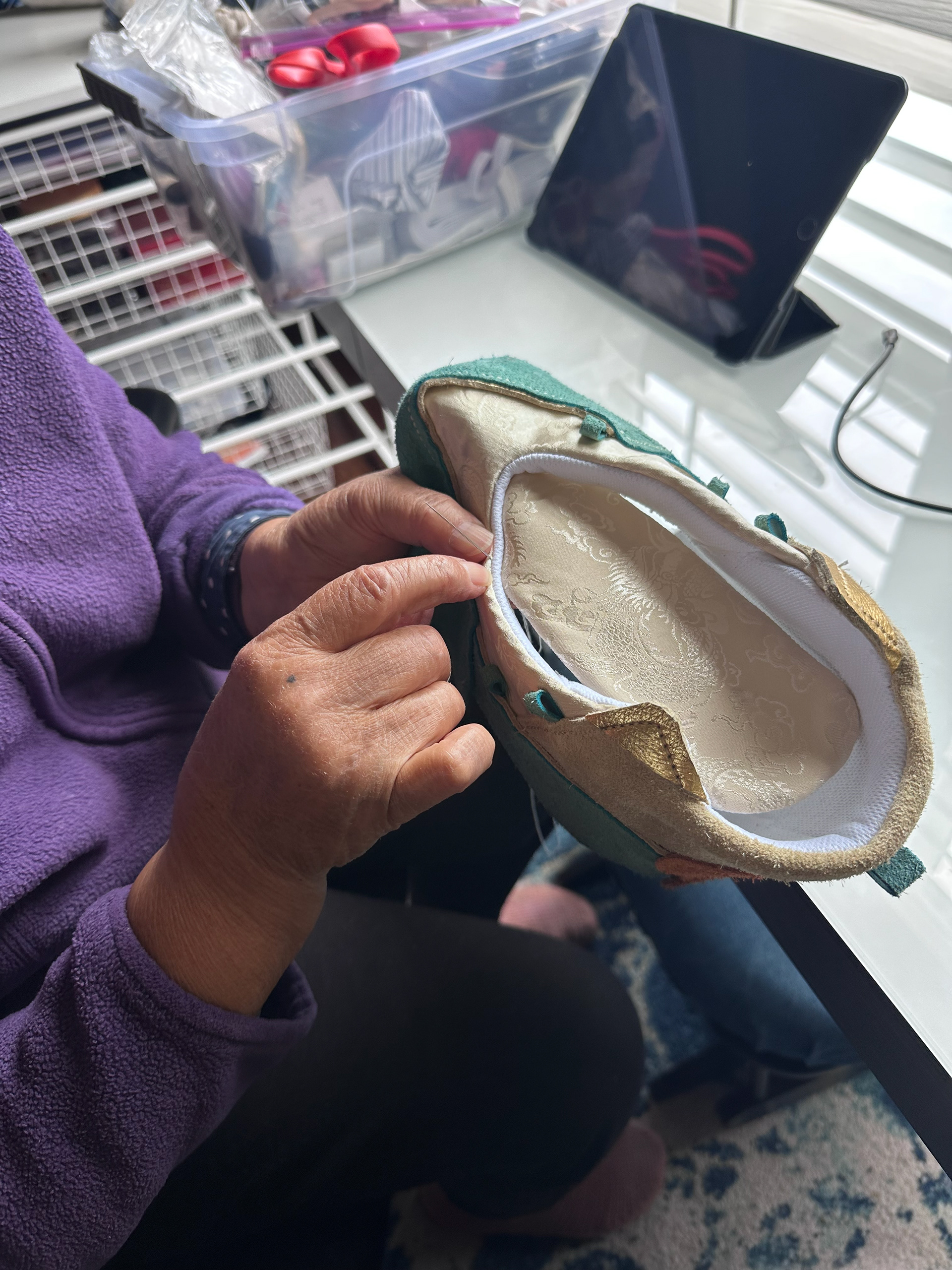
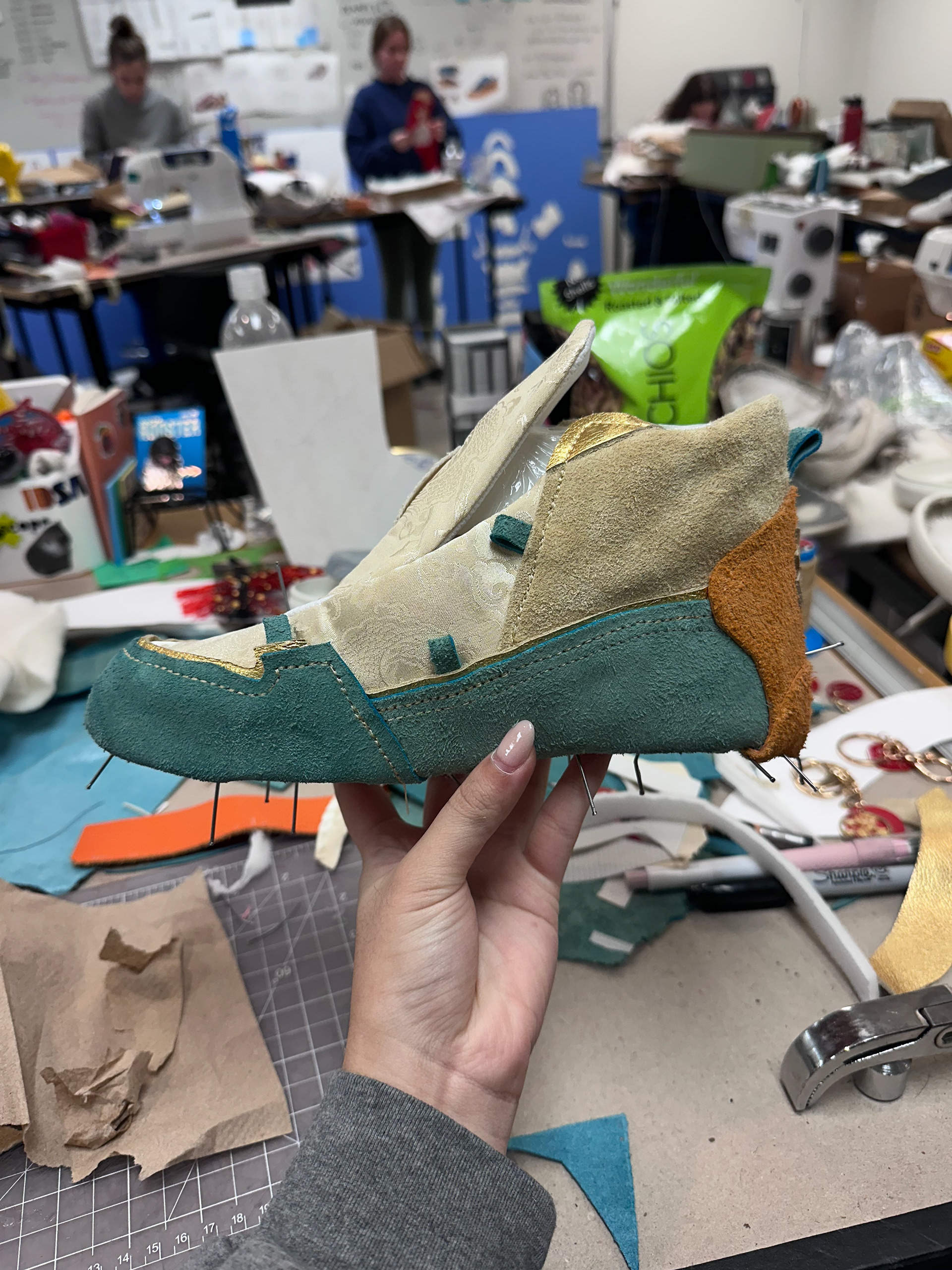
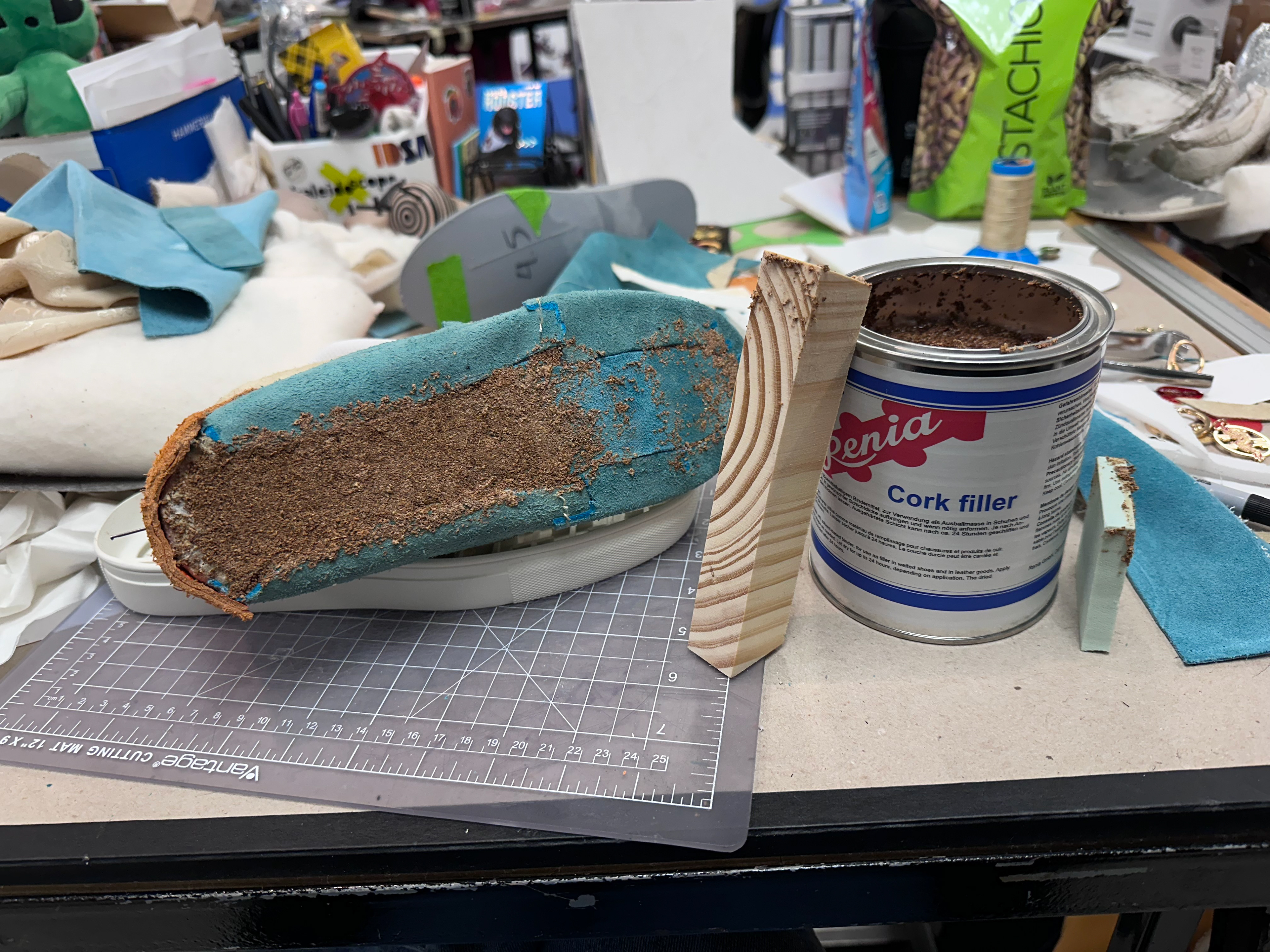
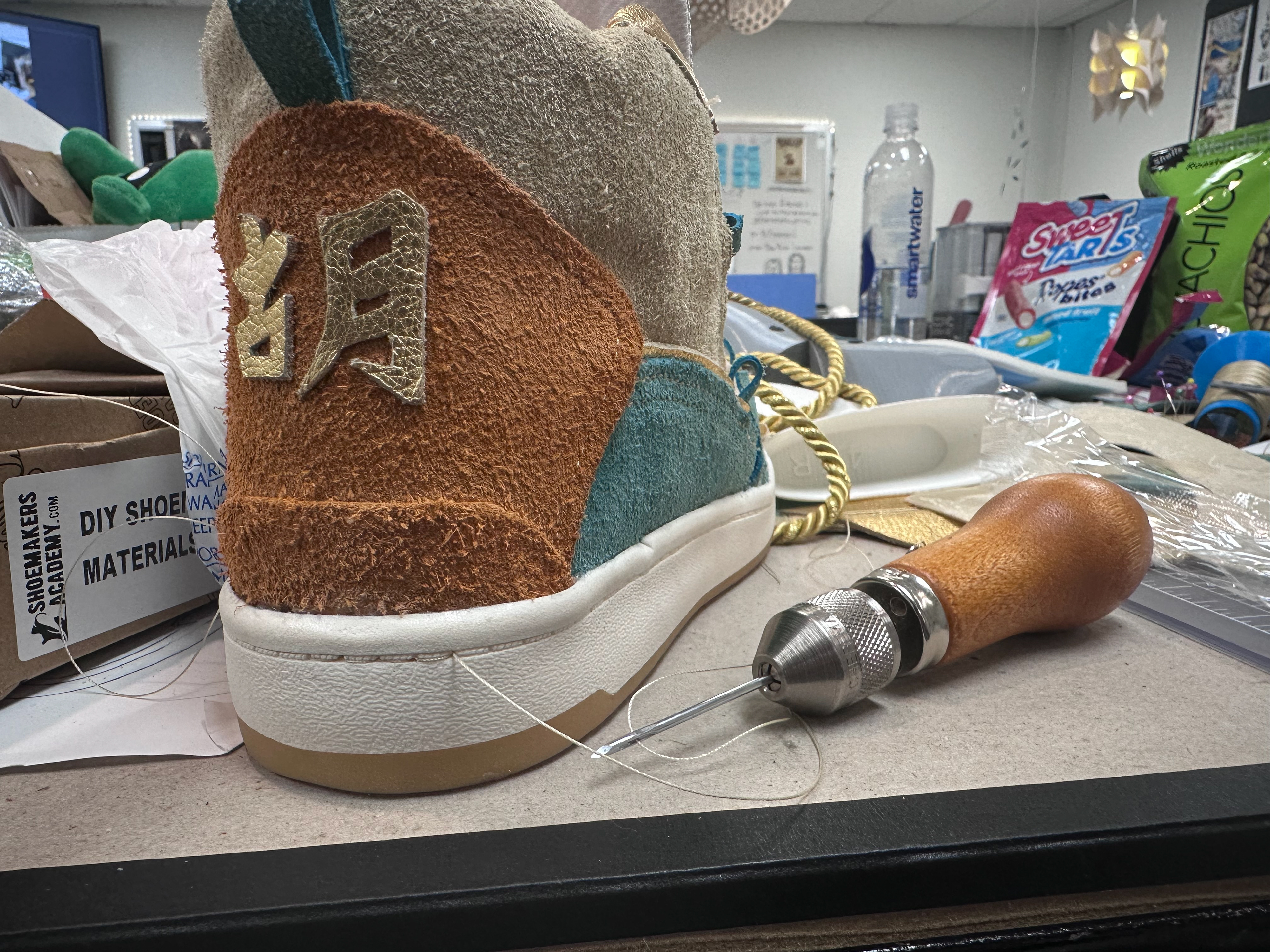
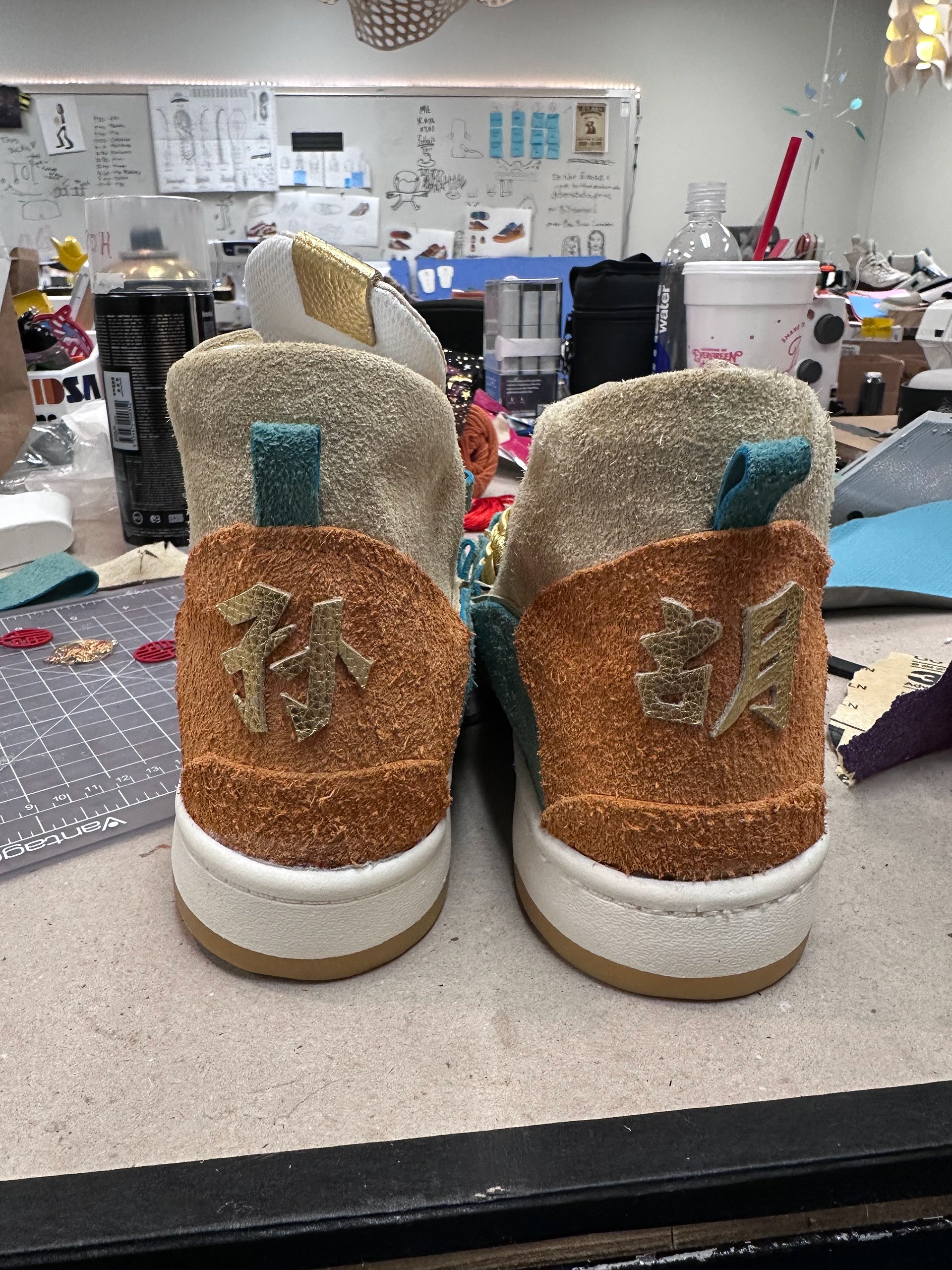
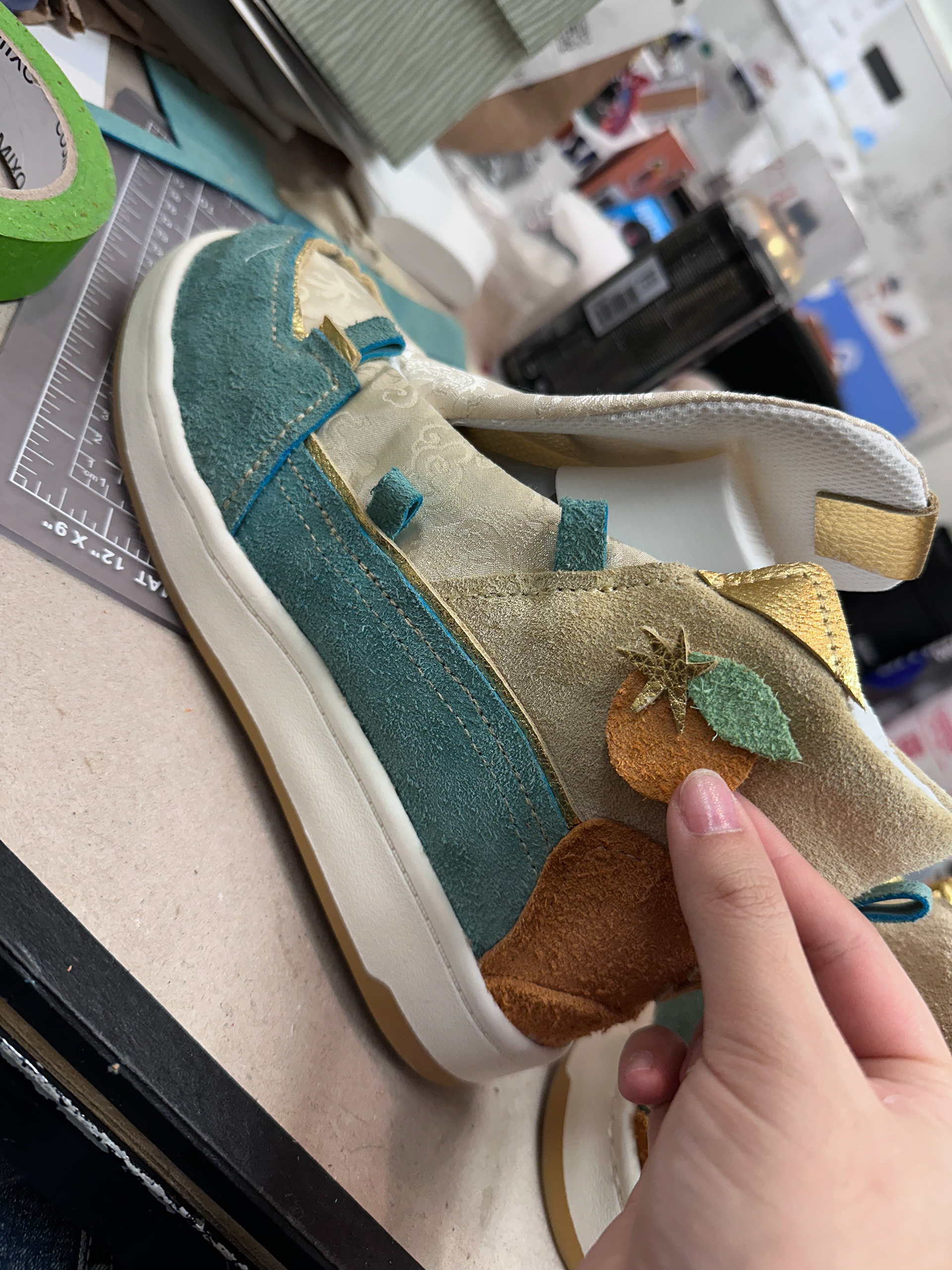
Studio Photos
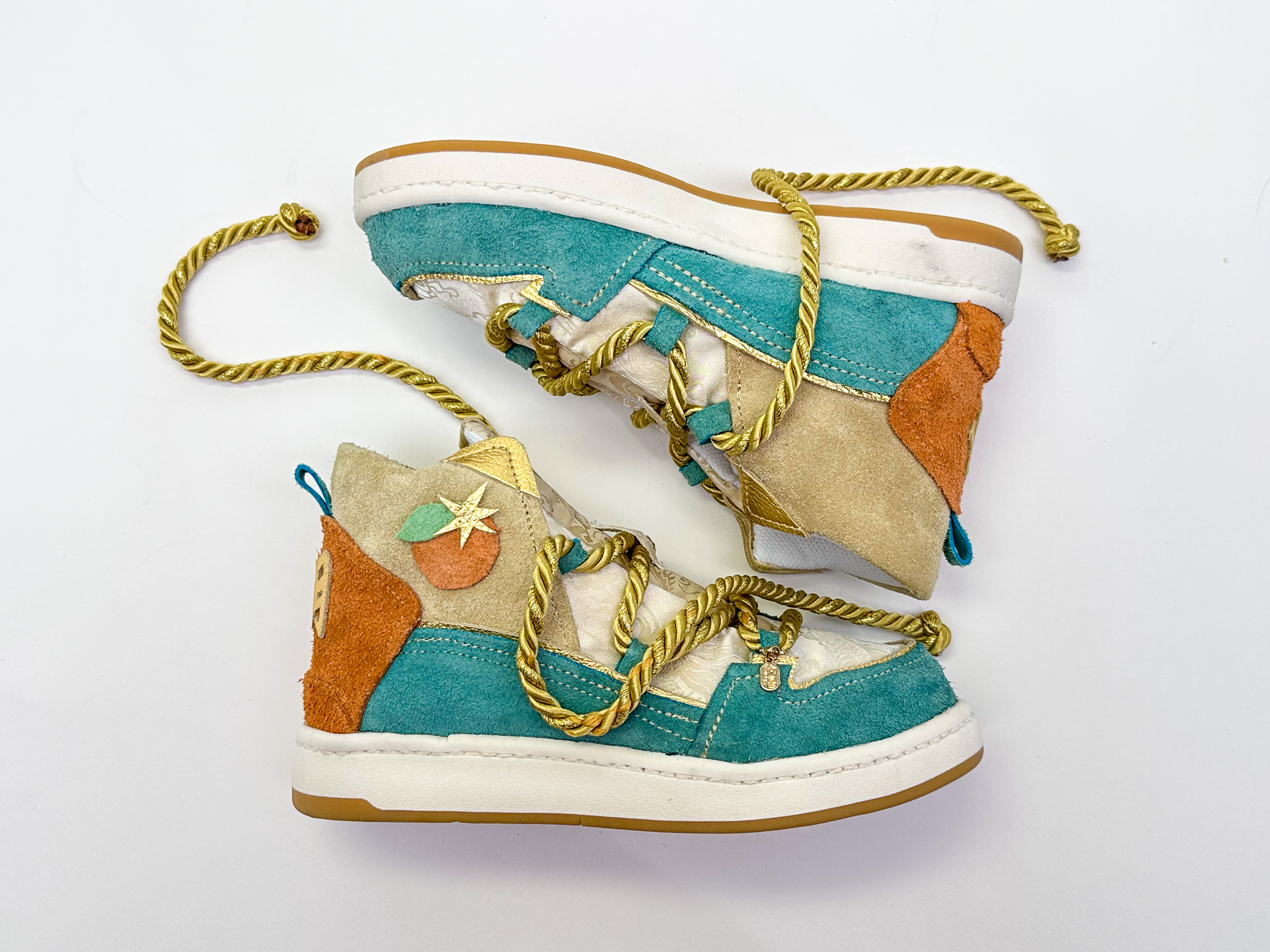
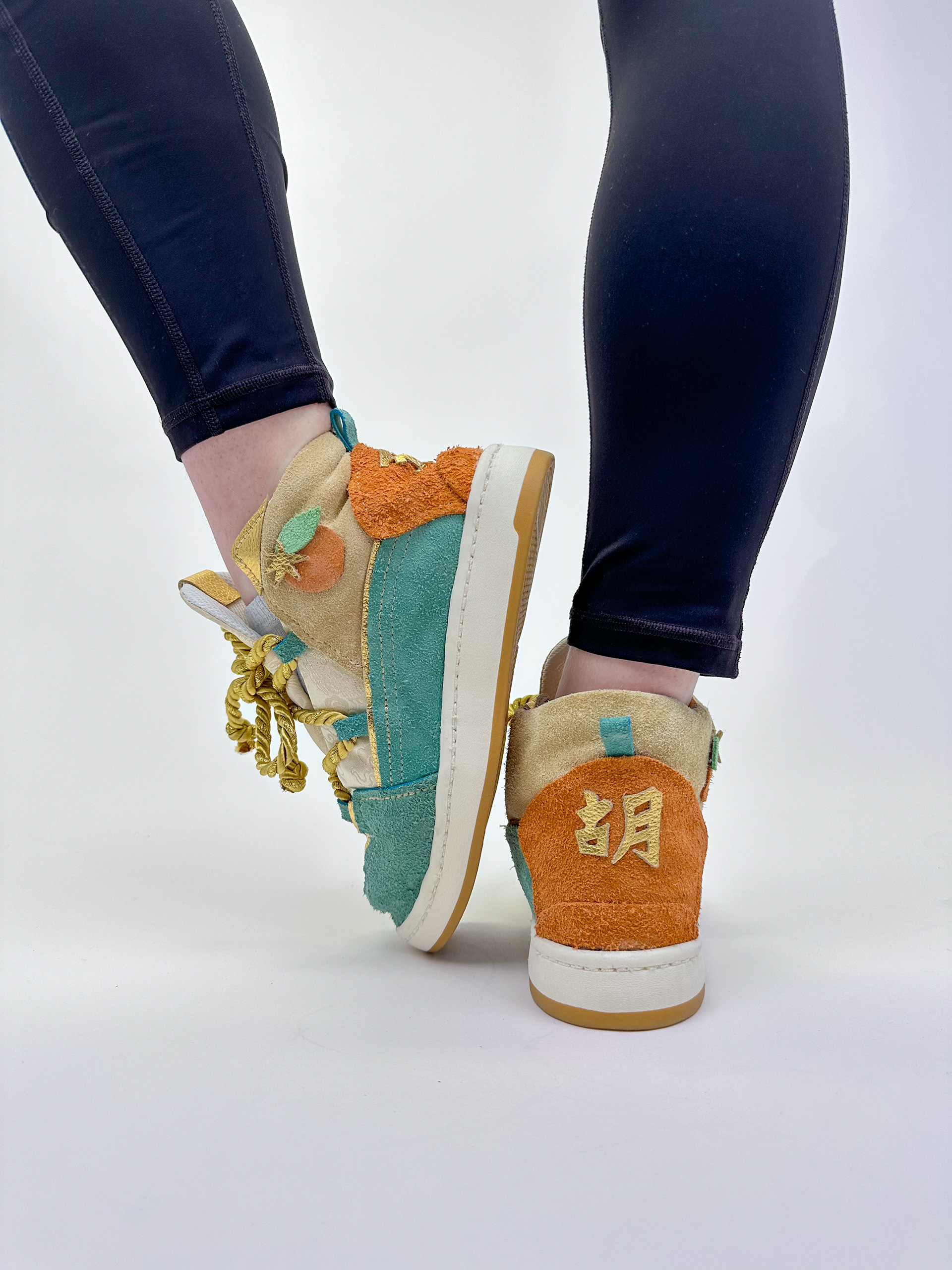
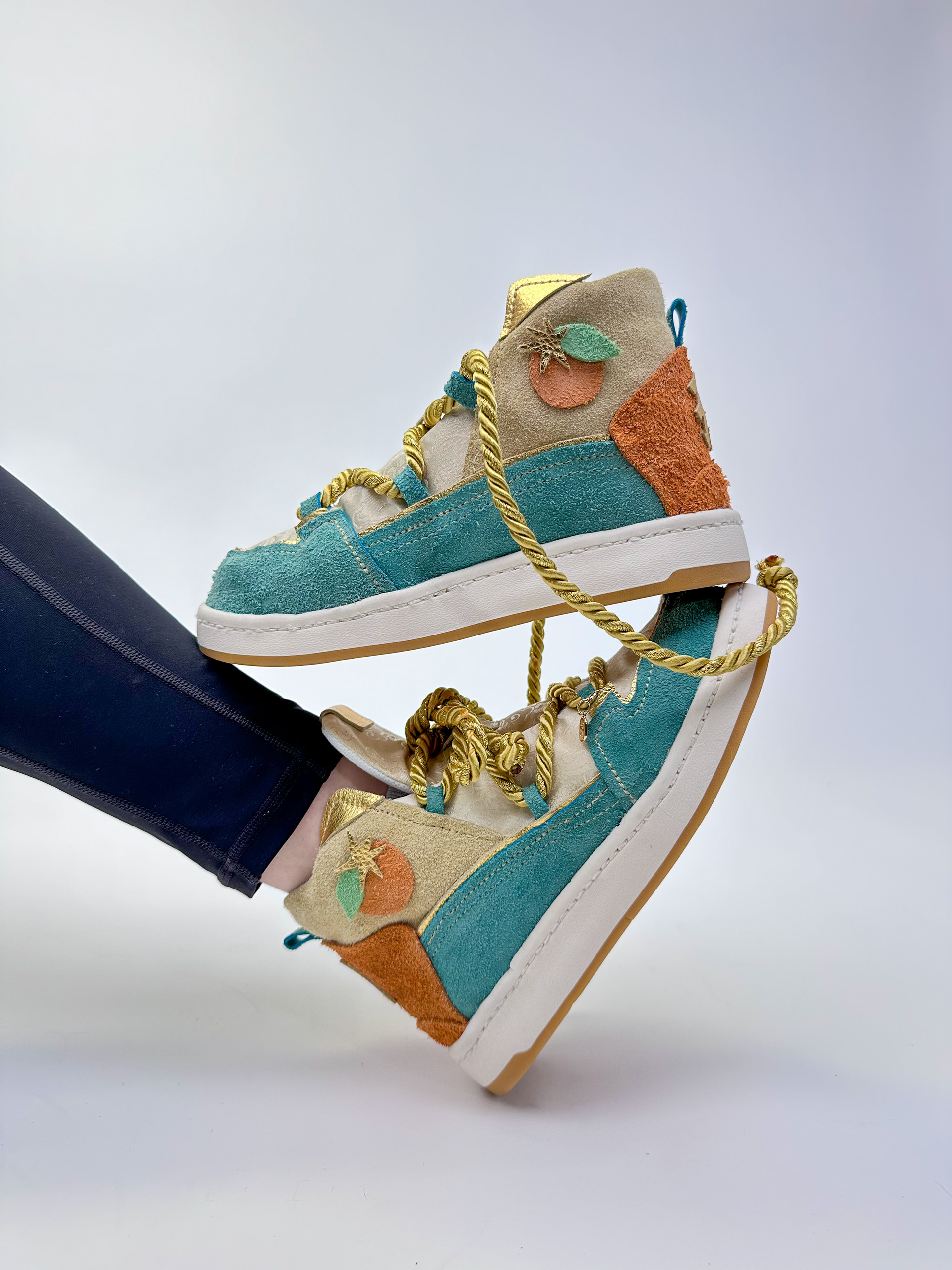
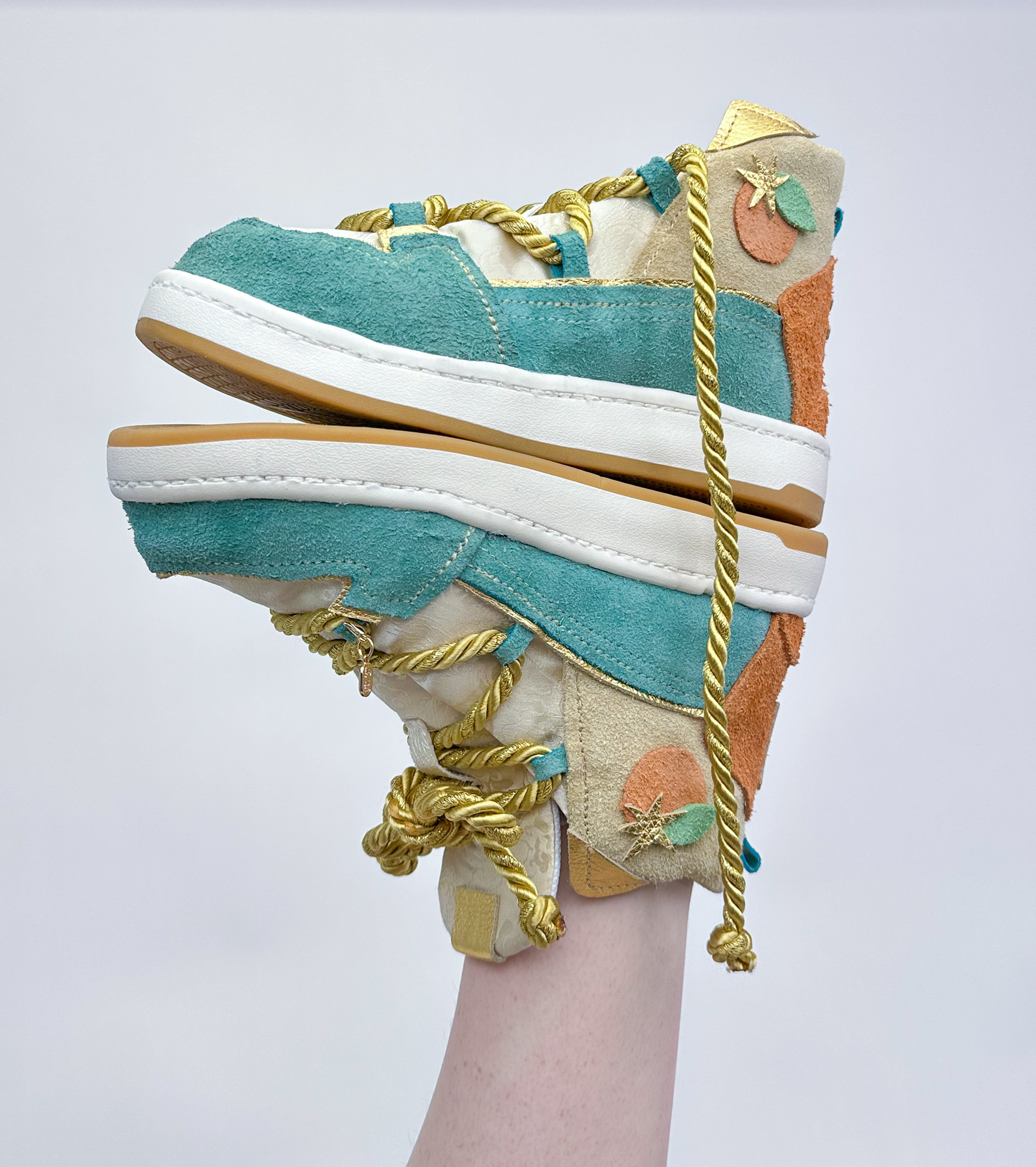
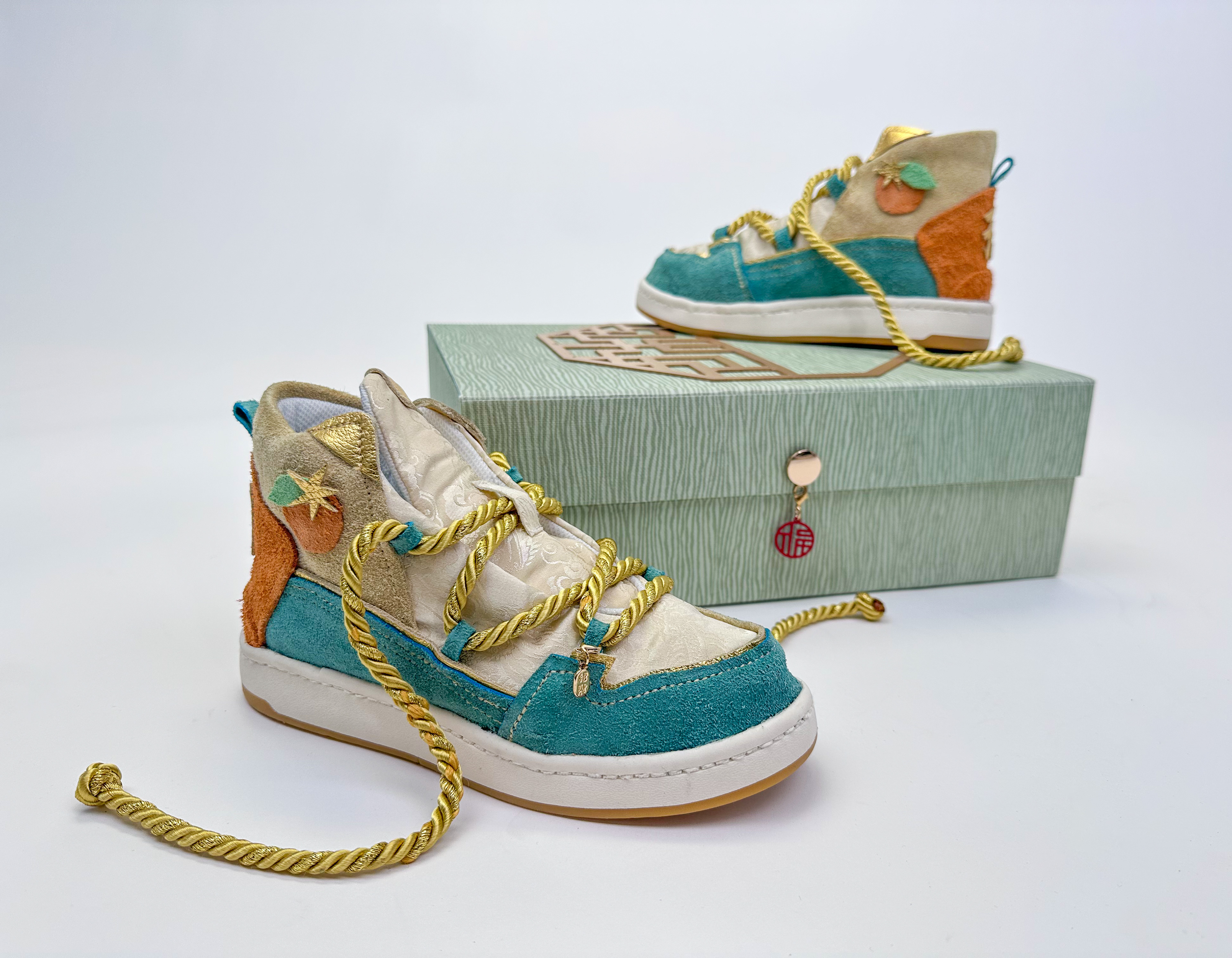
Testing & Durability
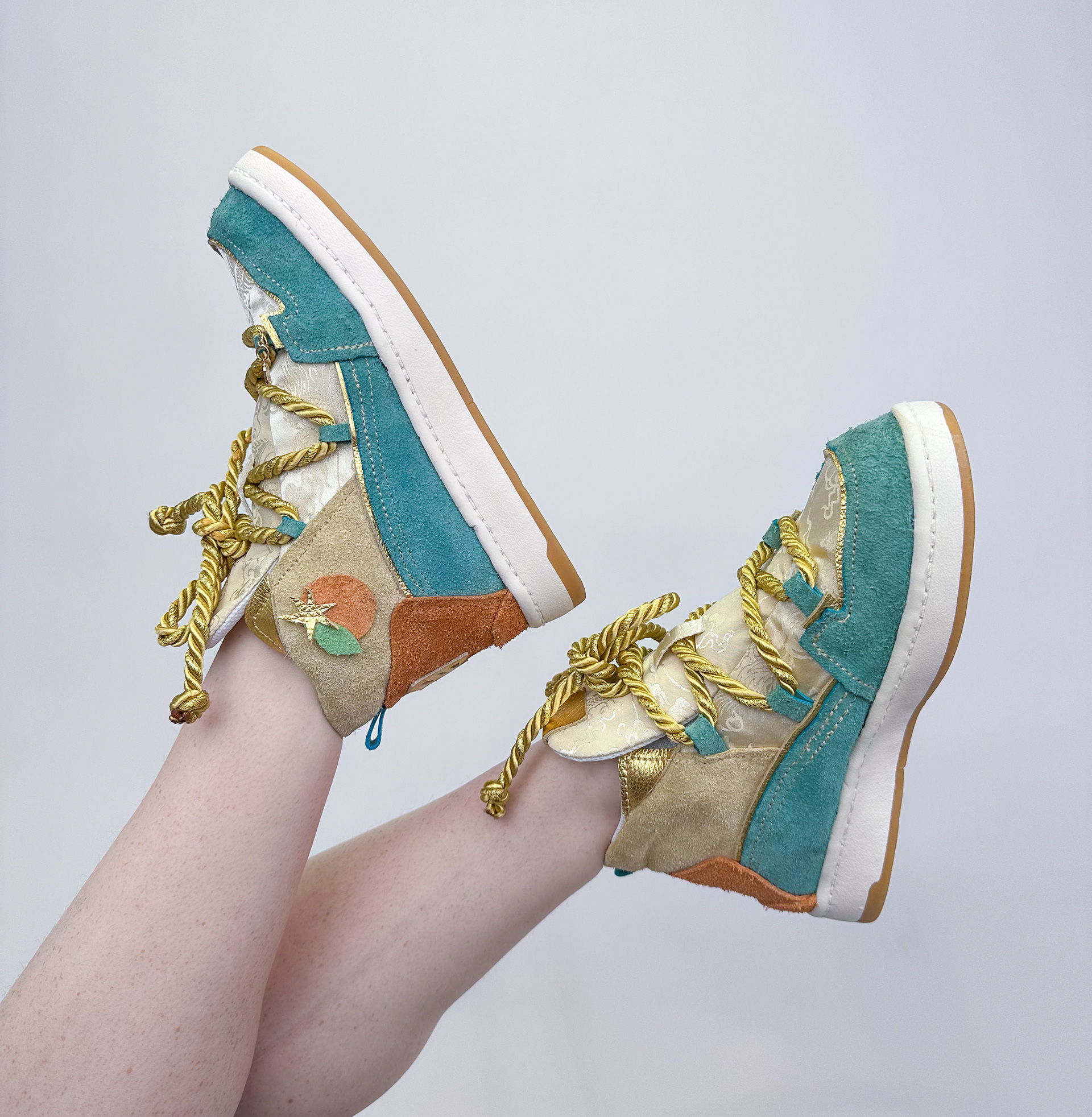
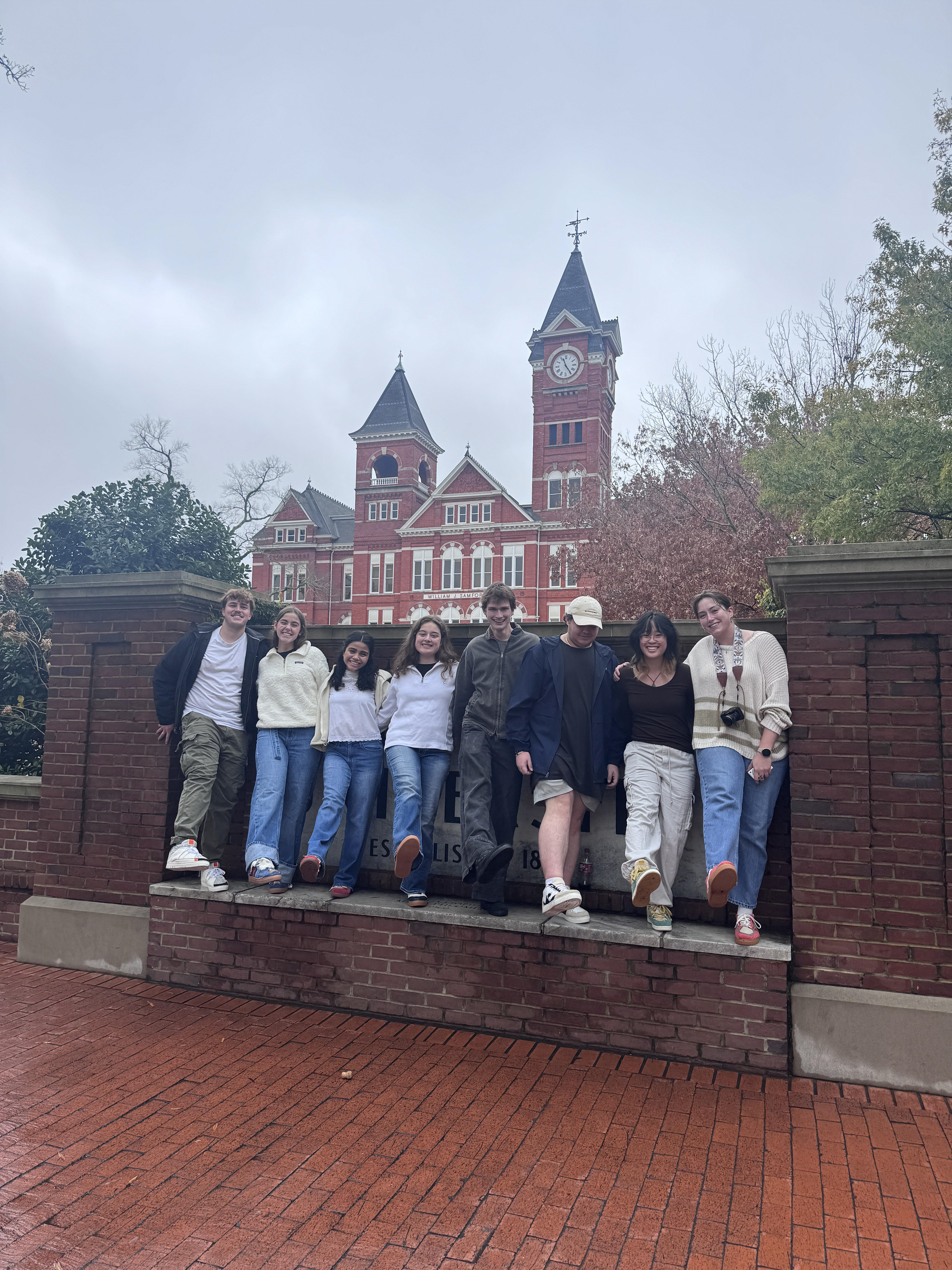
After finishing the shoes, we put them to the ultimate test: a 2-mile trek around Auburn’s campus. It rained, the grass was muddy, but the shoes returned in perfect condition. Proof that love, oranges, and good construction can really go the distance.