Initial Research
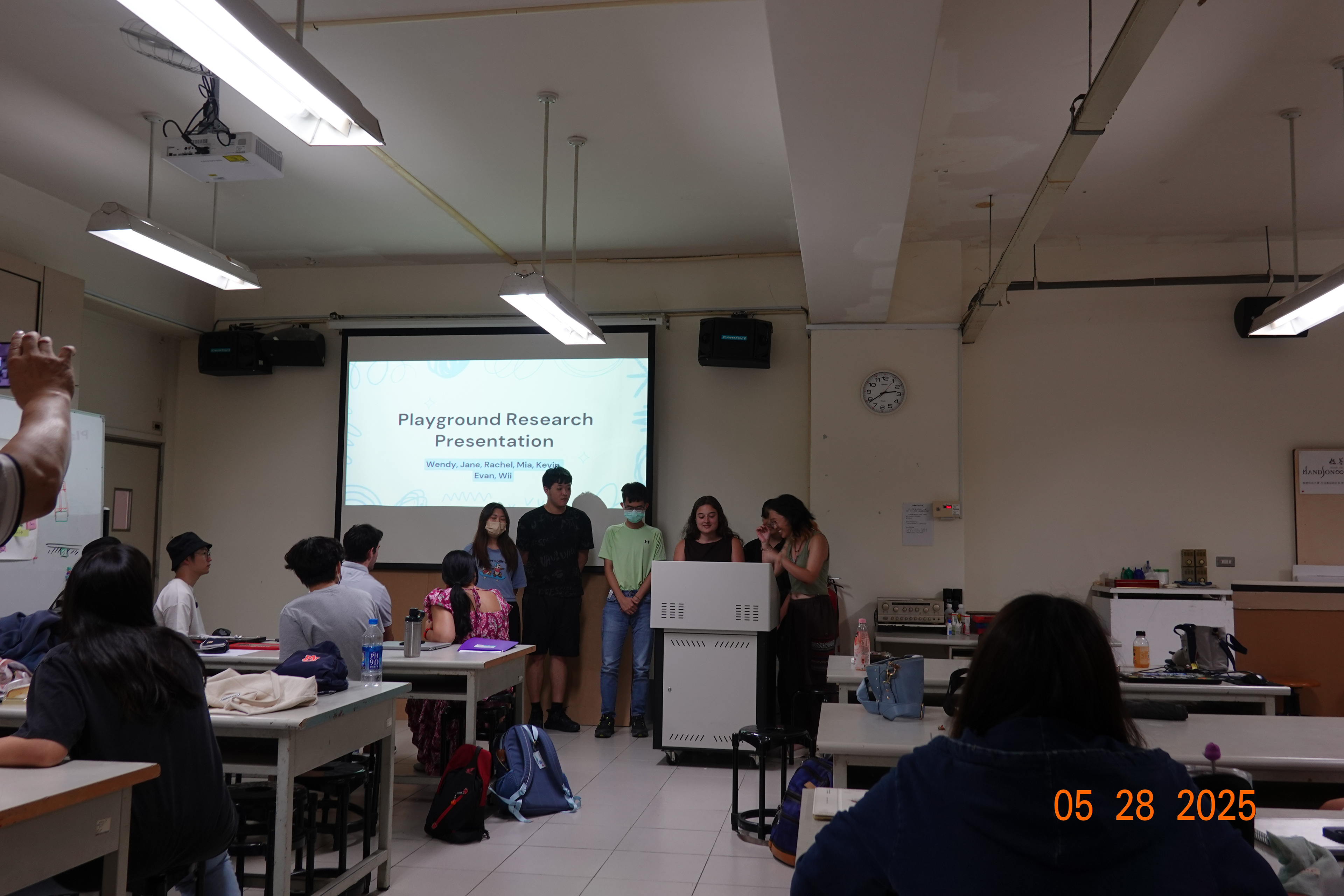
We researched how to design playgrounds that include children with disabilities and their parents, supporting social, physical, and cognitive development through open-ended, cooperative play. Environmental, cultural, and accessibility considerations guided our design from the start. Our findings were presented to our professor and class, shaping the direction of our project.
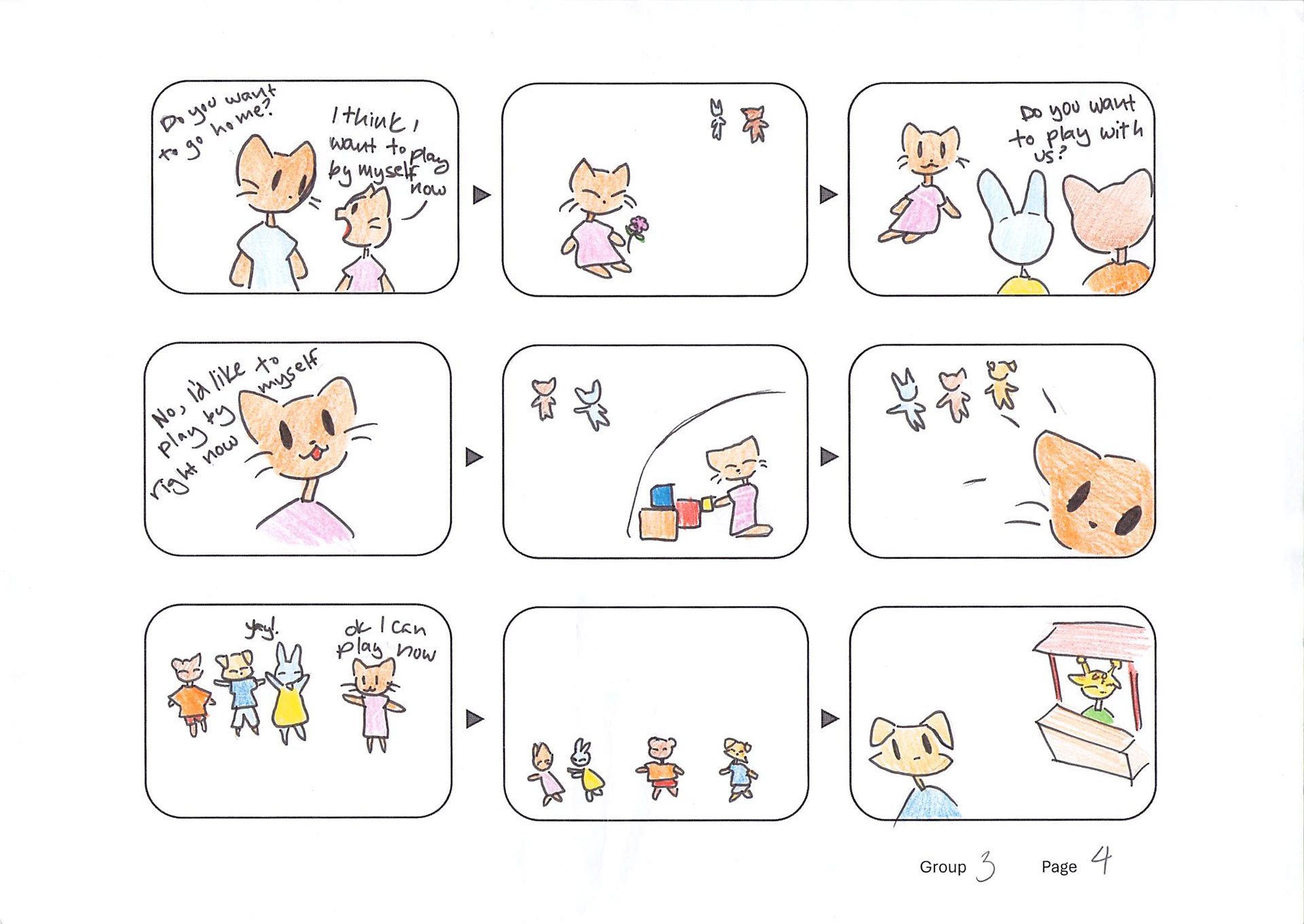
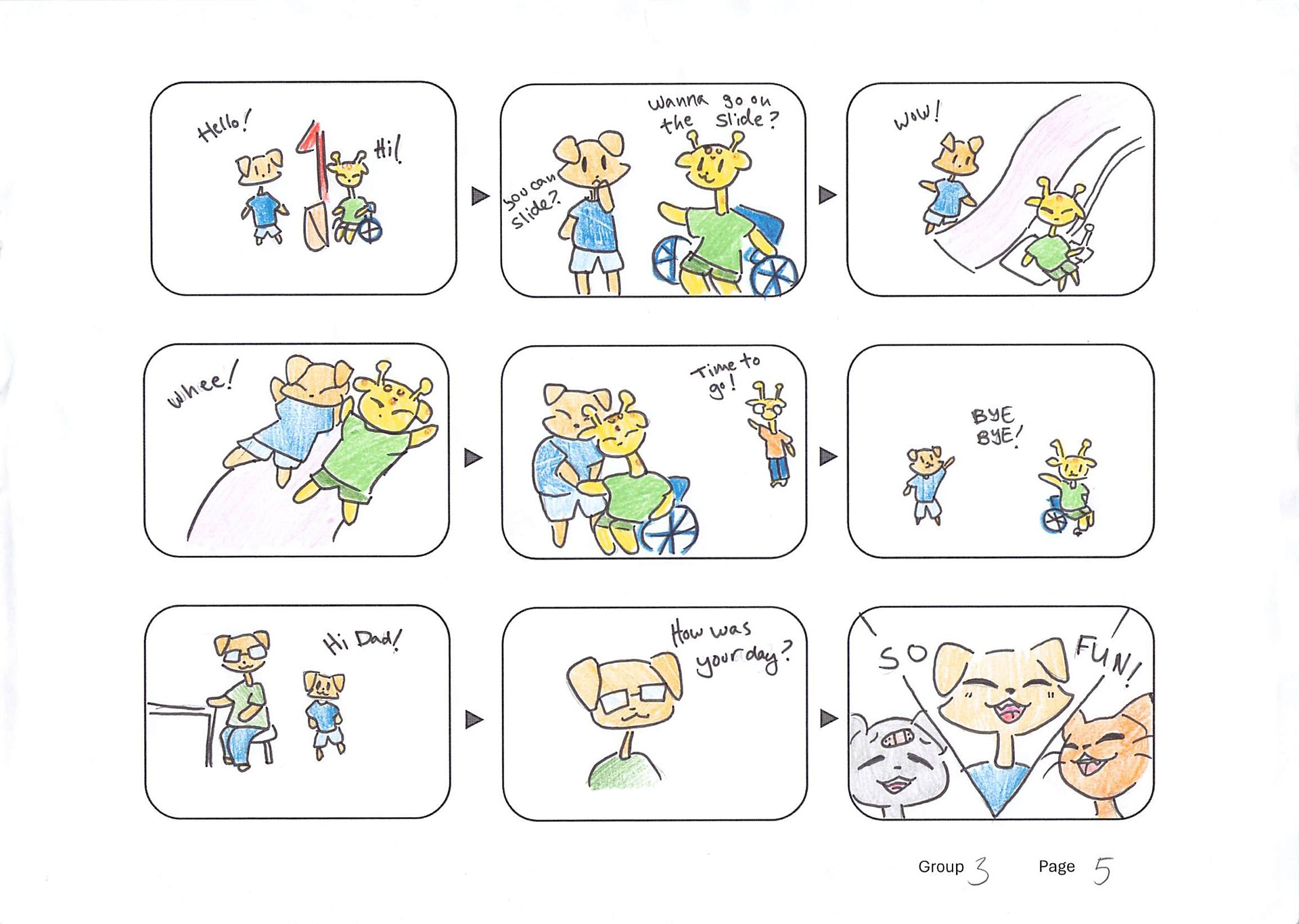
Storyboarding & Interaction Design
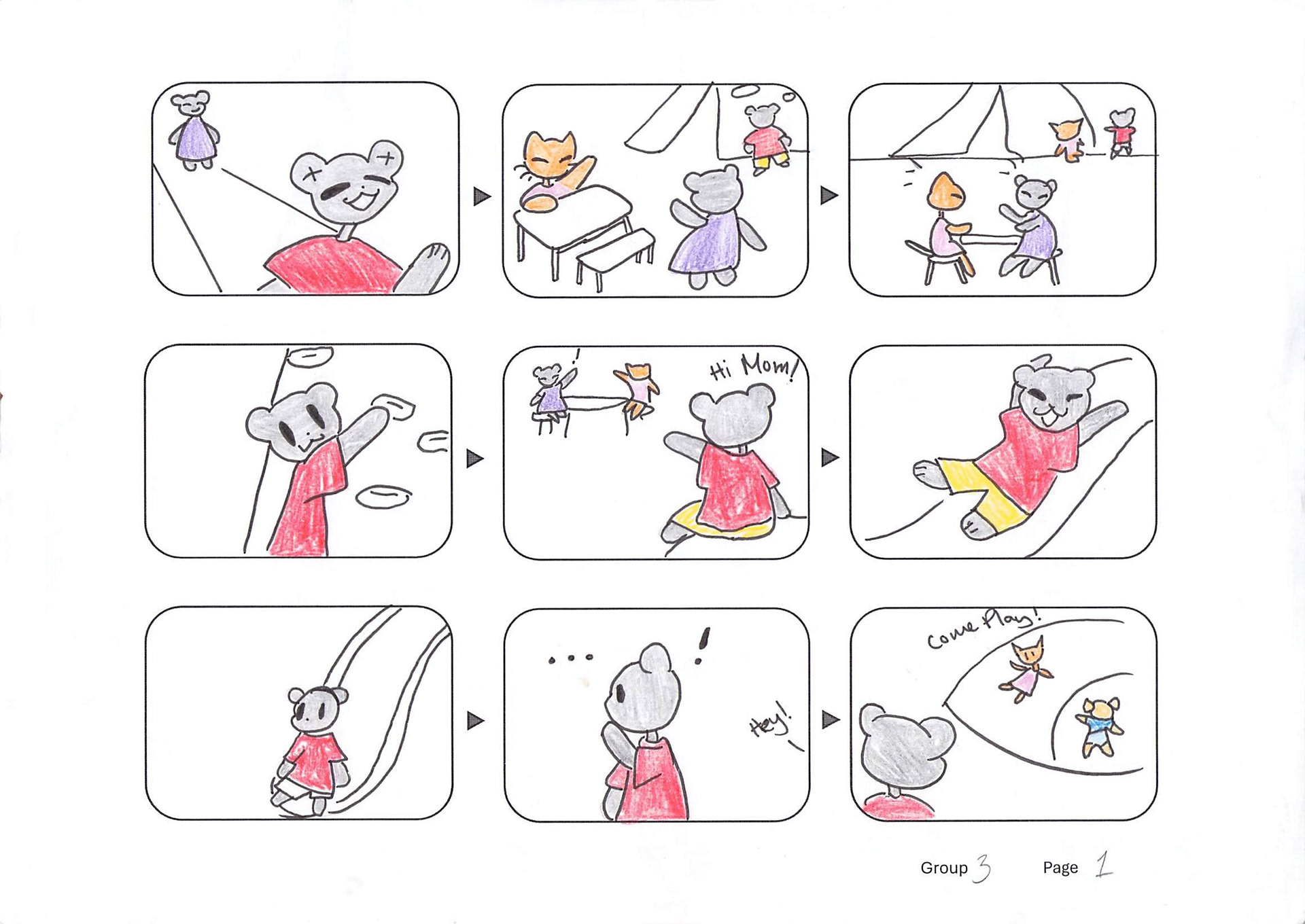
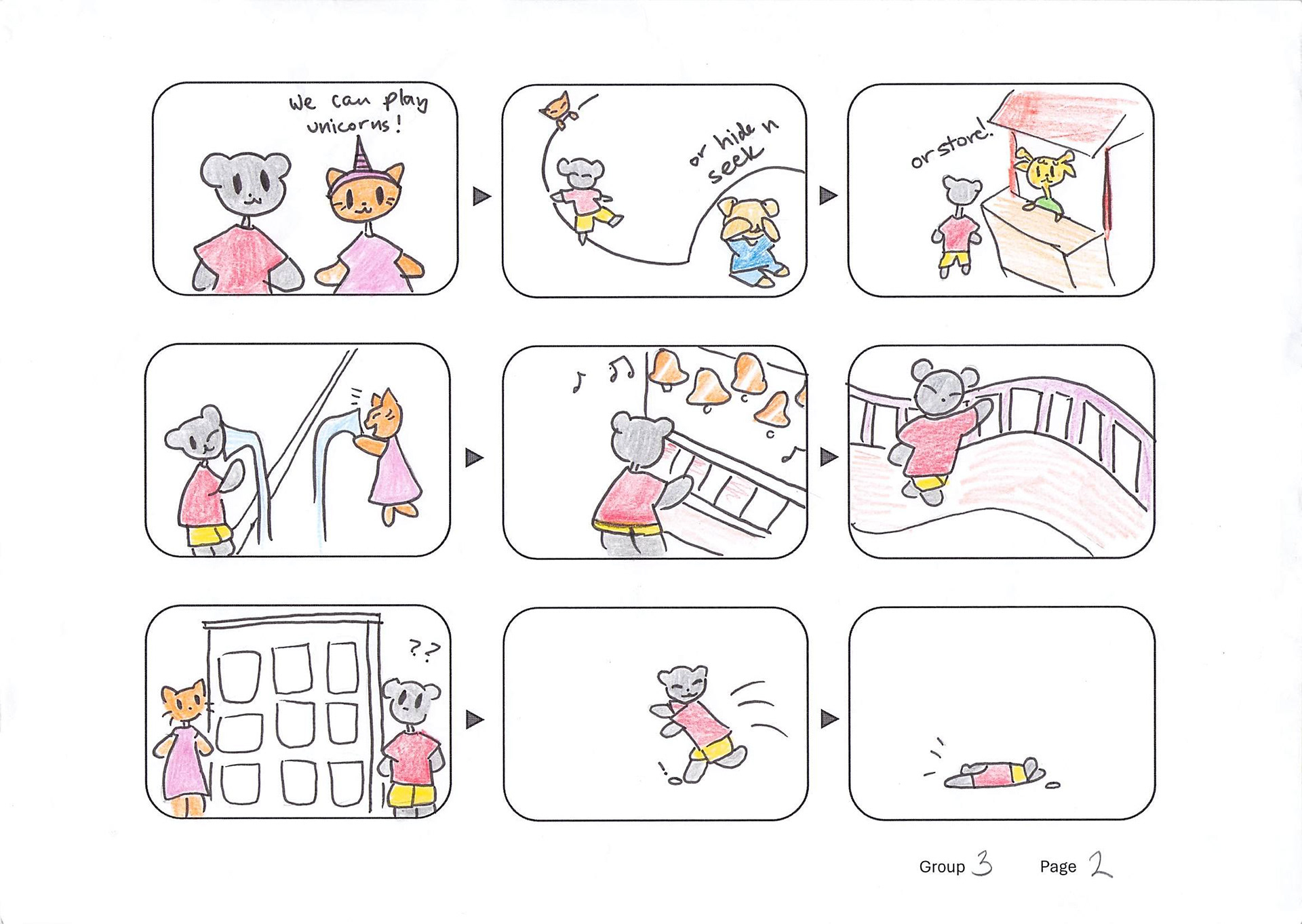
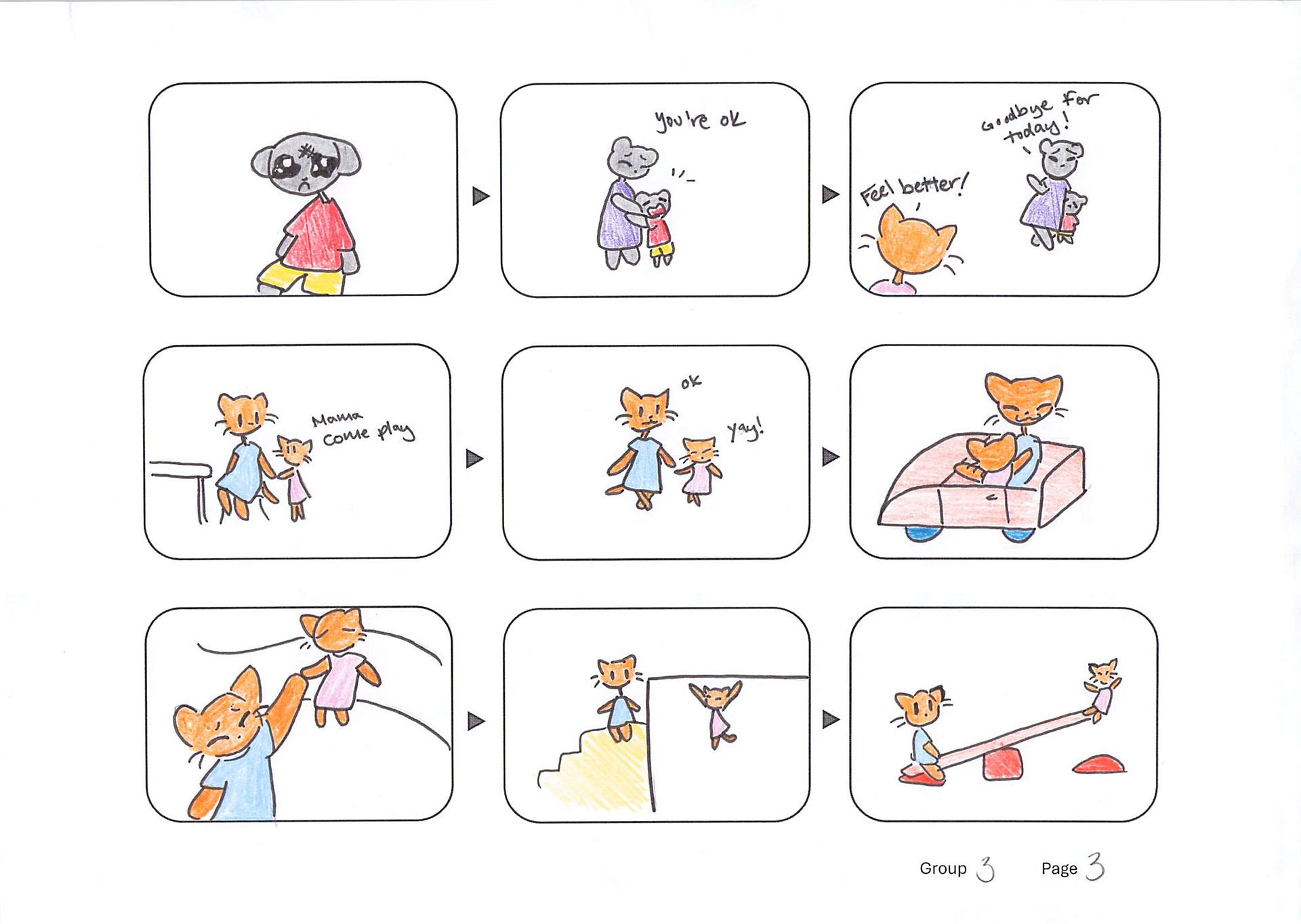
After research, we developed storyboards to explore and visualize the types of interactions we wanted from the play structure. By imagining and illustrating how children and adults would engage with different elements, we clarified design goals and informed our concepts.
Concept Development & Iteration
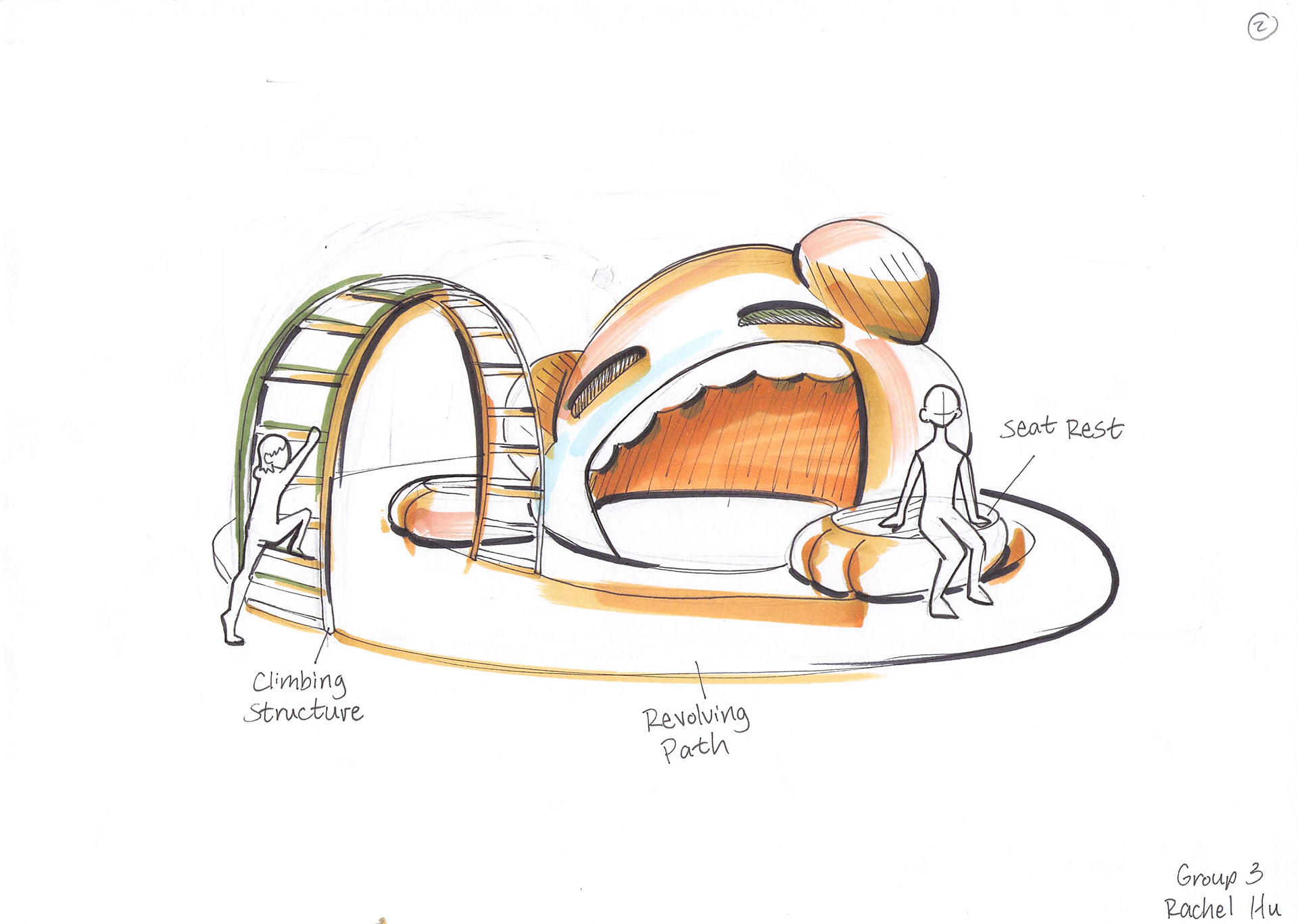
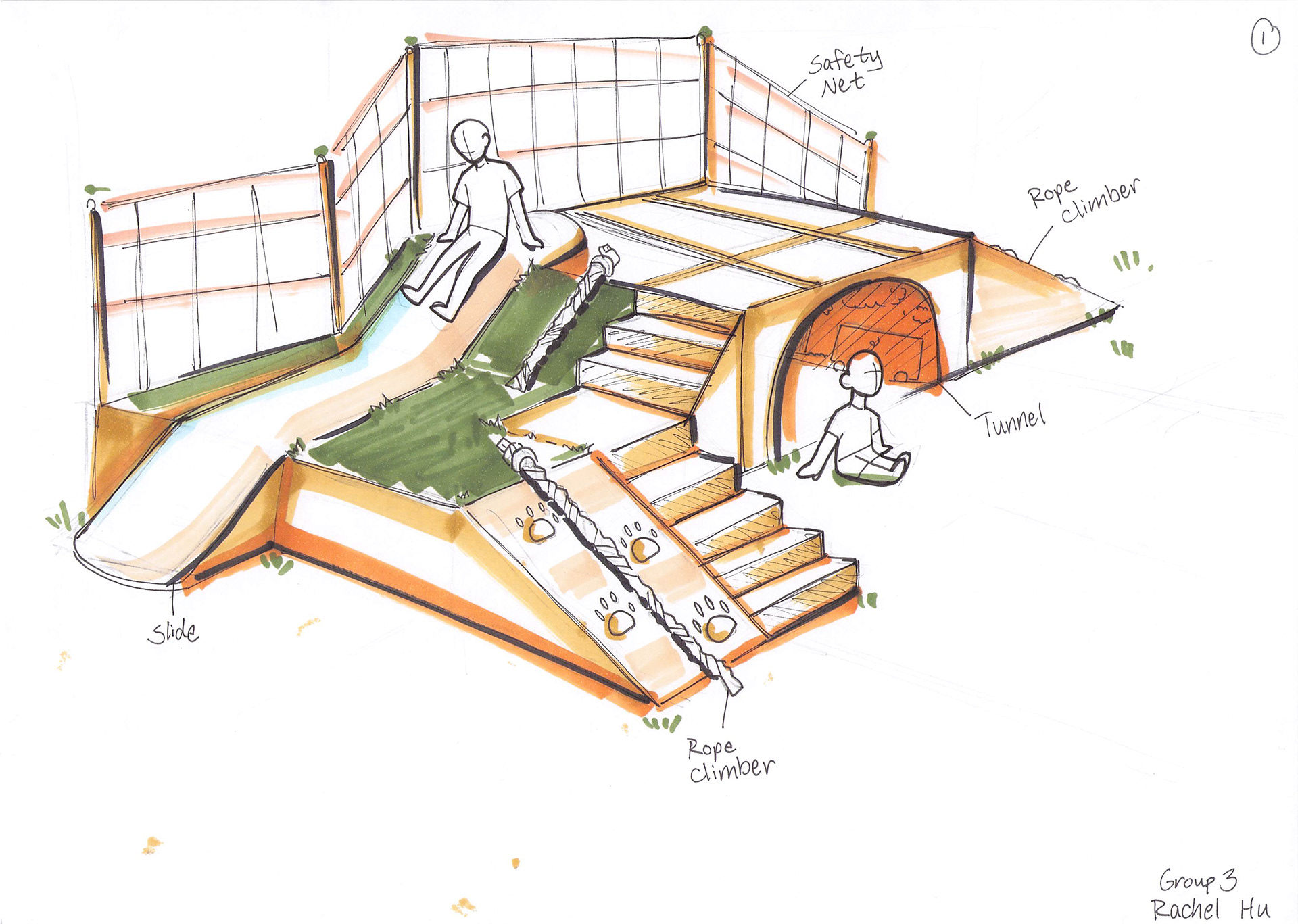
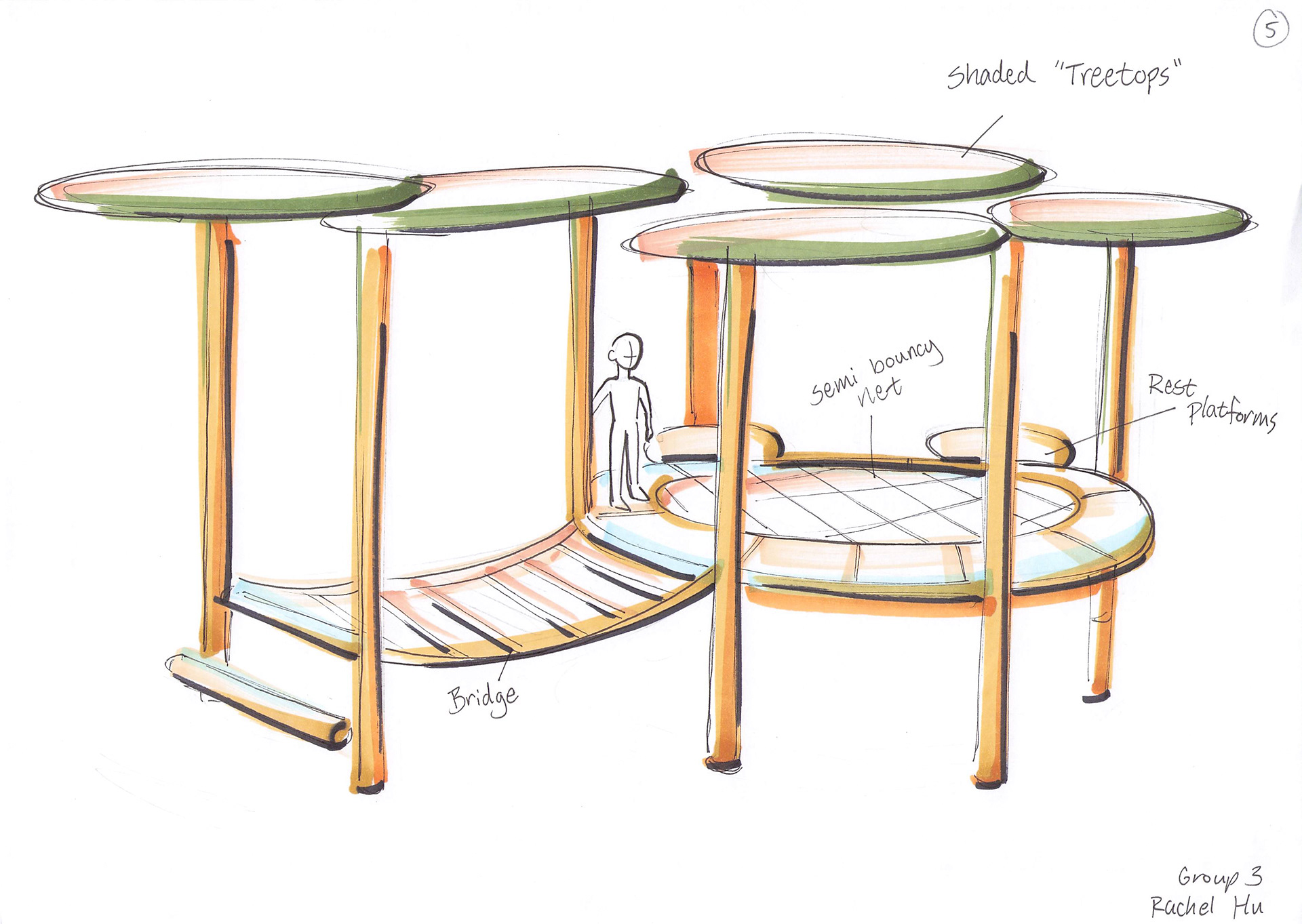
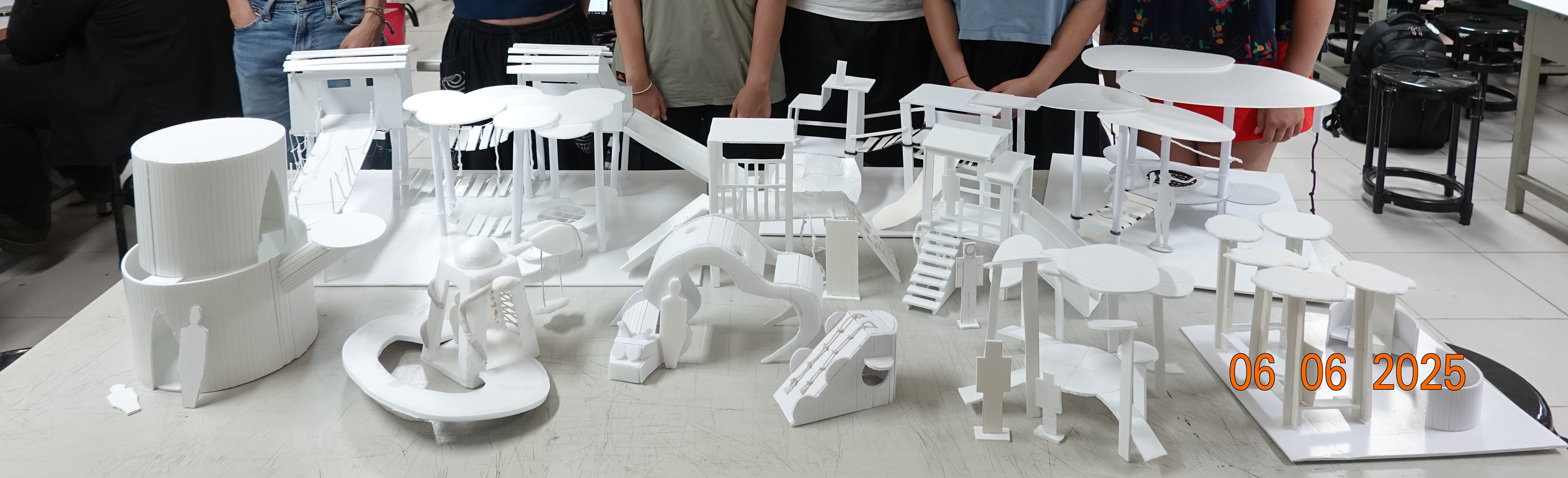
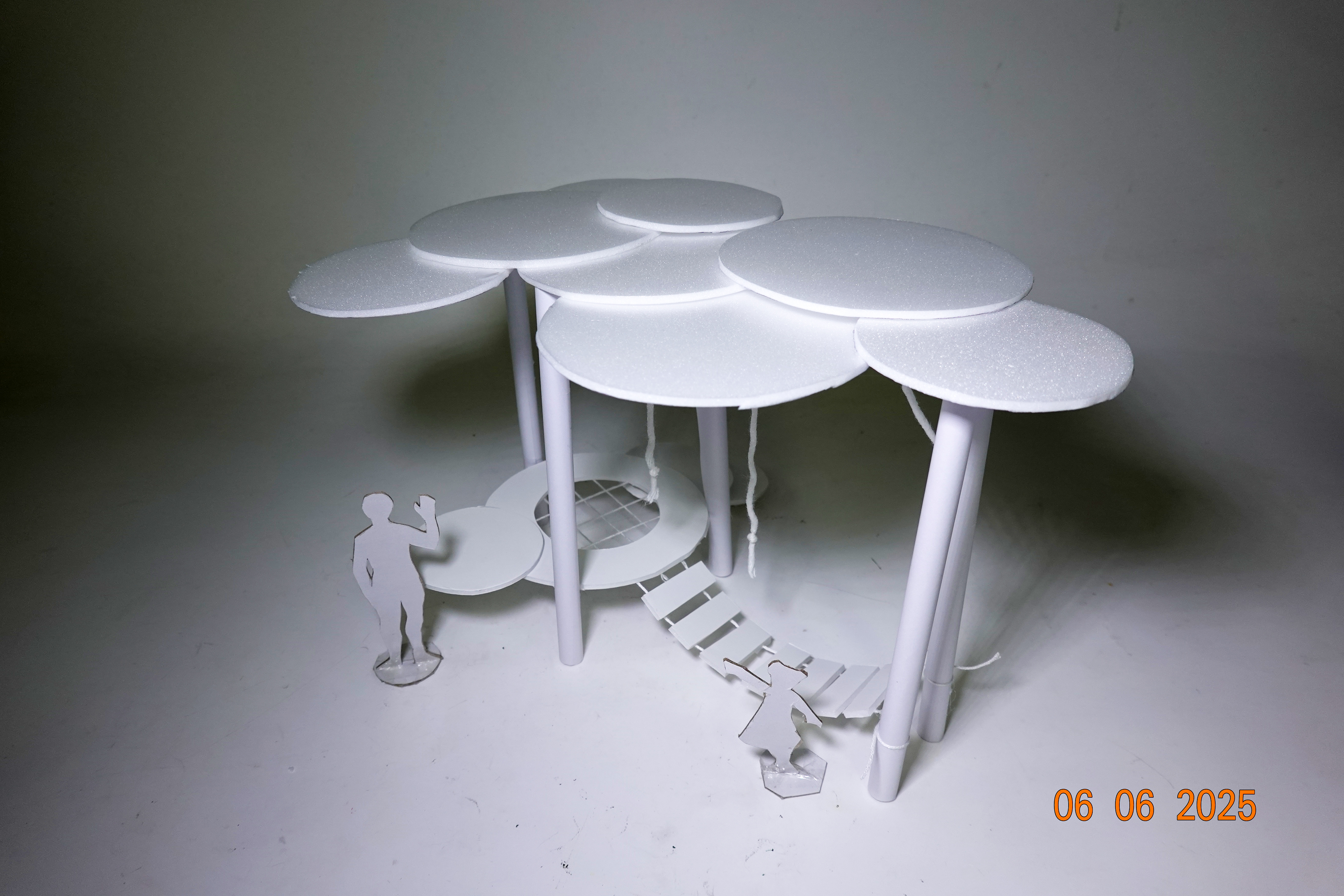
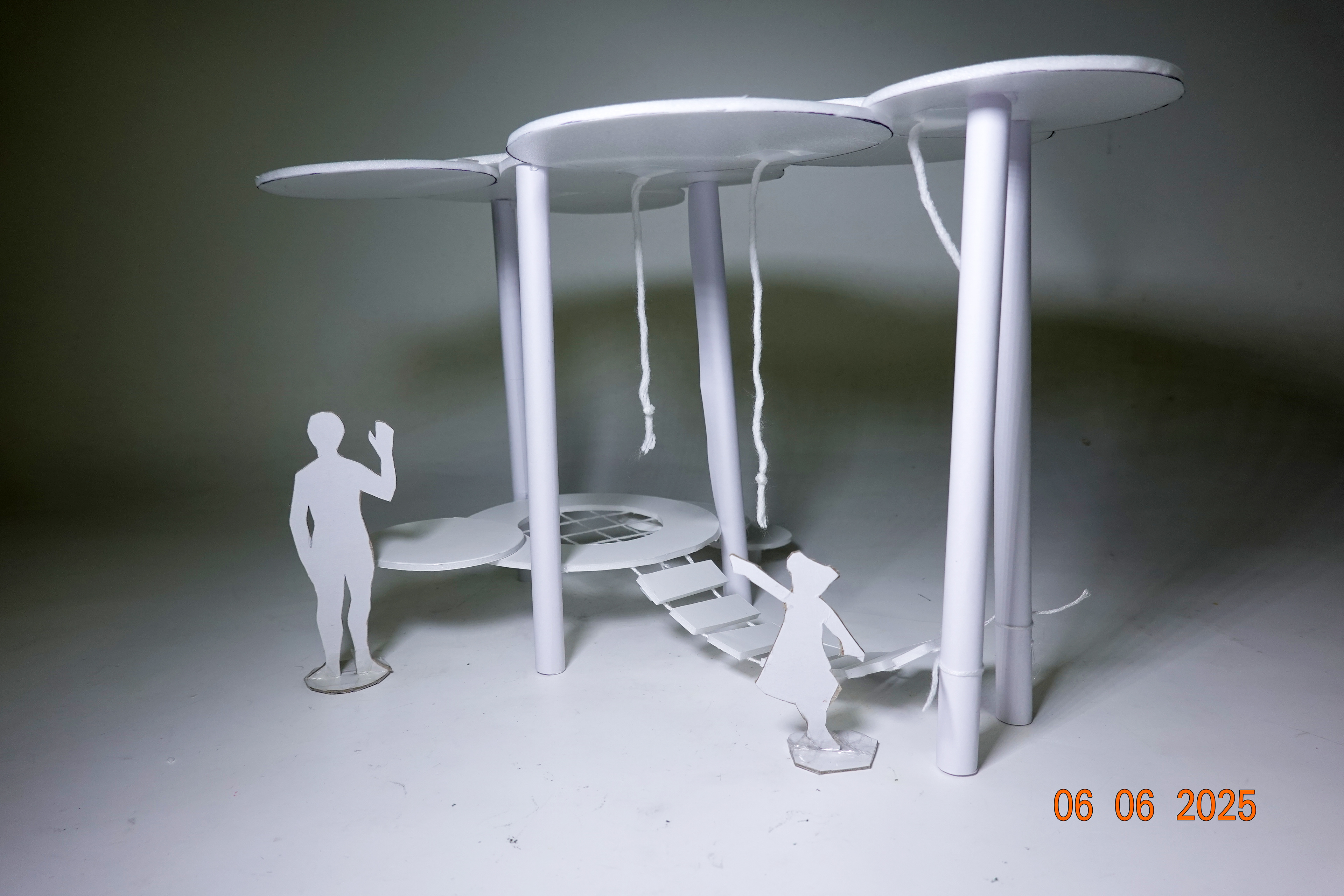
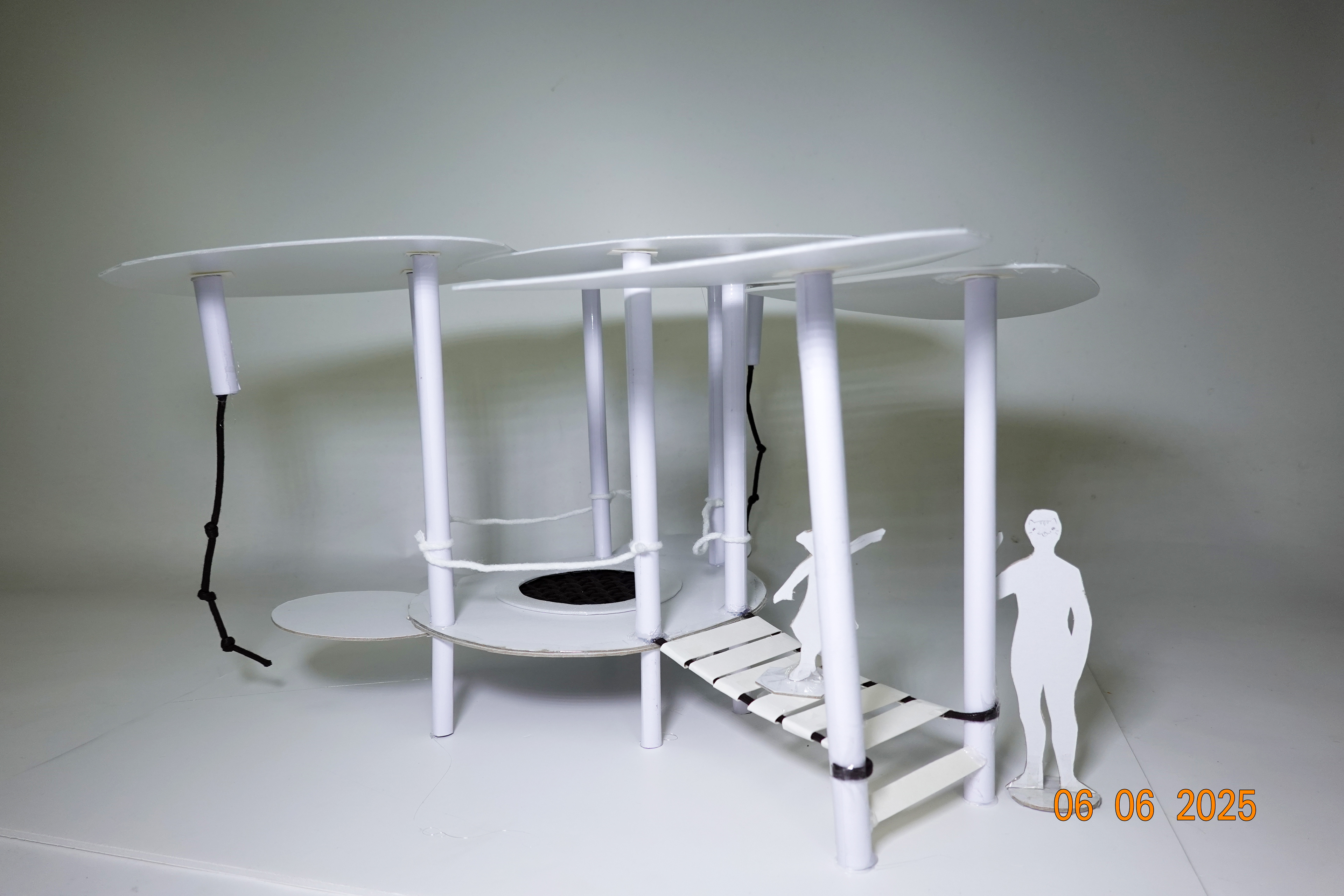
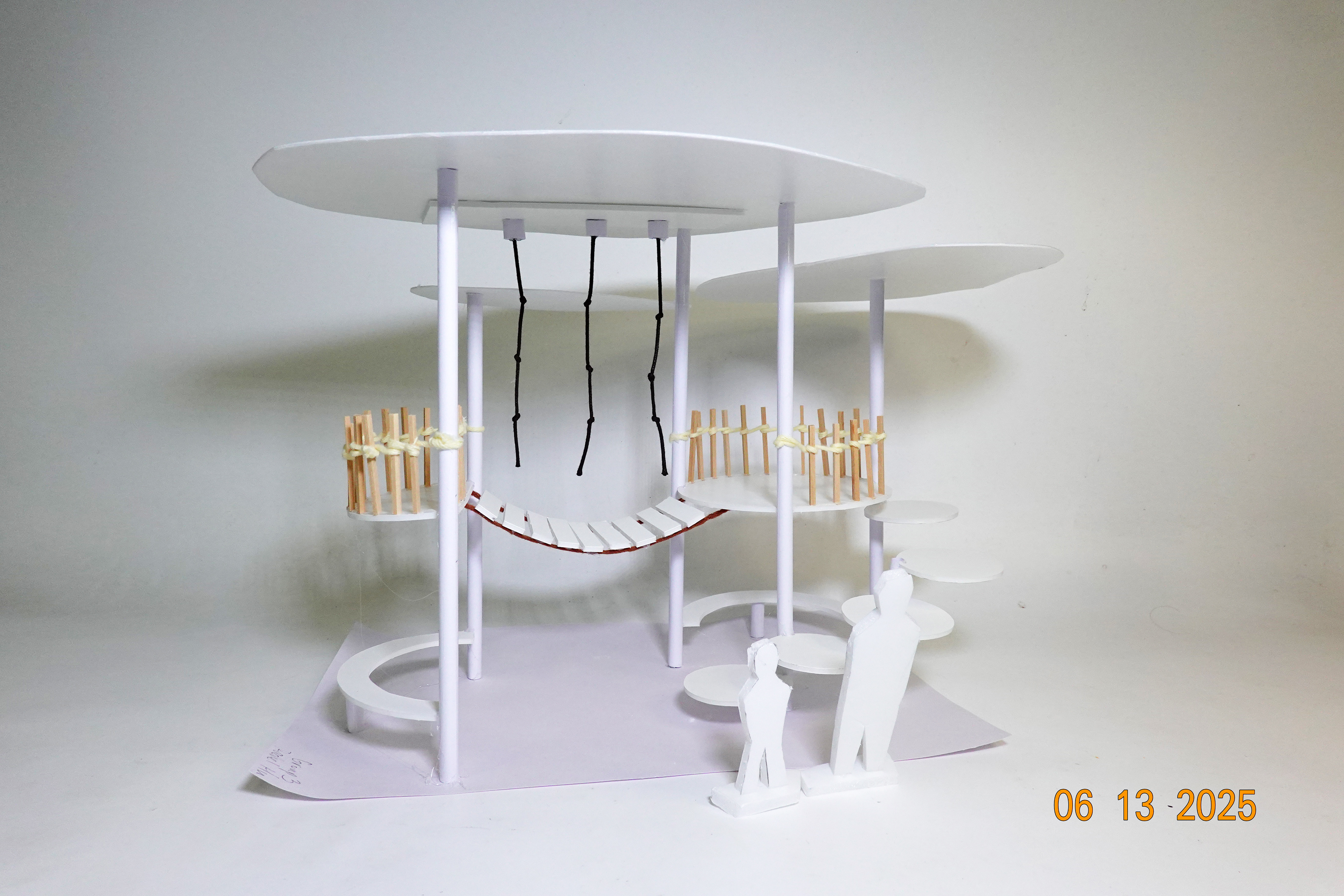
Following group brainstorming, we individually sketched and iterated on design concepts through multiple rounds of critique and discussion. After a week of analysis and scaled model-making, the final group design was developed and heavily inspired by one of my concepts.
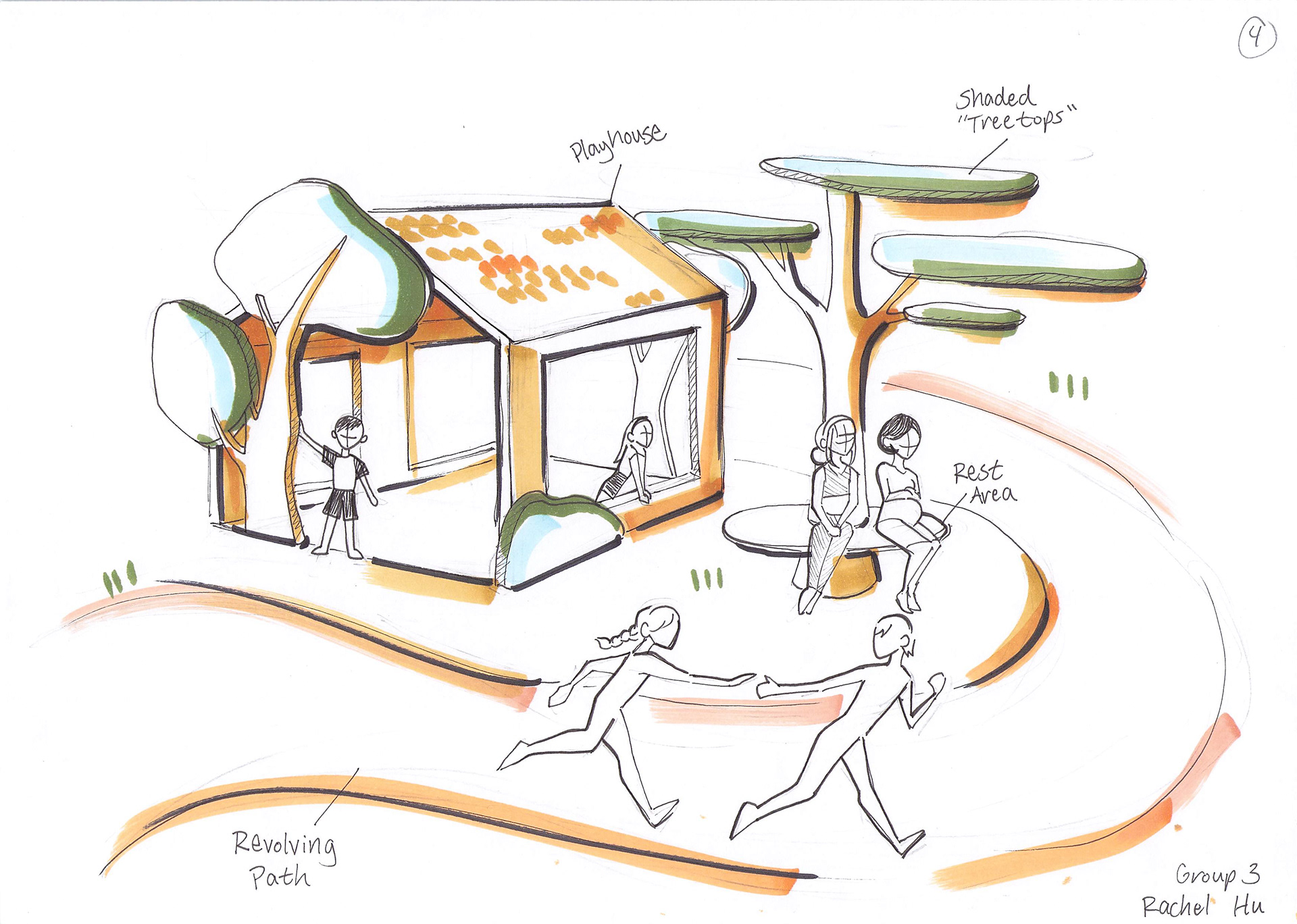
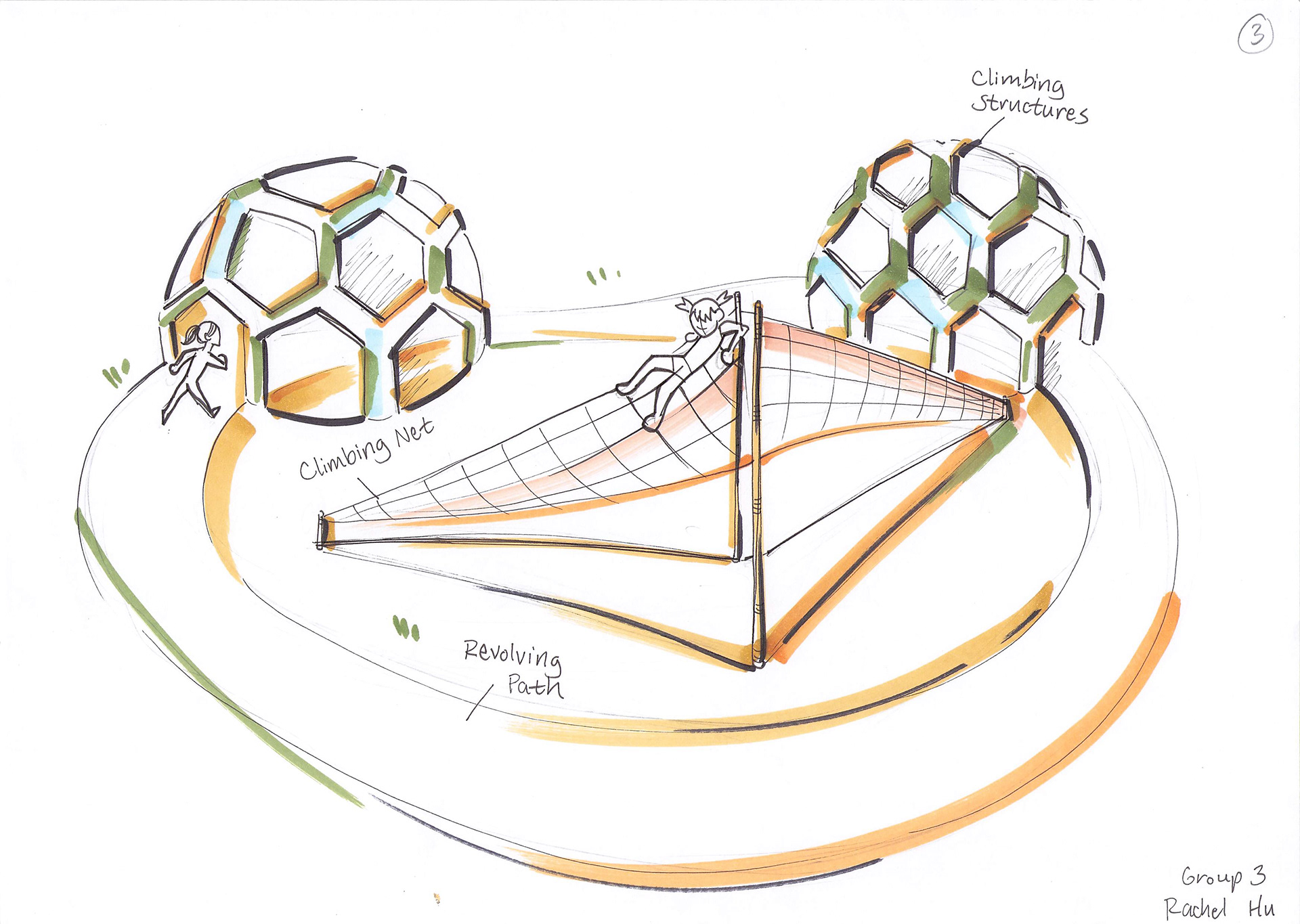
Design Development & Standards
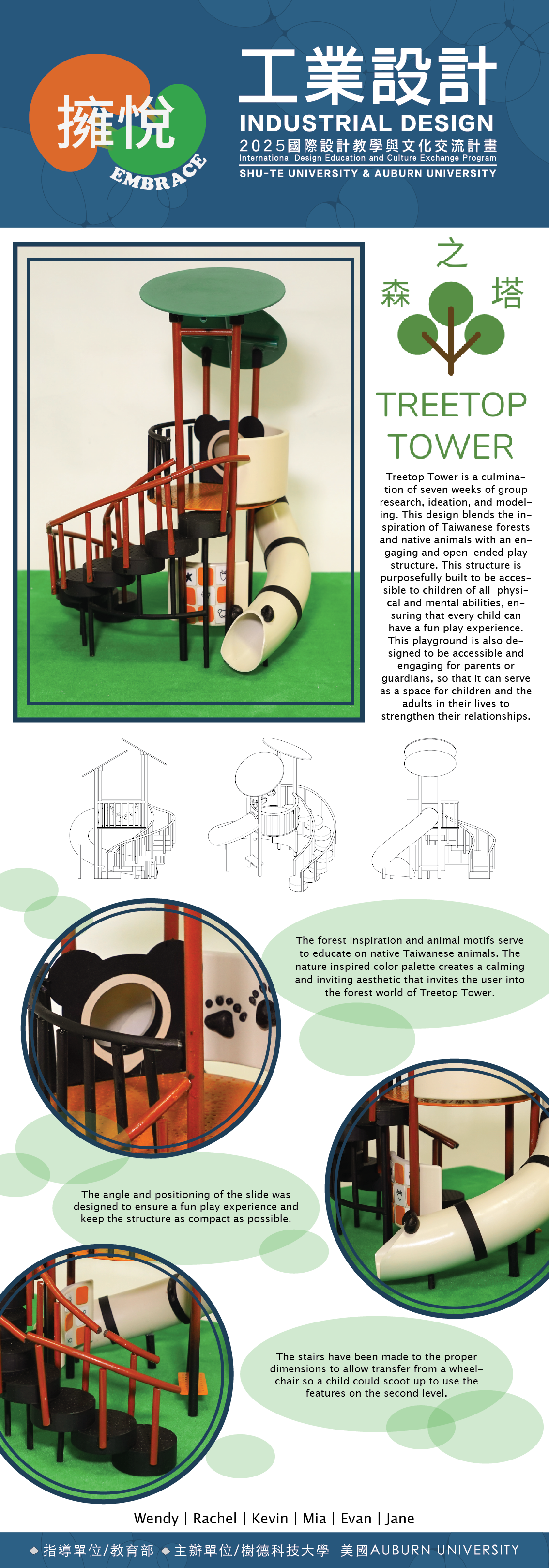
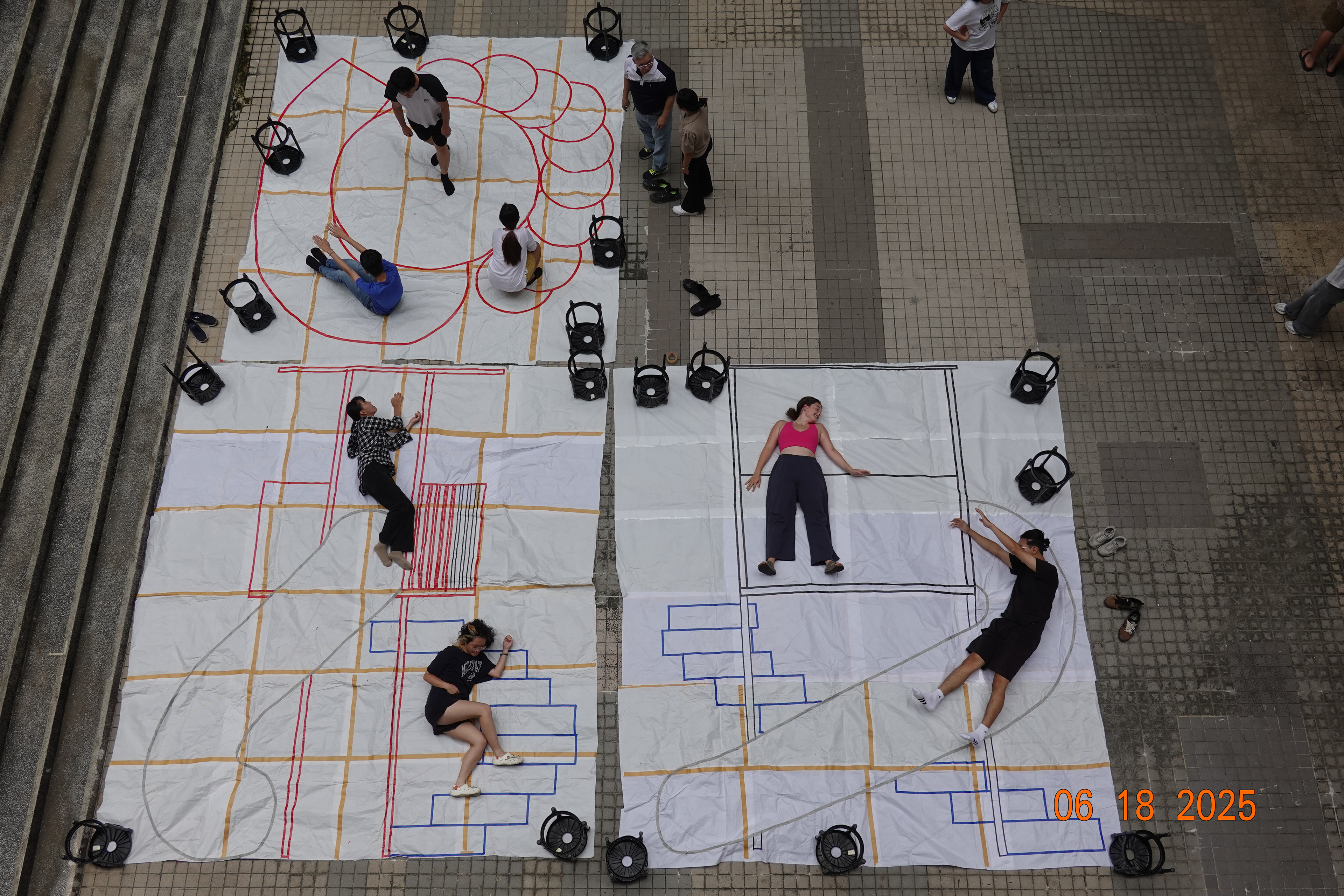
After selecting a final concept, we researched and applied playground safety and accessibility standards, including height limits and wheelchair transfer platforms, in order to refine the design. The team then produced a full-scale orthographic drawing to finalize proportions and spatial relationships.
3D Modeling
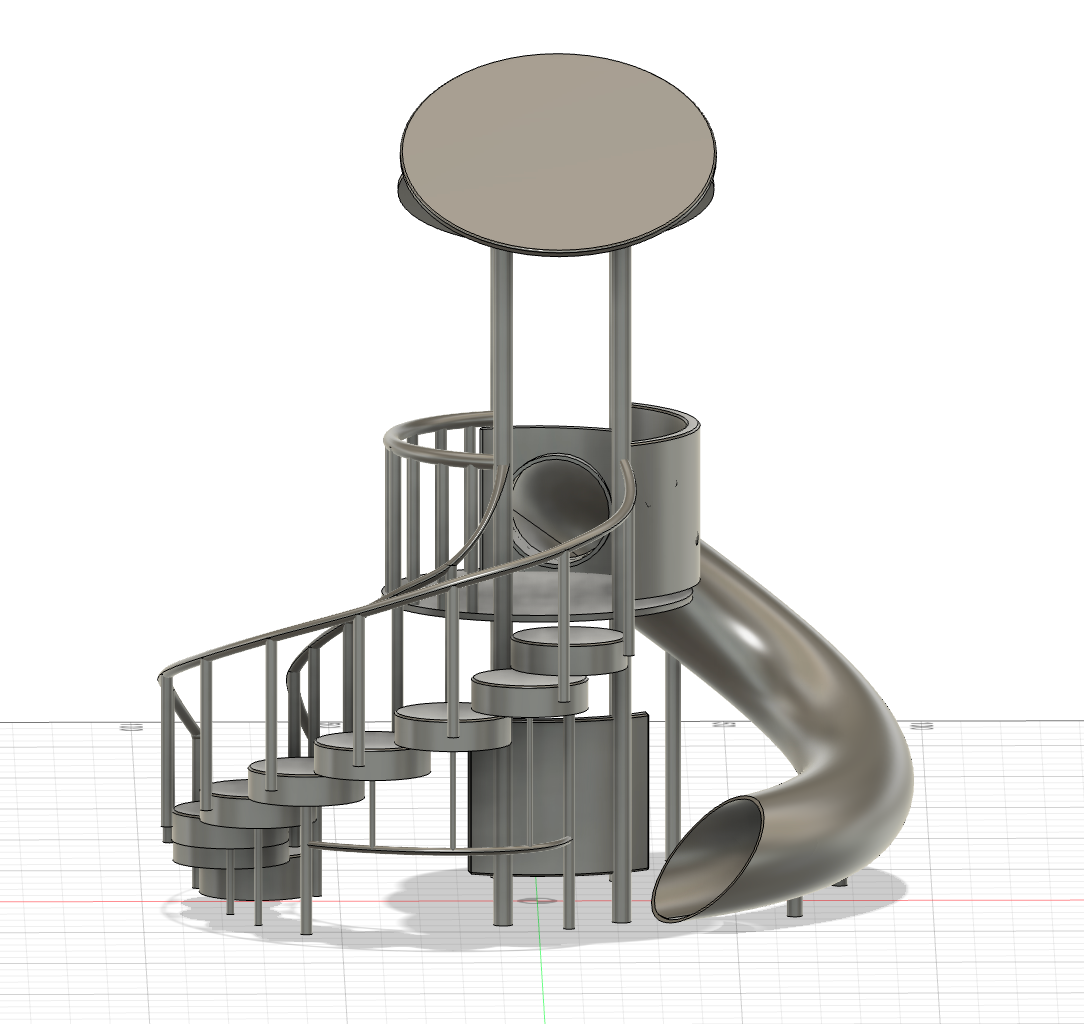
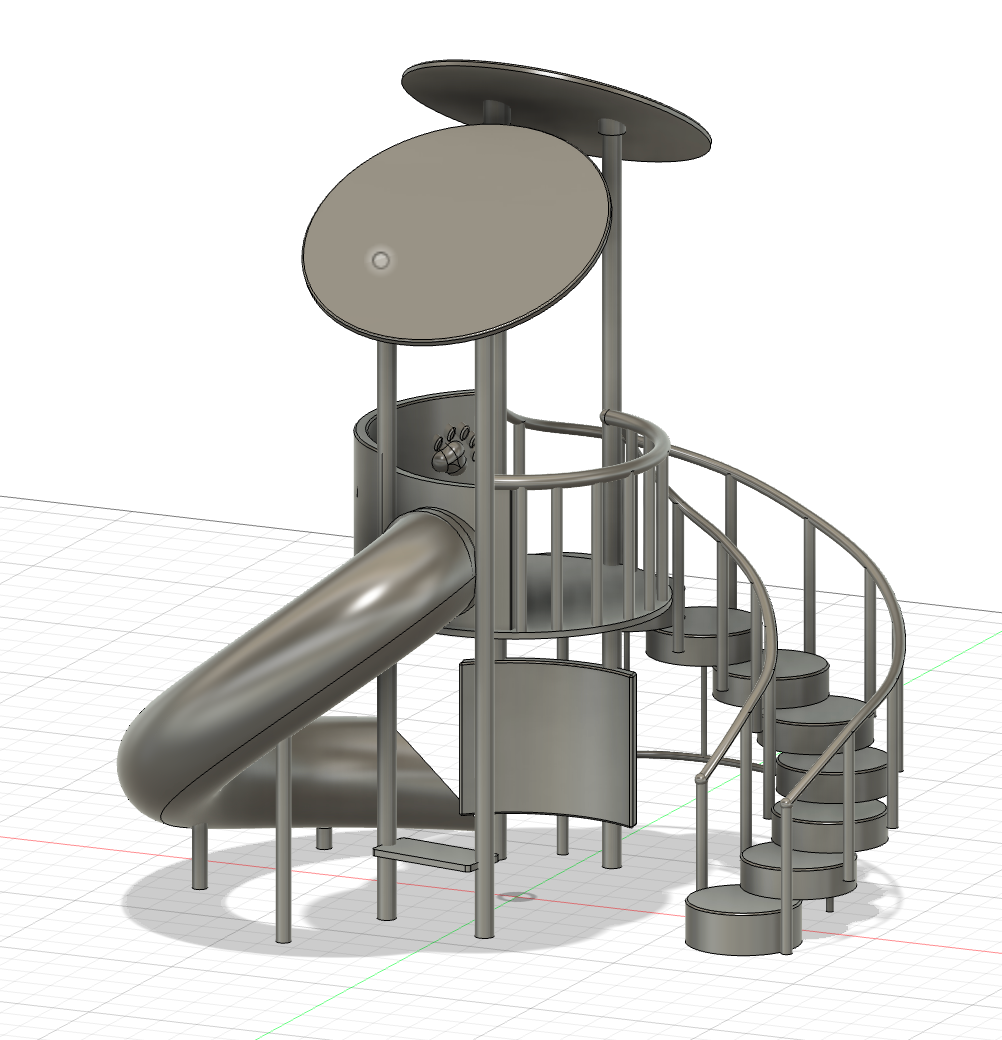
I then used Fusion 360 to create a detailed, scaled 3D model of the play structure to better understand proportions, dimensions, and spatial relationships. This digital model allowed my group to evaluate accessibility, circulation, and user scale, helping refine the design before final presentation.
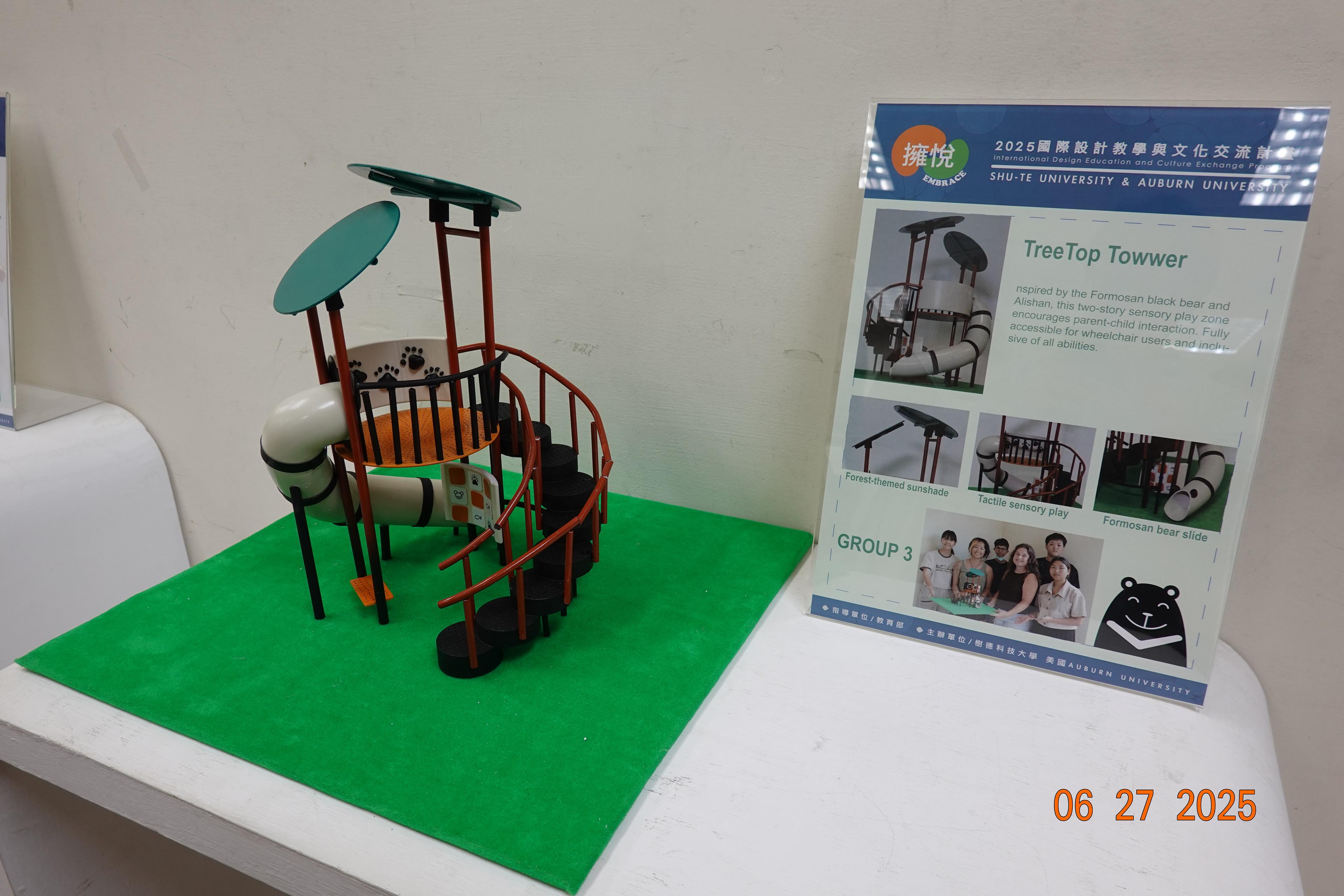
Teamwork & Final Model
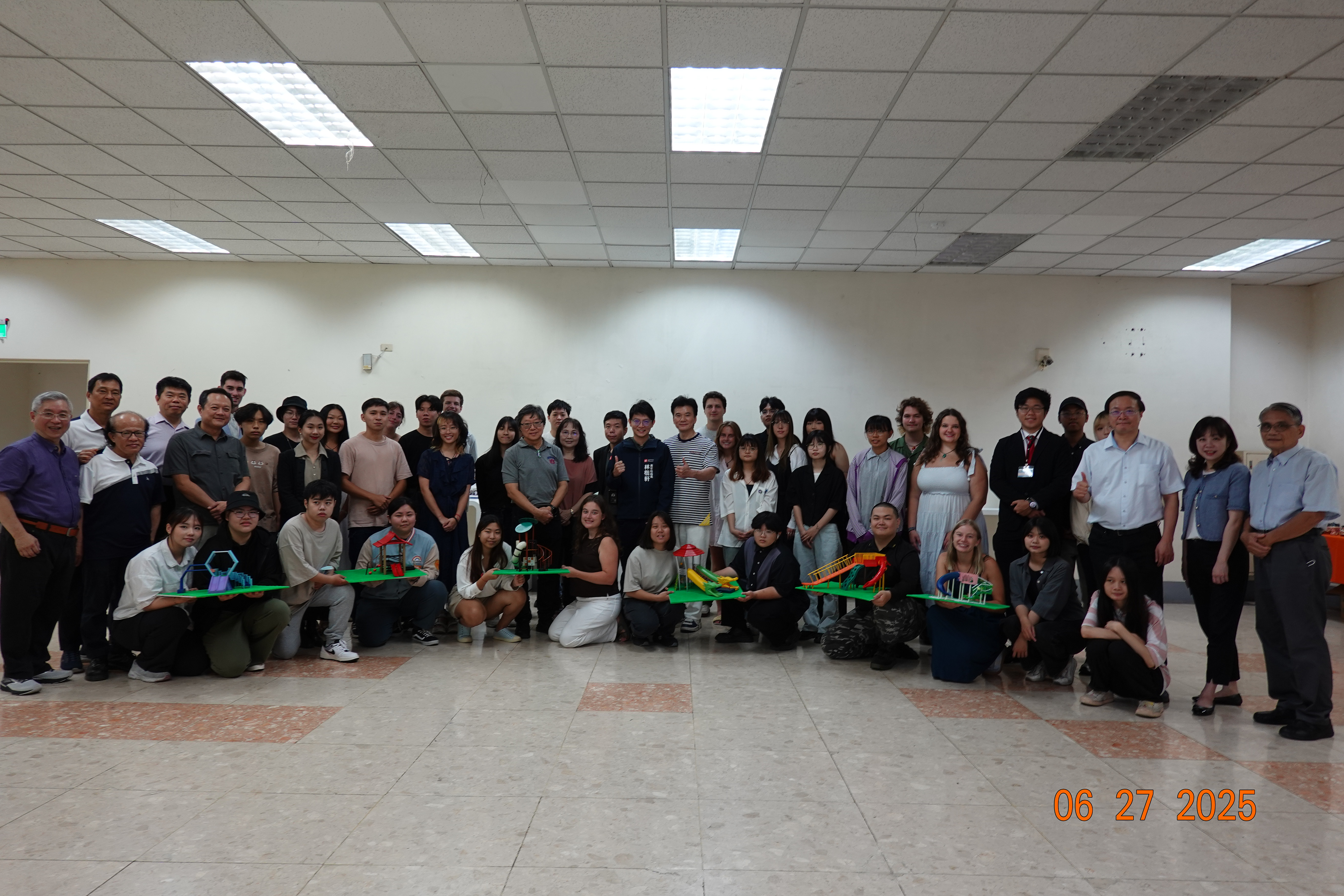
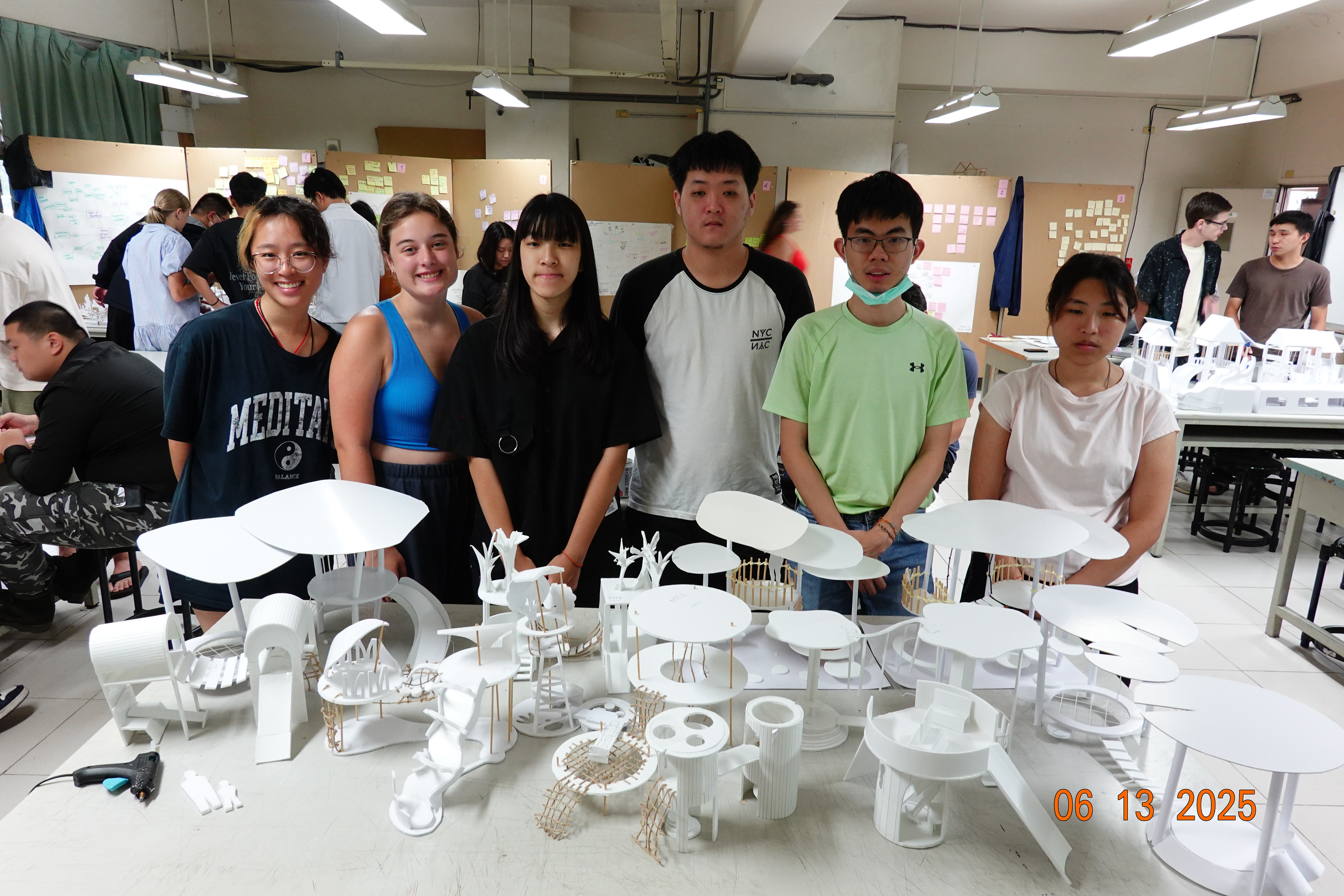
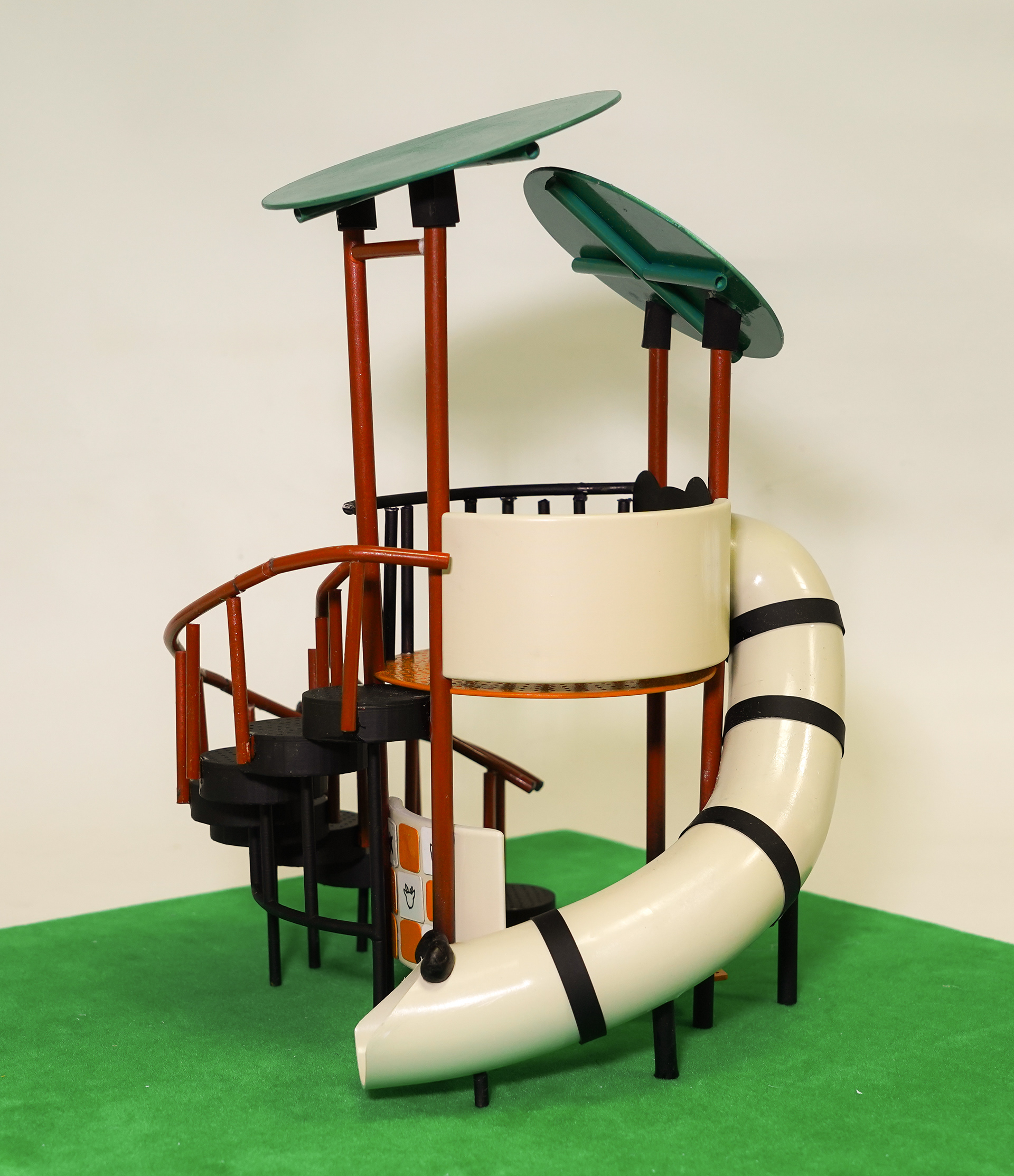
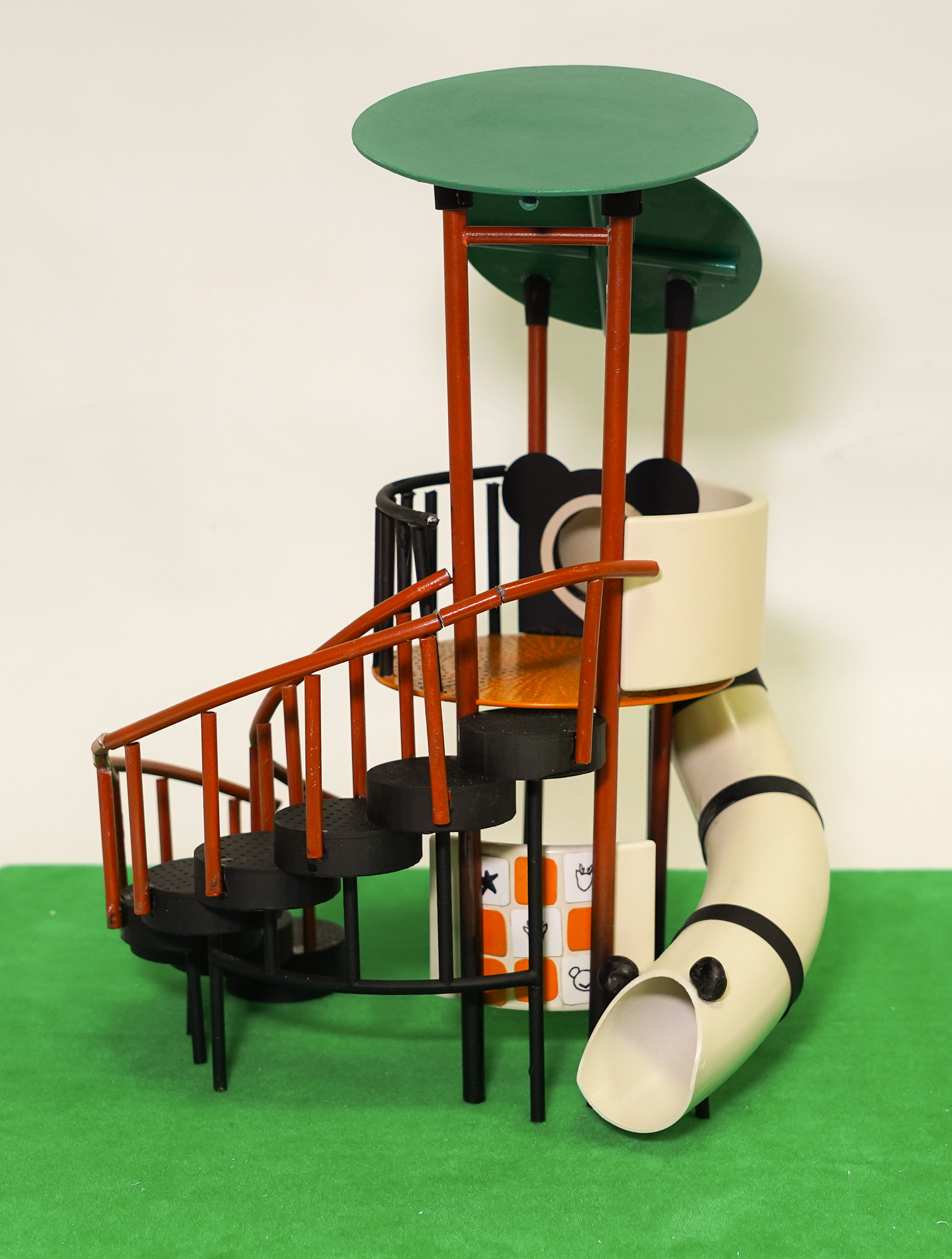
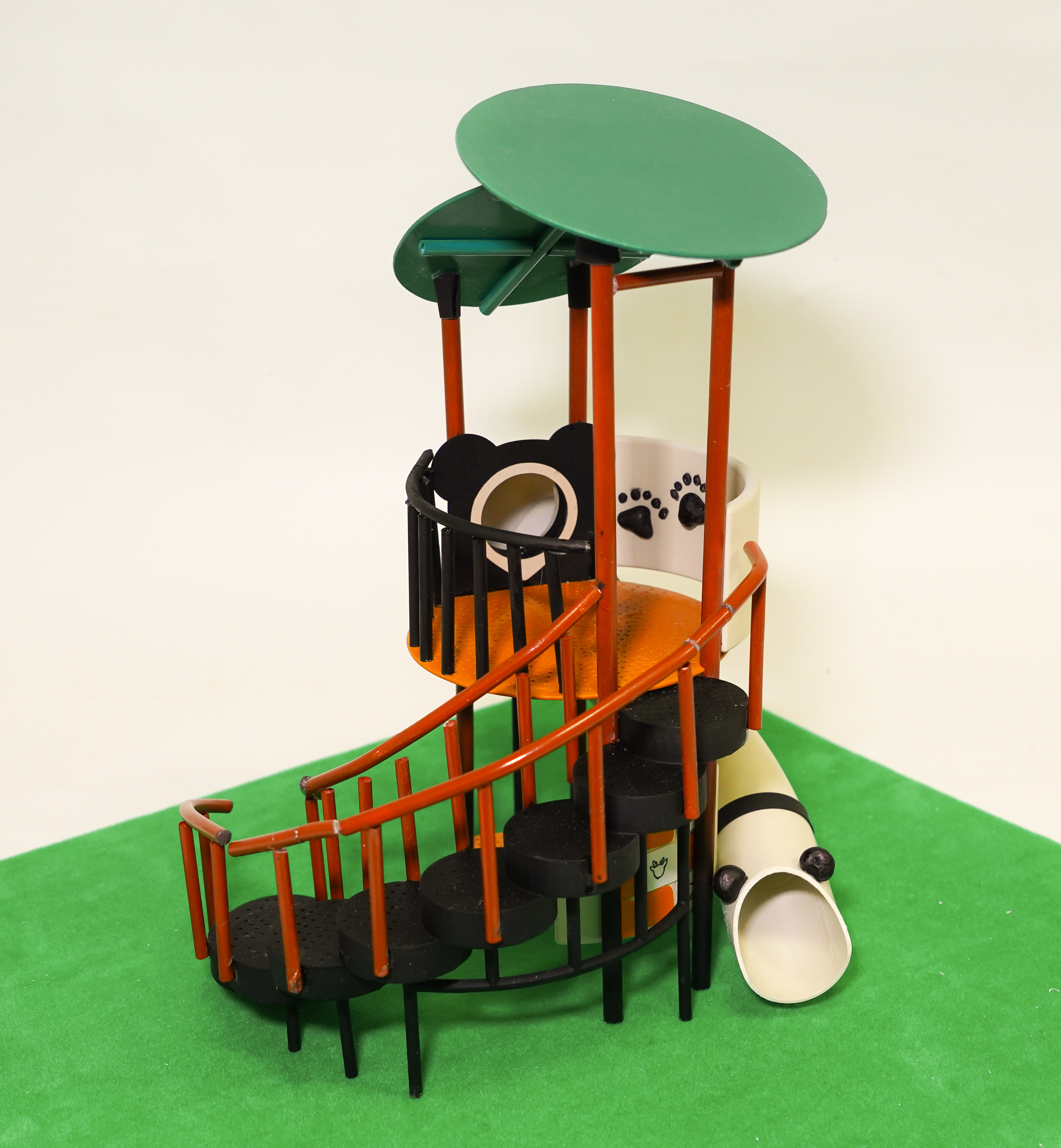
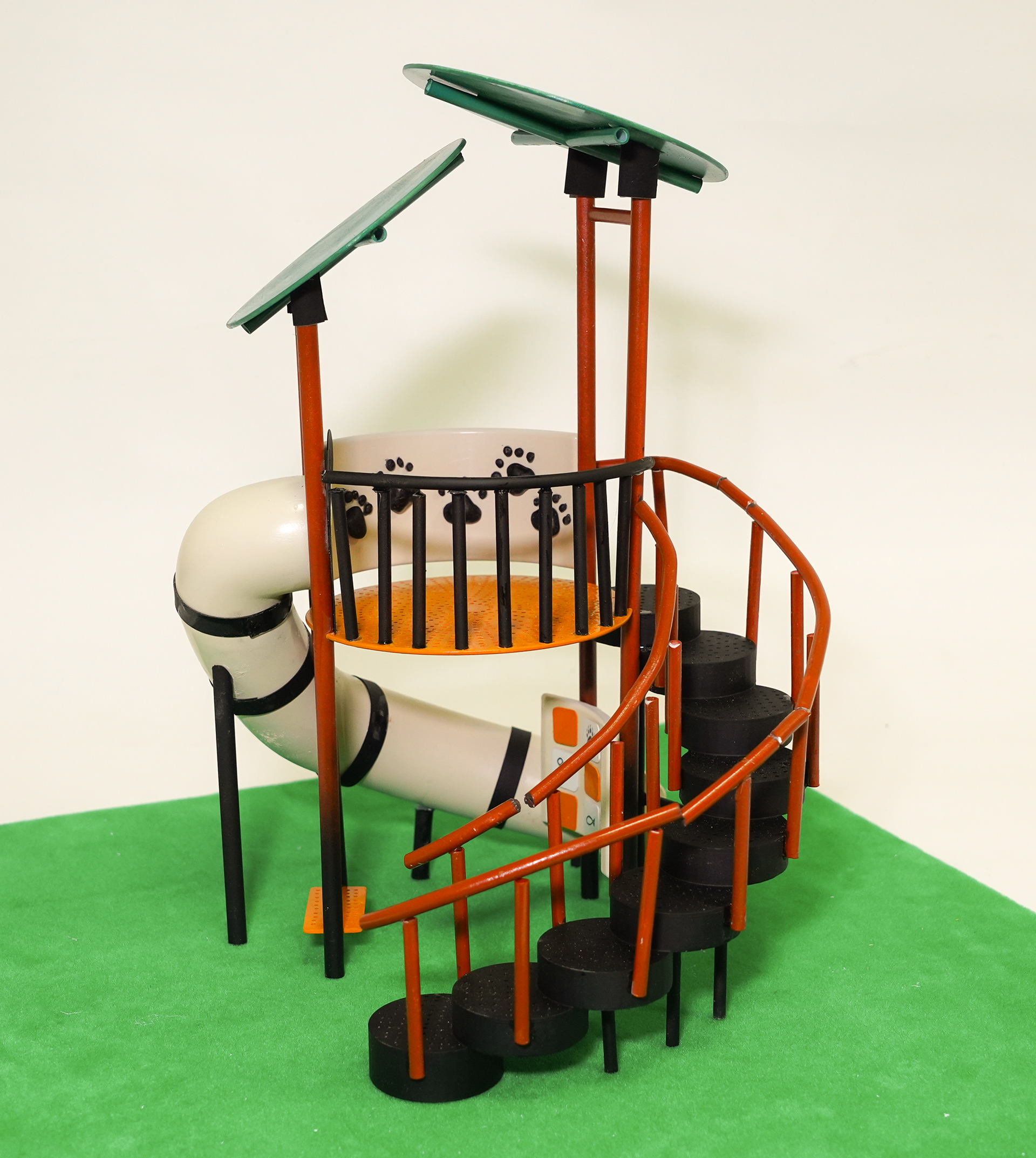
Through late nights and strong bonds formed with my Taiwanese classmates, we collaboratively built a detailed scaled model using a combination of 3D printing, hand modeling, and hand painting, prioritizing clarity and proper execution. While the stair railings could not be fully 3D printed due to time and technical constraints, we adapted our approach to recreate them as accurately as possible, remaining true to the original design within the project’s timeframe.